Parkinson’s disease is a progressive neurological disorder characterized by the loss of dopamine-producing neurons in the substantia nigra region of the brain. Because current clinical treatments primarily focus on slowing the progression of the disease rather than reversing its effects, early intervention is the cornerstone of effective patient management. However, the medical community has long struggled with the limitations of existing diagnostic tools. Traditional methods, such as clinical rating scales and specialized neural imaging like DaTscans, are often subjective, expensive, and generally only effective once significant neurological damage has already occurred. The introduction of an inexpensive, odor-based screening tool could fundamentally shift the paradigm of PD care from reactive treatment to proactive management.
The Biological Foundation: Sebum and the Scent of Disease
The concept of "smelling" Parkinson’s disease is rooted in the biological changes that occur within the body’s integumentary system as the disease progresses. Previous scientific inquiries have established that individuals with PD often exhibit alterations in sebum—an oily, waxy substance secreted by the sebaceous glands to lubricate and waterproof the skin. These alterations are driven by complex internal factors, including systemic inflammation, oxidative stress, and the underlying neurodegeneration that defines the disease.
As these metabolic and pathological processes unfold, they produce specific volatile organic compounds (VOCs). These VOCs are released through the skin, creating a unique "odor signature" associated with the disease. While the potential of sebum as a diagnostic medium has been recognized for several years, practical application has been hindered by environmental interference. Sebum located on the face or back is frequently exposed to external variables such as air pollution, varying humidity levels, and personal hygiene products, all of which can contaminate the sample and lead to unreliable results.
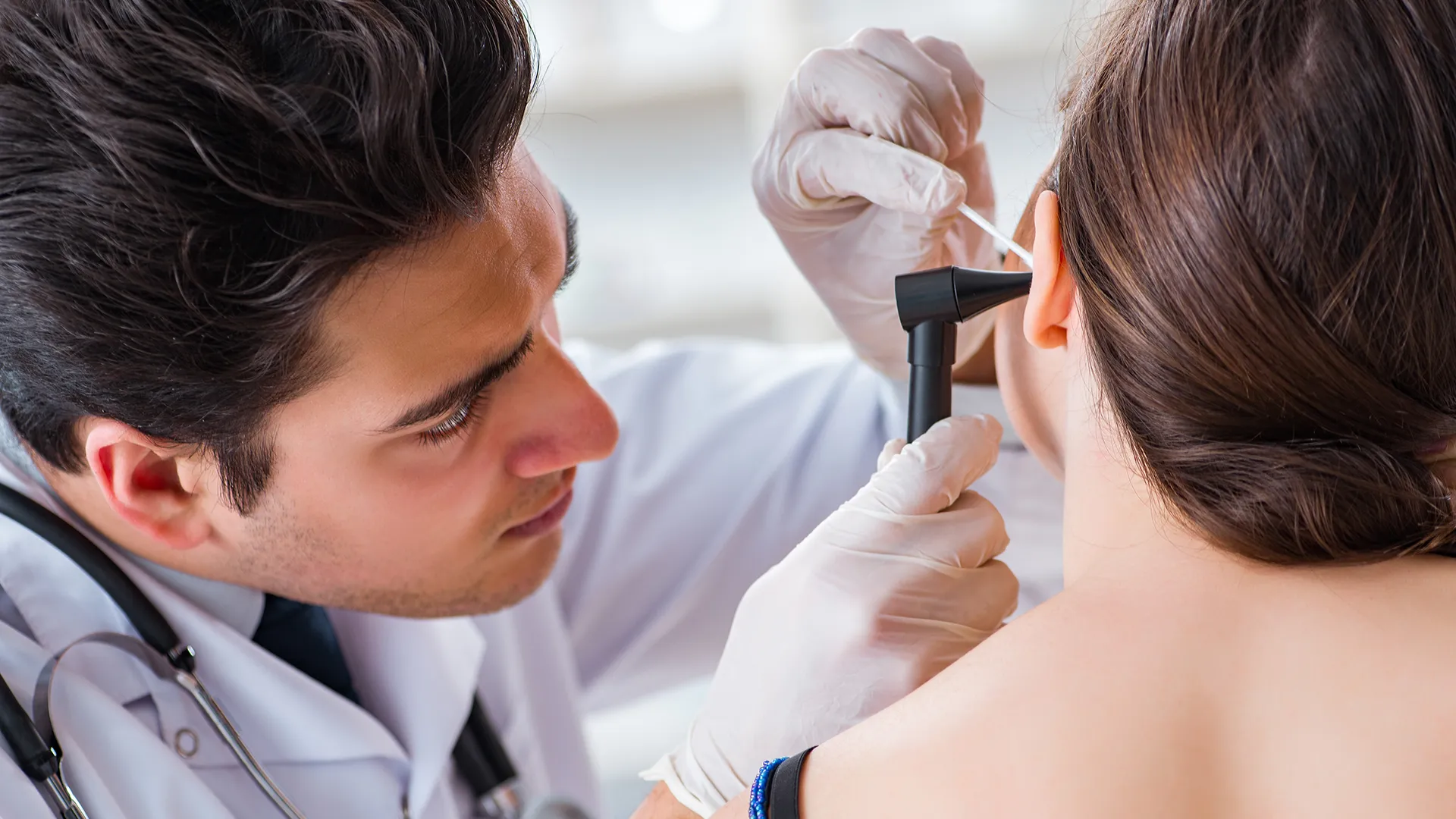
To circumvent these issues, Dong, Zhu, and their colleagues turned their attention to the ear canal. The skin inside the ear is shielded from many environmental pollutants, and the earwax (cerumen) produced there consists largely of sebum and dead skin cells. By focusing on earwax, the research team identified a stable, easily accessible, and protected medium that could serve as a more accurate reservoir for disease-related biomarkers.
Methodology and the Identification of Chemical Biomarkers
The study was conducted as a controlled experiment involving 209 human subjects. To ensure a robust data set, the cohort was divided into two primary groups: 108 individuals who had already received a clinical diagnosis of Parkinson’s disease and 101 healthy control subjects. The researchers utilized a non-invasive swabbing technique to collect secretions from the ear canals of all participants.
The collected samples were then subjected to rigorous laboratory analysis using gas chromatography-mass spectrometry (GC-MS). This sophisticated analytical technique allows scientists to separate, identify, and quantify the various chemical components within a complex mixture. Upon comparing the chemical profiles of the two groups, the researchers identified significant disparities in the concentrations of several volatile organic compounds.
Specifically, four VOCs were found to be consistently and significantly different in the earwax of PD patients compared to the healthy control group. These compounds—ethylbenzene, 4-ethyltoluene, pentanal, and 2-pentadecyl-1,3-dioxolane—have been designated as potential biomarkers for the disease. The presence and concentration of these chemicals provide a molecular "fingerprint" that reflects the internal state of the patient’s neurological health.
Integrating Artificial Intelligence and Olfactory Sensing
Identifying the biomarkers was only the first step in creating a viable screening tool. To translate these chemical findings into a functional diagnostic model, the research team developed and trained an artificial intelligence olfactory (AIO) system. This system acts as an "electronic nose," utilizing machine learning algorithms to recognize the specific patterns of VOCs associated with Parkinson’s disease.
The AIO system was trained using the data gathered from the initial 209 subjects. By processing the complex chemical data through neural networks, the AI learned to distinguish between the odor profiles of PD patients and healthy individuals with a high degree of precision. In the validation phase of the study, the AIO-based screening model demonstrated a remarkable 94% accuracy rate in categorizing earwax samples.
This high level of accuracy is particularly significant given the low cost of the materials required. Unlike expensive MRI or PET scans, the AIO system relies on relatively simple chemical analysis and computational processing, making it a candidate for widespread use in primary care settings and clinics with limited resources.
A Chronology of Research and Development
The development of this earwax-based screening tool represents the culmination of several years of interdisciplinary research. The timeline of this discovery can be traced back to early observations of skin changes in PD patients, which eventually led to more focused studies on VOCs.
- Early 2010s: Anecdotal evidence and preliminary studies suggest that Parkinson’s disease may have a detectable odor, primarily linked to increased sebum production (seborrhea) in patients.
- 2019-2021: Researchers begin identifying specific VOCs in sebum collected from the backs of patients, but face challenges regarding sample contamination and environmental variability.
- 2022: The research team led by Dong and Zhu pivots to earwax as a more stable medium, initiating the collection of samples from a diverse group of subjects in China.
- 2023: The team refines the GC-MS analysis and identifies the four key biomarkers: ethylbenzene, 4-ethyltoluene, pentanal, and 2-pentadecyl-1,3-dioxolane.
- 2024: The results of the AIO system’s 94% accuracy are published in Analytical Chemistry, marking the transition from experimental theory to a validated screening model.
Implications for Global Healthcare and Early Intervention
The implications of a 94% accurate, low-cost screening tool for Parkinson’s disease are profound. Globally, the prevalence of PD is rising faster than any other neurological disorder, largely due to aging populations. According to the World Health Organization, the burden of PD has doubled in the last 25 years. In this context, the ability to identify at-risk individuals during the "prodromal" phase—the period before motor symptoms like tremors and rigidity appear—is invaluable.
Early detection allows for the initiation of neuroprotective strategies and lifestyle interventions that can significantly improve a patient’s long-term quality of life. Furthermore, such a tool could accelerate clinical trials for new PD drugs. Currently, many clinical trials fail because participants are recruited too late in the disease’s progression, when the loss of neurons is already too extensive to reverse. A reliable screening method would allow researchers to identify candidates in the very earliest stages of the disease, providing a clearer picture of a drug’s efficacy.
From a public health perspective, the AIO system offers a path toward "democratizing" PD diagnosis. In many parts of the world, access to neurologists and advanced imaging technology is severely limited. A system that requires only a simple ear swab and a digital analysis could be deployed in rural or underserved areas, ensuring that more patients receive a timely diagnosis regardless of their socioeconomic status.
Expert Perspectives and Future Directions
While the results of the study are highly promising, the research team remains cautious about the immediate implementation of the technology. Hao Dong emphasized that the current study was a "small-scale single-center experiment" conducted within a specific population in China. For the AIO system to become a global standard, it must undergo further validation.
"The next step is to conduct further research at different stages of the disease, in multiple research centers and among multiple ethnic groups," Dong stated. This is a critical point, as diet, genetics, and local environmental factors can all influence the composition of earwax and the production of VOCs. Expanding the study to a global, multi-ethnic cohort will determine if the four identified biomarkers are universal or if the AI model needs to be calibrated for different populations.
Neurologists and independent researchers have reacted to the study with cautious optimism. Many point out that while 94% accuracy is excellent for a screening tool, it would likely be used in conjunction with other tests rather than as a standalone diagnostic. The goal would be to use the earwax test as a "first-line" screen to identify individuals who should then undergo more intensive clinical evaluation.
Funding and Institutional Support
The success of this research was supported by several prominent scientific organizations. The authors acknowledged funding from the National Natural Sciences Foundation of Science, the Pioneer and Leading Goose R&D Program of Zhejiang Province, and the Fundamental Research Funds for the Central Universities. This level of institutional support underscores the perceived importance of finding innovative solutions to the growing Parkinson’s crisis.
As the research moves into its next phase, the focus will shift toward miniaturizing the AIO system and making it more user-friendly for clinical environments. The ultimate goal is a point-of-care device that can provide results within minutes, much like a rapid glucose test for diabetes. If successful, the simple act of checking earwax could become a standard part of geriatric wellness exams, providing a vital window into the health of the human brain.