
This launch comes as RayNeo, an entity incubated by TCL Electronics and an Official Worldwide Olympic Partner in the AR glasses category, continues to demonstrate strong market presence. According to Counterpoint Research Q1 2026 data, RayNeo commanded a notable 23.7% share of the global consumer AR smart glasses market by shipment volume, underscoring its growing influence and user adoption in a competitive and rapidly evolving sector. The simultaneous introduction of two distinct product lines, each tailored to specific user needs, exemplifies RayNeo CEO Howie Li’s vision for specialized devices that avoid the compromises of a "do-it-all" approach. "RayNeo iO and the GT Series represent a fundamental commitment to purpose-built spatial hardware," stated Li. "Rather than compromising with a single device that tries to do everything, we designed two dedicated experiences: the iO as an invisible, all-day assistant for heads-up productivity, and the GT Series as an uncompromising personal cinema for travel and entertainment. Together, they deliver intuitive tools tailored precisely to how people work and relax every day."
Revolutionizing Communication: The RayNeo iO Smart Glasses
The RayNeo iO Smart Glasses are poised to be a transformative communication aid, particularly for the DHH community. For years, individuals with hearing loss have relied on a patchwork of solutions to navigate spoken conversations, ranging from lip-reading and sign language interpreters to text-to-speech apps on smartphones. While these tools have provided invaluable support, they often introduce friction into natural interactions. Smartphone apps, for instance, require users to constantly look down at a screen, breaking eye contact and potentially disrupting the flow of conversation. The RayNeo iO seeks to overcome these limitations by projecting transcribed speech directly into the wearer’s line of sight, allowing for seamless, hands-free engagement.
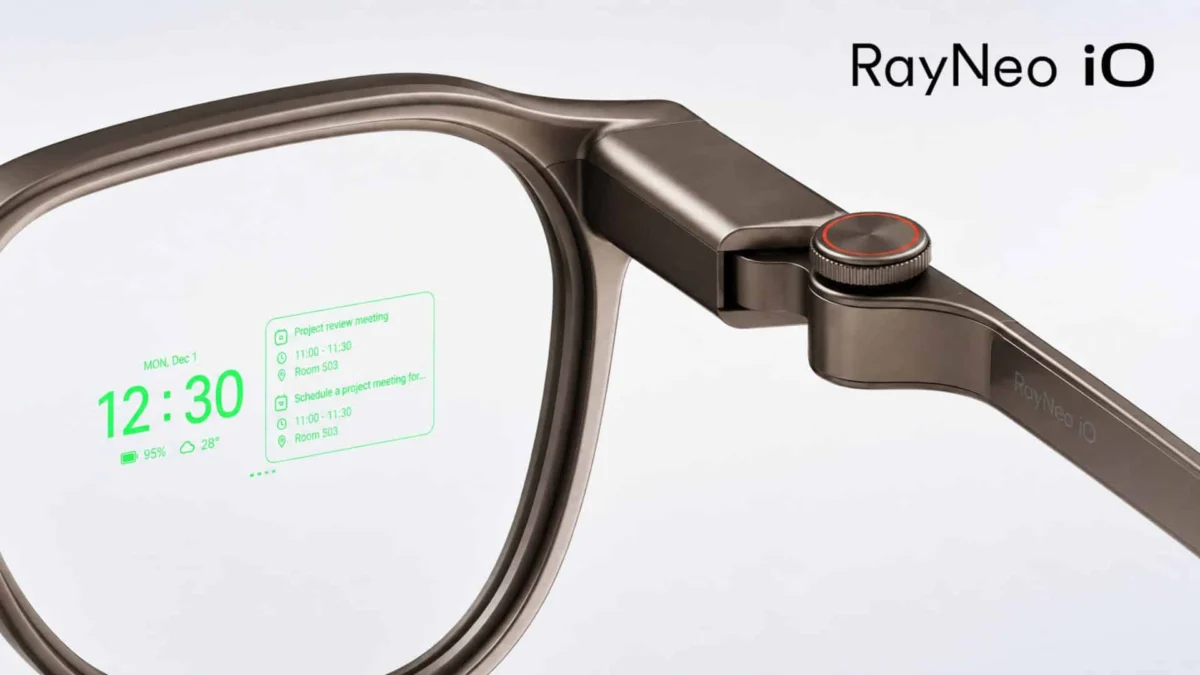
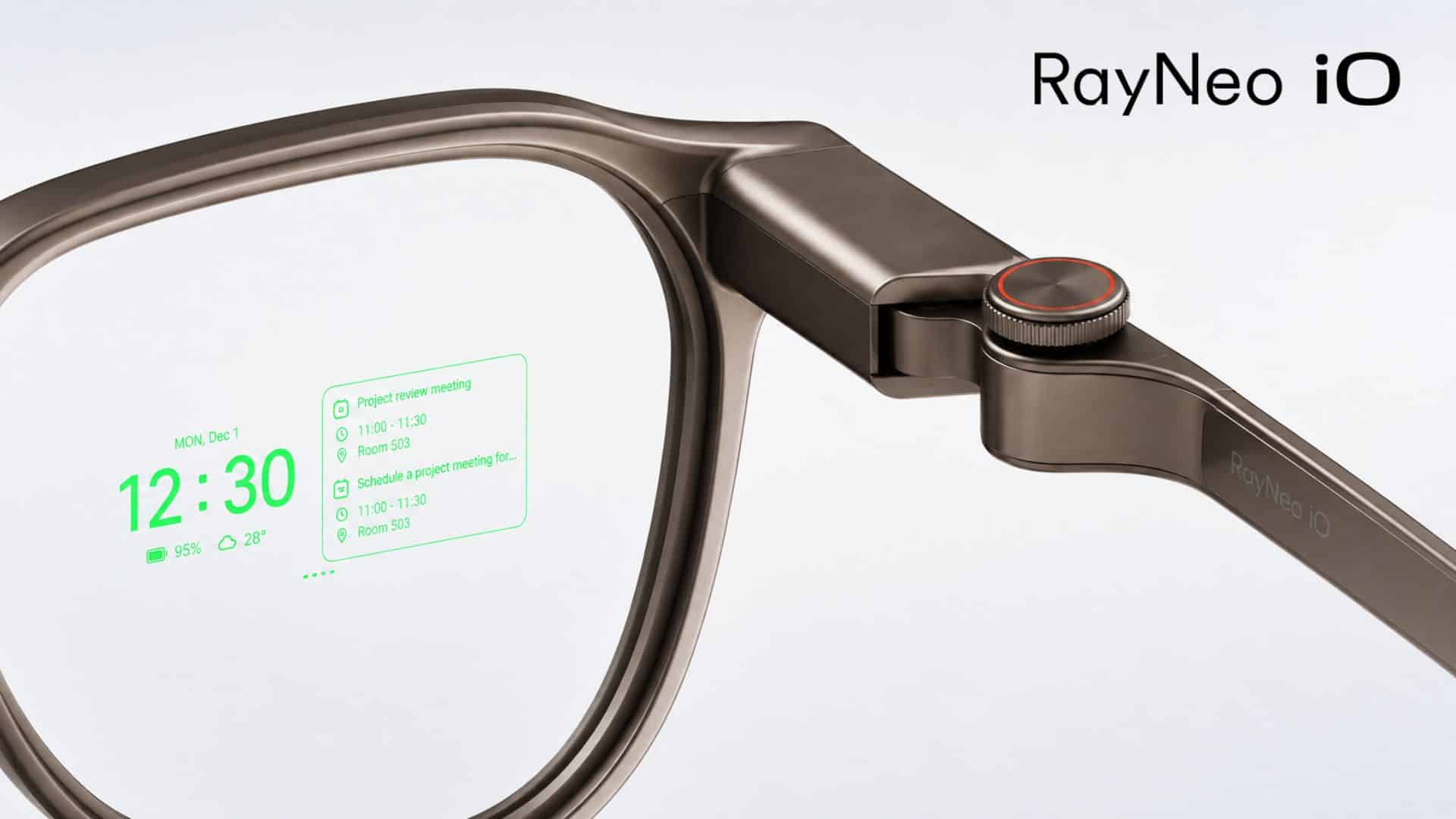
Weighing a mere 33 grams, the iO glasses are designed for all-day comfort and unobtrusive wear. Their core functionality hinges on a transparent heads-up display powered by the Firefly Nano Engine, utilizing a 0.085cc MicroLED system that ensures clear, crisp text overlay without obscuring the wearer’s vision. The device incorporates a sophisticated four-microphone array for accurate sound capture, complemented by bone-conduction voice sensing technology. This combination is crucial for isolating speech in diverse acoustic environments, from quiet personal interactions to bustling public spaces. By leveraging AI-assisted features, the glasses can deliver highly accurate, real-time transcription and even live translation, bridging language barriers in addition to hearing ones.
A distinctive design choice for the RayNeo iO is its "visual-first" approach, meaning it operates without built-in speakers. This decision underscores the device’s primary function as an information display, allowing users to remain fully visually engaged with their surroundings and conversation partners. Interaction with the device is managed through intuitive controls like a Smart Crown Dial and head gestures, ensuring ease of use without distracting button presses or touchscreen manipulations. This focus on an "invisible, all-day assistant" aligns with broader trends in assistive technology, where the goal is to integrate solutions seamlessly into daily life, minimizing their physical and social footprint. The 23.5° Field of View (FOV) is optimized for displaying essential text and information without overwhelming the user’s peripheral vision.
Immersive Entertainment Redefined: The RayNeo GT Series
While the iO glasses target productivity and accessibility, the RayNeo GT and GT Max are engineered for premium spatial entertainment. This series represents RayNeo’s commitment to delivering unparalleled visual and audio experiences for movies, gaming, and other forms of immersive media. In an era where portable screens are ubiquitous, the GT Series aims to elevate personal viewing from a small device to a truly cinematic experience, accessible anywhere.
The technical prowess of the GT Series is evident in its dedicated dual-chip architecture. It features RayNeo’s Vision 4000 Display Chip, responsible for rendering stunning visuals, and the Zone 360 3DoF Chip, which provides native 3DoF (three degrees of freedom) tracking for spatial awareness and interactive experiences. This combination ensures smooth, responsive performance whether users are navigating virtual environments or enjoying high-definition content. The GT and GT Max boast significantly larger Fields of View compared to the iO, at 46° and 59° respectively, providing a more enveloping visual experience.
The virtual display sizing offered by the GT Series is particularly impressive. The RayNeo GT can project a virtual screen equivalent to up to 231 inches, while the GT Max pushes this further to a staggering 307 inches. This capability transforms personal viewing into a grand spectacle, far surpassing the limitations of physical screens. To complement the visual immersion, both GT models are equipped with quad speakers co-tuned by B&O, renowned for their high-fidelity audio. This partnership ensures a rich, spatial sound experience that matches the expansive visuals, critical for truly immersive gaming and cinematic playback. Weighing 68g for the GT and 78g for the GT Max, these glasses are designed for comfortable extended use during travel or relaxation. Custom prescription lens inserts are also supported, enhancing their appeal for a broader user base.
RayNeo’s Strategic Market Position and the Evolving AR Landscape
RayNeo’s impressive 23.7% market share in Q1 2026, as cited by Counterpoint Research, highlights its significant traction in the nascent but rapidly growing consumer AR smart glasses segment. This market leadership is not accidental; it stems from a strategic approach that prioritizes innovation, user-centric design, and diversification of applications. Incubated by TCL Electronics, a global electronics giant, RayNeo benefits from substantial R&D resources, manufacturing capabilities, and a global distribution network. Its designation as an Official Worldwide Olympic Partner in the AR glasses category further burnishes its brand, associating it with cutting-edge technology and global reach.
The company’s existing portfolio, including the full-color spatial computing X Series and the portable Air Series, demonstrates a consistent effort to cater to various consumer needs within the AR ecosystem. The introduction of the iO and GT Series further refines this strategy, moving beyond general-purpose AR to highly specialized devices. This differentiation is crucial in a market where early attempts at mass-market AR, such as Google Glass, faced challenges related to cost, form factor, and a clear "killer app." By focusing on specific use cases – accessibility for the iO and premium entertainment for the GT Series – RayNeo aims to deliver compelling value propositions that drive adoption.
The broader AR market is projected for substantial growth in the coming years. Analysts from firms like IDC and Gartner predict that augmented reality will increasingly integrate into daily life, moving beyond niche enterprise applications to mainstream consumer products. However, challenges remain, including battery life, processing power in compact form factors, and the development of intuitive user interfaces. RayNeo’s commitment to specialized hardware, coupled with advancements in microLED displays and AI integration, positions it well to navigate these complexities and capitalize on future growth. The company’s emphasis on lightweight design (33g for iO) addresses a key consumer pain point, as bulky and heavy devices have historically deterred widespread adoption.
Broader Implications and Future Outlook
The launch of the RayNeo iO Smart Glasses holds profound implications for accessibility and inclusion. By making real-time transcription and translation available in a hands-free, heads-up format, RayNeo is not just offering a new gadget; it is potentially reshaping social interactions for millions of DHH individuals. This technology could reduce communication barriers in professional settings, educational environments, and everyday social encounters, fostering greater independence and reducing the social stigma often associated with hearing loss. Advocacy groups and the DHH community have long championed technological advancements that enhance autonomy, and the iO glasses represent a significant step in this direction. However, widespread adoption will depend on factors like affordability, device reliability, and the continued improvement of AI-driven transcription accuracy across various accents and languages.
Concurrently, the RayNeo GT Series is poised to transform personal entertainment. The ability to carry a "personal cinema" in a lightweight pair of glasses offers unprecedented freedom and immersion. This could be particularly appealing to commuters, travelers, and anyone seeking a private, high-quality viewing experience without the bulk of a tablet or laptop. The integration of high-fidelity audio co-tuned by B&O elevates the experience beyond mere visual novelty, signaling a holistic approach to immersive entertainment. This trend aligns with the growing demand for personalized digital experiences and could influence how content creators develop new forms of interactive media tailored for AR platforms.
Looking ahead, RayNeo’s dual strategy of addressing both practical utility and immersive entertainment positions it as a key innovator in the spatial computing landscape. The company’s participation at IFA 2026 in Berlin from September 4–8, 2026, offers a global platform to demonstrate these groundbreaking products and engage with industry partners and consumers. As AR technology continues to mature, the distinction between specialized devices and integrated solutions will likely become more pronounced. RayNeo’s current approach suggests a clear understanding of these market dynamics, aiming to capture significant segments by offering tailored, high-performance hardware. The availability of both product lines through the RayNeo website and Amazon store, starting September 4, 2026, marks a tangible step towards making these advanced AR experiences accessible to a global audience. The RayNeo iO will be available in Polar Night (Dark Grey) and Dune (Gold), while the GT Series offers RayNeo GT and RayNeo GT Max configurations, ensuring aesthetic choice alongside technological advancement. This strategic launch not only reinforces RayNeo’s market leadership but also signals a promising future for augmented reality’s practical integration into everyday life and its potential to revolutionize both communication and entertainment.