

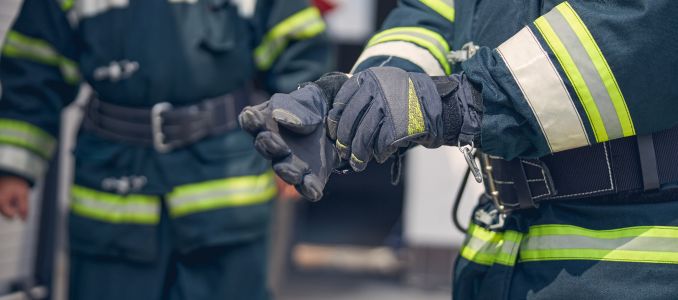
The decision to overhaul the department’s inventory was not merely proactive; it was a response to empirical findings that shattered previous industry assumptions. By securing two complete sets of gear for every firefighter, the City of Quincy has also addressed a critical operational challenge: the ability to rotate and decontaminate gear effectively. This "dual-set" protocol ensures that firefighters are never forced to choose between wearing contaminated gear or going unprotected while their primary suits undergo professional cleaning.
The Catalyst for Change: Testing and Transparency
The momentum for this replacement program began in August 2025, when Quincy Firefighters IAFF Local 792 commissioned independent testing on the department’s existing inventory. For years, fire departments across the United States operated under the impression that certain turnout gear—specifically those designed to be moisture-repellent—could be manufactured without PFAS. However, the 2025 testing performed on suits that had been purchased as early as 2019 yielded alarming results: the presence of fluorine-based compounds was detected, even in equipment that had been previously cleared by industry standards.

This discovery sent a shockwave through the local fire service. Recognizing the immediate health implications, Quincy Firefighters IAFF Local 792 engaged with city officials to present the findings. The city administration acted with relative speed, acknowledging the potential liability and the moral imperative to protect their personnel. By March 2026, the city had formally approved the necessary funding, and a formal appropriation of $2,646,730 was finalized the following month.
Engineering a Safer Standard
The new protective gear, manufactured by Fire-Dex, represents a major technological departure from traditional firefighting ensembles. The central challenge in manufacturing turnout gear is balancing durability, flame resistance, and moisture protection. Historically, PFAS were the "gold standard" for creating the moisture barriers that prevented water, oils, and chemicals from soaking into the inner layers of the suit.

To overcome this, Fire-Dex utilized a specialized three-layer textile system developed by Milliken & Company. This system is designed to provide the same high level of protection as legacy gear while utilizing non-PFAS chemistry. The ensemble consists of a robust outer shell, a high-performance thermal liner, and a non-halogenated, flame-resistant moisture barrier that was first introduced to the market in late 2024.
Crucially, the city did not rely solely on the manufacturer’s claims. Independent verification was performed by Forever Analytical, which conducted a comprehensive screening of all three layers for total fluorine content. The results confirmed that the new gear is entirely free of the fluorine-based substances that have caused widespread concern. This level of rigorous, third-party validation is becoming a new benchmark for municipal procurement as departments across the country grapple with similar concerns.

A Chronology of the PFAS Crisis in Firefighting
The Quincy transition serves as a localized case study of a much larger national crisis. The chronology of events in Quincy reflects a wider timeline of awareness and legislative movement:
- 2019: The City of Quincy procures what was then considered high-standard turnout gear. Later, independent testing would reveal these suits contained PFAS.
- August 2025: Quincy Firefighters IAFF Local 792 triggers independent testing, which definitively identifies PFAS in the 2019-era gear.
- March 2026: City leaders officially authorize the funding for a full department-wide replacement of protective gear.
- April 2026: A formal appropriation of $2,646,730 is posted to finalize the procurement process.
- July 2026: The transition to the new, verified PFAS-free gear is completed, ahead of the state-mandated deadline.
Legislative Context and State Mandates
The City of Quincy’s actions place it in alignment with, and slightly ahead of, the shifting regulatory landscape in Massachusetts. The Commonwealth has been at the forefront of efforts to eliminate PFAS from consumer and industrial products.

Beginning in 2025, new disclosure requirements took effect in Massachusetts, mandating that manufacturers provide detailed information regarding the composition of protective gear. This move was designed to provide departments with the transparency needed to make informed purchasing decisions. However, the state has gone further by setting a hard deadline: as of January 1, 2027, the sale or distribution of any firefighter personal protective equipment (PPE) containing intentionally added PFAS will be prohibited.
By completing this transition in mid-2026, Quincy has ensured that its department is fully compliant with state law well before the mandate takes effect, effectively insulating the city from potential supply chain disruptions as the deadline approaches and demand for non-PFAS gear skyrockets.

Implications for Public Safety and Health
The implications of this transition extend far beyond the immediate logistical success of swapping out equipment. Firefighting is a high-risk profession with significantly elevated rates of various cancers, and there is a growing body of scientific literature linking PFAS exposure—both through inhalation and skin absorption—to these health outcomes.
The "dual-set" requirement, which allows for the thorough decontamination of gear, is just as vital as the chemical composition of the suit itself. Firefighters often operate in environments saturated with soot, toxic ash, and carcinogens. If gear is not cleaned immediately after a fire, the chemicals can off-gas or be absorbed through the skin during the next shift. By providing every firefighter with two sets, the Quincy Fire Department is fundamentally changing the culture of hygiene and safety, moving away from the "worn-in" gear aesthetic that was once a point of pride and toward a model of clinical cleanliness.

Broader Industry Impact and Future Outlook
The Quincy case provides a blueprint for other municipalities facing similar challenges. The procurement process highlighted that relying solely on manufacturer declarations is no longer sufficient. In an era where "PFAS-free" can sometimes be a marketing term rather than a technical reality, the decision to hire independent laboratories like Forever Analytical proved to be the linchpin of the project’s success.
As the industry moves toward 2027 and beyond, the demand for non-fluorinated textiles will continue to grow. This shift is likely to drive further innovation in fabric technology. Manufacturers are now racing to develop materials that can survive the intense heat and mechanical stress of firefighting without relying on the chemical properties of PFAS.

For the City of Quincy, the investment of $2.65 million is viewed by city officials and union representatives alike as a long-term insurance policy. While the upfront costs are significant, they are weighed against the long-term potential for reduced workers’ compensation claims, improved firefighter longevity, and the mitigation of future litigation risks.
As of July 2026, the Quincy Fire Department stands as one of the best-equipped departments in the state, having successfully navigated the complexities of toxic chemical exposure. The success of this transition sends a clear message to the firefighting community: the era of accepting chemical-laden gear as a necessary evil of the job is coming to an end. With the combination of aggressive testing, strategic investment, and legislative support, the standard for firefighter safety is being redefined.