
A New Perspective on Cognitive Decline
The study, supported by Wellcome and Alzheimer’s Research UK, provides what is believed to be the first evidence of a specific cognitive domain improving, or at least remaining robust, during the progression of dementia. By comparing individuals with Alzheimer’s disease to those with Mild Cognitive Impairment (MCI), the researchers found that those in the more advanced stages of the disease scored slightly higher on measures of emotional empathy. This stands in stark contrast to their performance in other areas of social cognition, such as the ability to recognize facial expressions or interpret the complex intentions of others.
Dr. Andrew Sommerlad, a leading author from UCL Psychiatry, emphasized the significance of these findings, noting that the evidence for preserved emotional empathy is compelling. According to Dr. Sommerlad, this discovery presents a vital opportunity for healthcare professionals to rethink psychological support strategies. By leveraging these enduring empathy skills, clinicians and caregivers may be able to foster deeper social connections and improve the quality of life for those living with the condition.
Methodology and Scope of the Meta-Analysis
To reach these conclusions, the research team conducted an exhaustive review of existing literature, analyzing data from 28 previous studies performed across the globe. This meta-analysis included a total of 2,409 participants, creating a robust dataset that allowed for a nuanced comparison between different stages of cognitive impairment. The participants were categorized into those with Mild Cognitive Impairment (MCI)—a state where cognitive decline is greater than expected for a person’s age but does not yet interfere with daily life—and those with diagnosed dementia, including Alzheimer’s disease and frontotemporal dementia (FTD).
The researchers utilized standardized metrics to evaluate various facets of social cognition. These included tests for "Theory of Mind" (the ability to understand that others have different beliefs and perspectives), emotion recognition through facial cues, and empathy. Empathy was further divided into cognitive empathy (understanding another person’s perspective) and emotional empathy (sharing or responding to another person’s emotional state).
The Divergence of Social Abilities
The data revealed a clear and progressive decline in most areas of social cognition as patients moved from MCI to dementia. Individuals with Alzheimer’s disease and frontotemporal dementia showed significantly lower scores in recognizing facial emotions and understanding thought processes compared to their peers with MCI. This decline is often what leads to the social withdrawal and "blunting" associated with the disease, as patients struggle to navigate the subtle cues of human interaction.
However, the trend reversed when measuring emotional empathy. Participants with Alzheimer’s disease exhibited a trend toward higher emotional reactivity. In the largest study analyzed within the meta-analysis, researchers noted a heightened emotional response to negative stimuli among Alzheimer’s patients. This suggests that while the brain’s "thinking" circuits for social interaction are failing, the "feeling" circuits remain active and may even become more sensitive.
Contextualizing the Findings: The Biology of Empathy
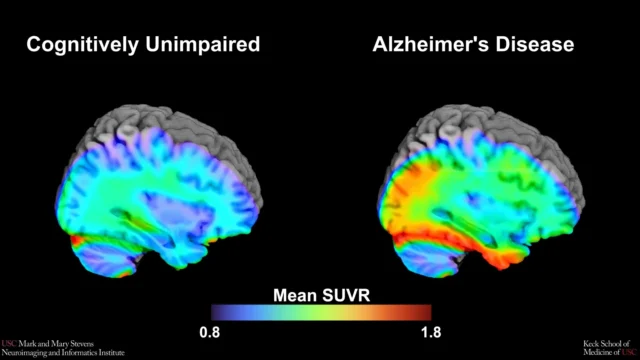
To understand why empathy might be preserved while memory fails, it is necessary to look at the neurobiology of the Alzheimer’s brain. Alzheimer’s typically begins in the hippocampus and the entorhinal cortex, areas responsible for memory formation. It then spreads to the temporal and parietal lobes, affecting language and spatial awareness.
In contrast, emotional empathy is largely mediated by the limbic system, including the amygdala and the anterior insula, as well as the "primitive" emotional centers of the brain. These areas are often less affected in the early and middle stages of Alzheimer’s compared to the prefrontal cortex, which governs cognitive empathy and executive control. The researchers hypothesize that as the higher-level cognitive "brakes" of the prefrontal cortex weaken, the emotional responses generated by the limbic system may become more pronounced and less regulated, leading to the observed increase in emotional reactivity.
The Chronology of Cognitive Transition
The transition from healthy aging to dementia is often viewed as a linear descent, but this study suggests a more complex chronology of change:
- Healthy Aging: Social cognition and empathy remain relatively stable, though processing speeds may slow.
- Mild Cognitive Impairment (MCI): Subtle declines in memory and executive function begin. Social cognition remains largely intact, though individuals may start to struggle with complex social nuances.
- Early-Stage Alzheimer’s: Significant decline in cognitive empathy and facial recognition. However, emotional empathy remains stable.
- Mid-to-Late Stage Alzheimer’s: While the ability to intellectually understand another’s point of view (cognitive empathy) is severely diminished, the visceral emotional response to others’ distress or joy (emotional empathy) may actually increase.
This timeline is crucial for caregivers to understand, as it helps explain why a loved one might seem "disconnected" from a conversation but still react strongly to the emotional tone of a room.
Implications for Caregivers and Families
The social cognitive impairments associated with dementia are often among the most distressing symptoms for families. Puyu Shi, the study’s first author and a PhD researcher at UCL, highlighted that the inability to understand intentions or respond appropriately in social settings frequently leads to loneliness and isolation.
"Families of people with dementia should be supported so that they can understand and adapt to changes in their loved one’s demeanour," Shi noted. The findings suggest that while a patient may no longer be able to follow the logic of a family argument or remember a recent event, they remain highly attuned to the emotional atmosphere. If a caregiver is stressed or angry, the patient may "absorb" that emotion more intensely than a healthy individual would, potentially leading to behavioral outbursts or increased anxiety. Conversely, positive emotional engagement, such as warmth, touch, and music, may be more effective than previously realized.
The Double-Edged Sword of Emotional Reactivity
While the preservation of empathy is seen as a potential "strength" to be leveraged, the researchers also cautioned that heightened emotional reactivity carries risks. Because Alzheimer’s patients are simultaneously losing their cognitive coping skills and their ability to regulate their emotions, they may become overwhelmed by negative emotions.
This reactivity can manifest as "emotional contagion," where the patient mirrors the distress of those around them without having the cognitive tools to process or distance themselves from that distress. This underscores the need for "emotionally intelligent" care environments where the focus is shifted from purely cognitive stimulation to emotional stability and regulation.
Future Research and Diagnostic Tools
Despite the breakthrough, the researchers noted that the evidence for increased emotional empathy is currently categorized as "weak" to "moderate" due to the limited number of longitudinal studies. Most of the data reviewed were cross-sectional, meaning they compared different groups of people at a single point in time rather than tracking the same individuals over several years.
Puyu Shi’s ongoing PhD research, funded by Alzheimer’s Research UK, aims to fill this gap. By examining how social abilities change over time in both healthy older adults and those with various forms of dementia, the team hopes to develop more sensitive diagnostic tests. Current cognitive assessments, such as the Mini-Mental State Exam (MMSE), focus heavily on memory and orientation but often ignore social cognition.
Dr. Sommerlad pointed out that better tests for identifying social cognitive impairments could help in early diagnosis and provide a more accurate prediction of how the disease will progress. "There remains a need for better tests that can enable early identification of these social cognitive impairments," he stated.
Conclusion: A Paradigm Shift in Dementia Care
The UCL study marks a significant shift in the narrative of Alzheimer’s disease. By identifying a "preserved" domain, it offers a rare glimmer of hope in a field often defined by what is lost. The realization that emotional empathy survives the ravages of the disease suggests that the "self" remains present and reachable through emotional channels.
For the global healthcare community, these findings advocate for a move toward "relationship-centered care." This approach prioritizes emotional connection and the shared human experience over the clinical management of symptoms. As the global population ages and the prevalence of Alzheimer’s continues to rise—affecting an estimated 55 million people worldwide—understanding the enduring emotional capacities of patients will be essential in creating a more compassionate and effective framework for dementia care.
The research suggests that even when words fail and memories fade, the heart of the person with Alzheimer’s remains open to the emotions of others. By focusing on this remaining bridge, society can better support those living with dementia, ensuring they remain connected to the social fabric of their communities and families.