The Evolving Landscape of Hearing Healthcare and the Access Gap
Hearing loss is a widespread public health challenge, particularly among older adults. Globally, an estimated 430 million people require rehabilitation for hearing loss, and this number is projected to rise to over 700 million by 2050. Untreated hearing loss is not merely an inconvenience; it is associated with a range of adverse health outcomes, including cognitive decline, dementia, social isolation, depression, and an increased risk of falls. Despite these significant impacts, a substantial "access gap" persists, with many individuals, especially older adults, delaying or never seeking professional help for their hearing difficulties. Barriers to care often include high costs, lack of awareness, social stigma, and logistical challenges in accessing specialist services.
In response to this growing public health concern and the acknowledged under-penetration of traditional hearing aid markets, there has been a significant policy push and technological innovation aimed at making hearing healthcare more accessible and affordable. This includes the development of self-fitting hearing aids, remote audiology services, and the landmark decision by the U.S. Food and Drug Administration (FDA) in October 2022 to establish a new category for over-the-counter (OTC) hearing aids. The FDA ruling permits adults with perceived mild-to-moderate hearing loss to purchase qualifying devices directly without a prescription, medical examination, or professional fitting, fundamentally altering the traditional distribution model. This move was widely anticipated to democratize access and encourage greater adoption of hearing aids. Similar discussions and regulatory changes are underway in other countries, reflecting a global trend towards consumer-empowered healthcare.
Study Methodology and Timeline: A Baseline Before Disruption
The research by Alnafjan et al. provides a unique snapshot of consumer preferences from a period just prior to these major shifts. Data for the study were meticulously collected between 2016 and 2018, predating both the widespread adoption of telehealth spurred by the COVID-19 pandemic and the introduction of FDA-regulated OTC hearing aids in the United States. This chronological context is vital, as it allows the study to serve as a baseline for understanding foundational consumer attitudes before these disruptive innovations fully entered the market.
The study involved 9,510 eligible participants aged 60 and older. Approximately 8,000 of these individuals provided responses to each of three primary questions: where they preferred to obtain hearing health information, where they preferred to receive hearing testing, and where they preferred to acquire hearing aids or other hearing devices. The participants were drawn from four diverse, high-income countries: Australia, Canada, England, and the United States, allowing for cross-cultural comparisons of preferences within Western healthcare systems. While the convenience sampling method and a predominantly White study population mean the findings may not be universally generalizable, they offer robust insights into a significant demographic within these key markets.
Consistent Preference for Professional, Clinical Environments
Across all three critical aspects of hearing healthcare—information, testing, and device acquisition—the study revealed a striking and consistent preference among older adults for traditional healthcare environments. These included audiologists’ offices, physicians’ offices, and hospitals, overwhelmingly favored over retail stores, online platforms, pharmacies, supermarkets, technology retailers, community centers, or self-testing options.
When seeking hearing health information, participants primarily looked to doctors and official medical or government websites. In contrast, less formal sources such as radio and internet advertisements ranked among the least preferred. This highlights a clear desire for authoritative, credible information directly from trusted medical professionals or officially sanctioned health bodies.

For hearing testing, the pattern was equally strong. Audiology practices, physicians’ offices, and hospitals were significantly preferred. The specific nuances varied slightly by country: respondents in Australia, Canada, and the United States showed a particular inclination towards audiologists’ offices, reflecting the established role of audiology as a primary care provider for hearing. Participants in England, however, demonstrated a stronger preference for general practitioners and hospital-based services, which aligns with the structure of the National Health Service (NHS) where general practitioners often serve as the first point of contact for health concerns and refer to hospital-based specialists.
The preferences for obtaining hearing devices mirrored those for information and testing. Audiologists’ offices, doctors’ offices, and hospitals were consistently favored over direct-to-consumer channels like mail-order and technology retail. This suggests that even for the final acquisition of a physical device, older adults prioritize the professional guidance and oversight that traditional medical settings offer.
Crucially, these preferences remained remarkably stable and consistent across various demographic and experiential factors. The degree of hearing loss reported by participants, their age group, previous experiences in seeking help for hearing, and even the mode of survey completion (online or in-person) did not significantly alter their inclination towards provider-mediated clinical settings. As the researchers emphatically stated, "Regardless of the participants’ hearing-loss severity, prior help-seeking, survey mode, or geographic location, they consistently preferred to seek help in person, in provider-mediated clinical settings." This broad consistency underscores a deeply rooted consumer mindset. Interestingly, participants who already reported hearing loss showed an even stronger preference for testing in audiologists’ offices, potentially indicating that direct experience with hearing care professionals reinforces trust and familiarity.
The Enduring Role of Trust and Professional Relationships
The persistent preference for traditional medical settings, even in an era of increasing consumer options, speaks volumes about the enduring importance of trust, established relationships, and perceived professional expertise. Medical settings inherently convey a sense of diagnostic accuracy, professional oversight, and continuity of care that non-medical alternatives often struggle to replicate.
Older adults, having often built long-term relationships with their physicians and healthcare providers, tend to view these individuals and institutions as reliable sources of health information and care. The decision to address hearing loss is not merely a transaction for a device; it often involves navigating complex health information, understanding personal auditory needs, and receiving ongoing support. The presence of a trained professional, such as an audiologist or a physician, offers reassurance that a thorough assessment will be conducted, appropriate recommendations will be made, and proper fitting and follow-up care will be provided. This comprehensive approach contrasts with the potentially more transactional nature of purchasing an OTC device from a retail store or online, where professional guidance might be minimal or entirely absent.
Implications for Over-the-Counter (OTC) Hearing Aids and Future Models
The study’s findings arrive at a pivotal moment for the hearing healthcare industry, particularly in the wake of the FDA’s OTC hearing aid category establishment in 2022. The primary goal of OTC hearing aids was to expand access and encourage greater adoption by removing traditional barriers. However, the Alnafjan et al. study, combined with more recent industry data, suggests that simply expanding purchasing channels may not automatically translate into widespread consumer adoption, especially among older adults.
While the study’s data predates the availability of OTC devices, subsequent industry research reinforces its conclusions. The 2022 U.S. MarkeTrak survey, a leading consumer survey in hearing healthcare, found that approximately 78% of respondents preferred obtaining future hearing aids through traditional, in-person channels involving a hearing care professional. Even more recently, the 2025 MarkeTrak survey indicated that 85% of existing hearing aid owners preferred to make future purchases in person with professional assistance. These figures, while separate from the BMC Geriatrics study, align perfectly with its core message: professional involvement remains a powerful driver of consumer preference.
This presents a significant challenge for the nascent OTC hearing aid market. While OTC devices offer convenience and potentially lower costs, they may struggle to overcome the deep-seated preference for professional guidance and the trust associated with medical environments. Policymakers and manufacturers of OTC devices must consider how to bridge this gap between expanded access and consumer comfort.
Towards Integrated Care Models: Balancing Access and Professionalism

The researchers acknowledge that traditional medical settings alone may not possess the capacity to meet the rapidly growing demand for hearing healthcare services as global populations continue to age. Therefore, a pragmatic approach is needed, one that integrates the accessibility offered by newer technologies and channels with the trust and professionalism inherent in established healthcare environments.
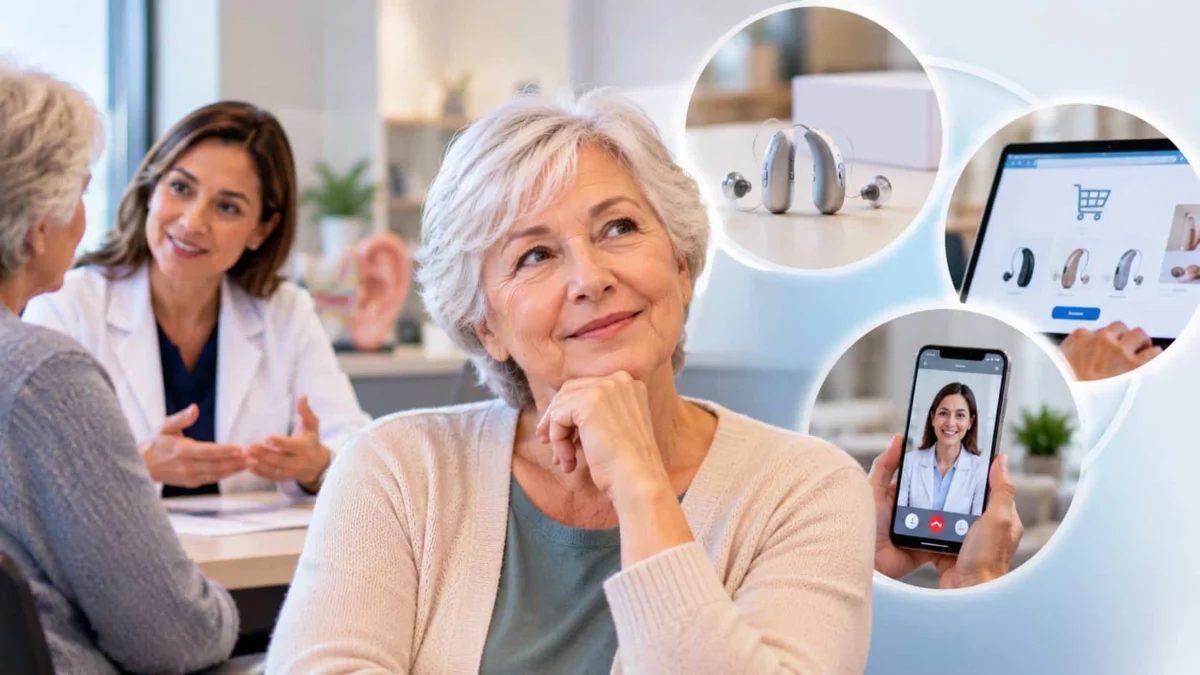
Alnafjan and colleagues propose that "employing trained personnel and offering complimentary in-person and remote services situated in medical-type settings, under the supervision of professional hearing care providers, may be a viable approach." This vision suggests hybrid models where OTC devices or self-fitting technologies could be introduced within a framework that still offers professional oversight. For example, a consumer might purchase an OTC device, but then have access to follow-up consultations with an audiologist or trained hearing care assistant, either in person or remotely, to ensure proper fitting, address concerns, and provide ongoing support.
Such integrated care pathways could involve:
- "Guided OTC" models: Where retail outlets or online platforms partner with audiology clinics to offer optional professional consultations.
- "Hub-and-spoke" systems: Where audiologists act as central hubs, supervising trained personnel in satellite clinics or community centers that offer initial screenings and support for simpler devices, referring more complex cases to the audiologist.
- Telehealth integration: Leveraging remote technologies to provide professional follow-up and adjustments for devices initially acquired through non-traditional channels, maintaining the professional connection.
These models aim to combine the accessibility and affordability benefits of new technologies with the crucial element of professional trust and continuity of care that older adults clearly value.
Study Limitations and Future Research Directions
While highly informative, the authors prudently highlight several limitations that warrant consideration. The primary limitation is the data collection period (2016-2018), which predates significant shifts like the COVID-19 pandemic’s acceleration of telehealth and the FDA’s OTC hearing aid ruling. Consumer attitudes may have evolved as newer technologies and purchasing options have become more familiar and normalized. For instance, the experience of remote consultations during the pandemic might have made some older adults more comfortable with virtual care models.
Furthermore, the convenience sampling method and the predominantly White demographic of the study population limit the generalizability of the findings to more diverse populations. Socioeconomic factors, cultural backgrounds, and varying healthcare systems across different countries could influence preferences significantly.
Finally, the study examined stated preferences rather than actual purchasing behavior. There can often be a gap between what people say they prefer and the decisions they make when faced with real-world constraints like cost, immediate availability, or specific convenience factors. A person might prefer a professional fitting but choose an OTC device due to budget limitations or ease of purchase.
Despite these limitations, the study offers invaluable insights for all stakeholders in hearing healthcare:
- For Hearing Care Professionals: It reinforces the enduring importance of patient relationships, professional guidance, and accessible clinical services. It suggests that even with new market entrants, the core value proposition of comprehensive audiological care remains strong.
- For Policymakers: It highlights the need for policies that don’t just expand access but also consider consumer comfort and trust. Strategies might involve incentivizing professional involvement in OTC pathways or ensuring clear educational resources for consumers navigating new options.
- For Industry (OTC Manufacturers): It signals that market penetration may require more than just availability. Building trust, offering pathways to professional support, and integrating with traditional healthcare models could be key to widespread adoption.
The authors conclude by emphasizing the need for additional research to track how preferences evolve in response to the dynamic healthcare landscape. Understanding whether newer generations of older adults will approach hearing healthcare differently, and how actual purchasing behaviors align with stated preferences, will be crucial for developing effective and patient-centered hearing healthcare solutions in the coming decades. Ultimately, truly improving hearing healthcare utilization will hinge not just on making technologies available, but on understanding where consumers feel comfortable seeking help—and why.
Reference
Alnafjan, F., Davis, A. C., Lee, M. L., McMahon, C. M., Mokdad, A. H., Mosley, C. L., Pichora-Fuller, M. K., & Tremblay, K. L. (2026). Consumer preferences for hearing health care information and services as described by older adults surveyed in Australia, Canada, England, and the United States. BMC Geriatrics, 26, Article 1285. https://doi.org/10.1186/s12877-026-07819-7