The Historical and Institutional Context of Zero Tolerance
The term "zero tolerance" emerged prominently in United States public policy during the 1980s and 1990s, initially within the context of federal drug enforcement and later expanding into educational institutions. Critics have long argued that zero-tolerance policies in schools and workplaces often function as blunt instruments, leading to the disproportionate punishment of marginalized groups and failing to account for nuances in behavior or context. By adopting such language, the NAD—an organization dedicated to advocating for the civil rights and accessibility needs of deaf and hard-of-hearing individuals—finds itself navigating a complex intersection between maintaining institutional safety and upholding the values of restorative justice.
For years, the NAD has utilized this policy to govern conduct at its biennial national conferences and other sanctioned activities. The policy was codified to provide a clear mechanism for reporting and addressing instances of discrimination, bullying, and abuse. However, recent discourse within the community suggests a growing preference for language that emphasizes accountability, intersectionality, and support, rather than punitive frameworks that mirror the historical carceral systems many disability advocates have historically opposed.
Chronology of the Policy Review
The current policy has served as the baseline for conduct at NAD-sponsored events for several biennial cycles. While it was originally drafted with the intent of fostering a safe environment, the internal and external pushback began to intensify in early 2026 as the organization prepared for upcoming national programming.
- Pre-2026: The Zero Tolerance Policy functioned as the primary administrative tool for managing interpersonal conflicts and behavioral standards at NAD conferences.
- Early 2026: Community members and stakeholders began circulating feedback through social media and direct correspondence, highlighting the disconnect between the policy’s name and the organization’s stated mission of inclusion and equity.
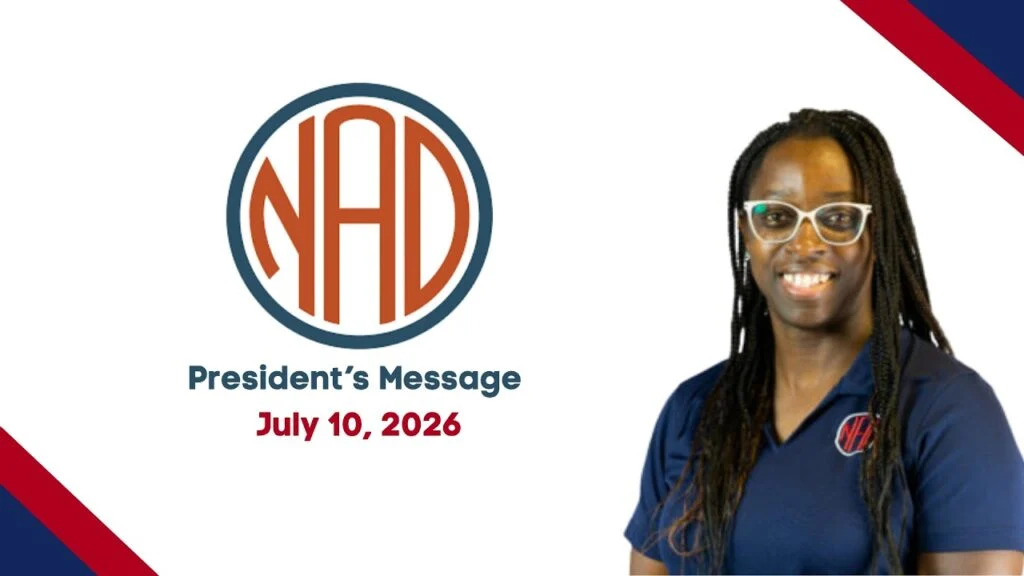
- July 10, 2026: NAD President Stephanie Hakulin issued a formal statement, acknowledging the community’s concerns and announcing that the Board of Directors would initiate a "thoughtful and comprehensive review" of the policy.
- Ongoing: The existing policy remains in effect to ensure that the organization can continue to process reports of misconduct, while the Board evaluates potential revisions to the language and implementation procedures.
Analyzing the Impact of Policy Language
The debate over the NAD’s policy is reflective of a broader trend in organizational governance where institutions are increasingly scrutinizing the semiotics of their internal rules. Sociological research into institutional behavior suggests that the nomenclature of a policy significantly dictates its enforcement. "Zero tolerance" implies an absolute, binary approach—guilt or innocence, violation or compliance—which often leaves little room for restorative mediation or contextual evaluation.
By contrast, many modern organizations are shifting toward "accountability frameworks." These models prioritize harm reduction and community restoration. For the deaf community, which has historically fought against paternalistic structures, the shift toward a more nuanced, inclusive vocabulary is seen as a necessary step in aligning organizational behavior with the lived experiences of its members. The NAD’s commitment to reviewing whether the title should better reflect values such as "restorative approaches" signals a potential pivot toward this more modern model of conflict resolution.
Official Responses and Organizational Stance
In her address to the community, President Stephanie Hakulin emphasized that the Board of Directors is operating with a high degree of transparency. "We recognize that the phrase ‘zero tolerance’ carries significant historical context and has been associated with policies and practices that resulted in disproportionate harm," Hakulin stated.
The NAD has clarified that no final decisions have been made regarding the specific changes to the policy. The review process is designed to be deliberative, ensuring that the Board evaluates all feedback before implementing any amendments. Crucially, the organization has stressed that the review process will not leave a vacuum in safety protocols. During the transition, the current policy remains the standard for behavior, ensuring that participants have a venue to report harassment or abuse without interruption.
Legal experts and organizational consultants often note that such transitions are delicate. If an organization moves too quickly to abandon a established policy without a robust replacement, it may face liability issues or gaps in its ability to protect vulnerable members. The NAD’s decision to keep the current policy in place while conducting the review is viewed as a pragmatic move to balance the desire for reform with the necessity of operational continuity.
Broader Implications for Disability Advocacy Groups
The NAD is not alone in grappling with these issues. Many national advocacy organizations are currently assessing whether their internal rules adequately address the needs of a diverse, modern membership base. The ripple effect of this review could be significant; if the NAD successfully transitions to a policy centered on restorative justice or accountability, it could serve as a template for other disability-led nonprofits and advocacy groups.
The potential for "restorative approaches" to be integrated into the NAD’s policy framework would be a major shift in how the organization handles disputes. In a restorative model, the focus moves from simply punishing an offender to repairing the harm caused to the community. For an organization that prides itself on being a collective—as evidenced by the slogan "Together, we NAD rise"—this approach aligns more closely with the ethos of community-led advocacy than the traditional, adversarial "zero tolerance" model.
Moving Forward: The Path to Reform
As the NAD moves into the next phase of its review, the organization faces the challenge of reconciling the diverse perspectives of its membership. The community is not a monolith, and while there is widespread agreement that current language should be updated, there may be varying opinions on how stringent the new policies should be.
The Board of Directors has committed to keeping the community updated on the progress of the review. This commitment to ongoing dialogue is essential for maintaining the trust of the membership. Effective policy reform in this space requires more than just changing a title; it necessitates a deep dive into the procedures that dictate how reports are filed, how investigations are conducted, and how outcomes are determined.
The ultimate success of this initiative will be measured by the organization’s ability to create a policy that is simultaneously firm in its rejection of abuse and discrimination, and inclusive in its language and implementation. By acknowledging that "good intentions do not replace the need to understand how the language is interpreted," the NAD has demonstrated a level of institutional humility that is often absent in larger, more rigid organizations.
The upcoming months will be critical. The Board will need to synthesize feedback from diverse stakeholders, including legal counsel, community advocates, and those who have historically been affected by the policy. If the NAD can navigate this process successfully, it will likely emerge as a more resilient organization, better equipped to serve its members in a way that truly reflects the values of dignity, fairness, and belonging that are core to the organization’s mission.
In summary, the NAD’s move to review its Zero Tolerance Policy is a significant development in the governance of national advocacy organizations. By opening its doors to community critique and committing to a transparent, evidence-based review, the association is positioning itself to lead by example, proving that even the most established organizations must remain willing to evolve in response to the changing needs and values of the communities they represent.