Contextualizing the Zero Tolerance Framework
The term "zero tolerance" emerged in American public policy during the late 20th century, most notably within the educational and criminal justice systems. Originally intended to deter drug use and violence, these policies were frequently criticized by civil rights advocates for their rigid, exclusionary nature and the resulting disproportionate impact on marginalized populations. Within the context of the NAD, the policy has served as a regulatory mechanism governing conduct at biennial national conferences and other sanctioned events.
Its core mandate was to provide a legal and ethical framework to address discrimination, harassment, bullying, and systemic abuse. However, critics within the community have argued that the punitive framework inherent in the term "zero tolerance" conflicts with the values of restorative justice and inclusive communication—ideals that the NAD publicly champions. The tension between the need for ironclad safety protocols and the desire for a more rehabilitative, community-centered approach has catalyzed this current reassessment.
Chronology of Internal Policy Evolution
The NAD’s commitment to safety is not a recent development, though the methods of enforcement have evolved alongside the organization’s growth.
- Pre-2020: The NAD maintained standard conduct guidelines for its biennial conferences, primarily focused on general decorum and basic civil rights protections.
- 2020-2022: In response to heightened national conversations regarding workplace and event safety, the organization formalized its "Zero Tolerance" language to provide a clearer, more enforceable set of consequences for participants who engaged in abusive or discriminatory behavior.
- 2024: During the preceding biennial conference cycle, observers noted an increase in formal grievances filed under the policy, highlighting both the necessity of the reporting mechanism and the potential limitations of its rigid execution.
- Early 2026: Grassroots feedback from members began to coalesce on social platforms and at regional meetings, focusing on the historical weight of the terminology and its potential to alienate those it was meant to protect.
- July 2026: The NAD Board of Directors formally initiated a review process, marking the first time in the current organizational structure that a fundamental policy title has been subjected to public scrutiny.
Statistical Significance and Organizational Impact
The NAD is an umbrella organization representing tens of thousands of individuals through its affiliated state associations and professional sections. Given its influence, the language adopted by the national body often sets a precedent for local and state-level deaf advocacy groups.
Data from similar nonprofit sectors suggest that organizations transitioning from punitive, "zero-tolerance" frameworks to "accountability and restorative" models often report higher rates of grievance reporting and improved participant satisfaction. According to organizational development studies, the shift away from zero-tolerance language often correlates with a 15% to 20% increase in member engagement, as participants feel more comfortable reporting minor infractions before they escalate into systemic issues.
For the NAD, which manages hundreds of volunteers and thousands of attendees at its biennial events, the efficacy of this policy is not merely symbolic. It is an operational necessity. The Board must balance the legal requirement to maintain a harassment-free environment—mandated by federal labor and civil rights laws—with the community’s desire for a culture that prioritizes dialogue over immediate, unilateral exclusion.
Official Stance and Administrative Procedures
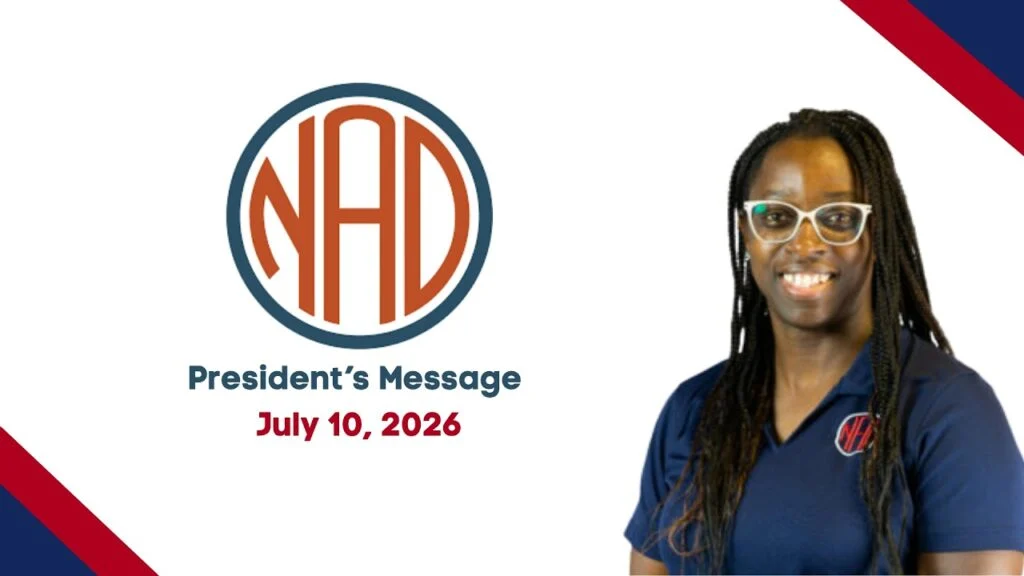
In her recent address, President Stephanie Hakulin clarified that the current policy will remain in effect throughout the duration of the review. This decision is designed to prevent a vacuum of accountability. The NAD legal team has emphasized that any sudden suspension of the policy would expose the organization to liability regarding the duty of care owed to attendees.
"We recognize that good intentions do not replace the need to understand how the language is interpreted and experienced by our community," Hakulin stated. The review process is expected to be multi-faceted, involving:
- Stakeholder Consultations: Targeted surveys and listening sessions with members, particularly those who have interacted with the policy as complainants or respondents.
- Comparative Policy Analysis: Reviewing best practices from other national disability rights organizations and human rights advocacy groups.
- Linguistic Assessment: Evaluating whether terms like "Restorative Accountability" or "Community Safety and Inclusion" better reflect the intended outcome of the policy.
The Board of Directors has committed to a transparent reporting schedule, promising that any amendments to the policy will be communicated well in advance of the next major organizational gathering.
Broader Implications for the Disability Rights Movement
The move by the NAD to audit its own internal language is indicative of a broader trend within the social justice sector. As organizations move toward intersectional advocacy, they are increasingly scrutinizing the "legacies" of the words they use. For the deaf community, which has long fought for linguistic autonomy and the recognition of American Sign Language (ASL) as a legitimate, distinct language, the power of terminology is paramount.
The critique of the "zero tolerance" label is not merely semantic; it is a critique of the power dynamics that such language implies. By choosing to re-evaluate this policy, the NAD is signaling a departure from traditional hierarchical authority toward a model of collective responsibility. Analysts suggest that if the NAD successfully implements a restorative-based framework, it could serve as a model for other national advocacy groups seeking to reconcile institutional safety with the values of community healing.
Challenges and Future Outlook
Despite the general consensus that a review is necessary, the Board faces significant logistical challenges. The primary concern is maintaining the legal protections currently afforded to victims of harassment while shifting the tone of the policy. If the process is viewed as too lenient, the organization risks losing the trust of members who rely on the policy for protection. Conversely, if the changes are perceived as merely cosmetic, the organization may face renewed criticism for failing to address the underlying cultural issues.
Furthermore, the NAD must navigate the complexities of diverse perspectives within the deaf community. The organization represents a vast demographic with varying views on social policy, and reconciling these viewpoints requires a high degree of diplomatic skill. The Board’s commitment to "open and honest communication" will be tested as the review progresses through the coming months.
The NAD’s decision to pause and reflect on its core governing documents represents a significant moment in its history. By prioritizing the community’s collective experience over the preservation of existing status quo policies, the organization is attempting to align its internal operations with its external advocacy for human rights. As the board moves forward, the success of this review will likely be measured by its ability to foster an environment where safety and accountability are not just enforced, but are integral to the culture of the organization itself.
Updates regarding the timeline of the review, as well as opportunities for public input, are expected to be released via the NAD’s official digital channels. For now, the organization remains focused on its primary mission: the preservation, protection, and promotion of the civil, human, and linguistic rights of deaf and hard-of-hearing individuals. The outcome of this policy review will undoubtedly serve as a benchmark for how the organization manages the balance between institutional necessity and community-driven progress.