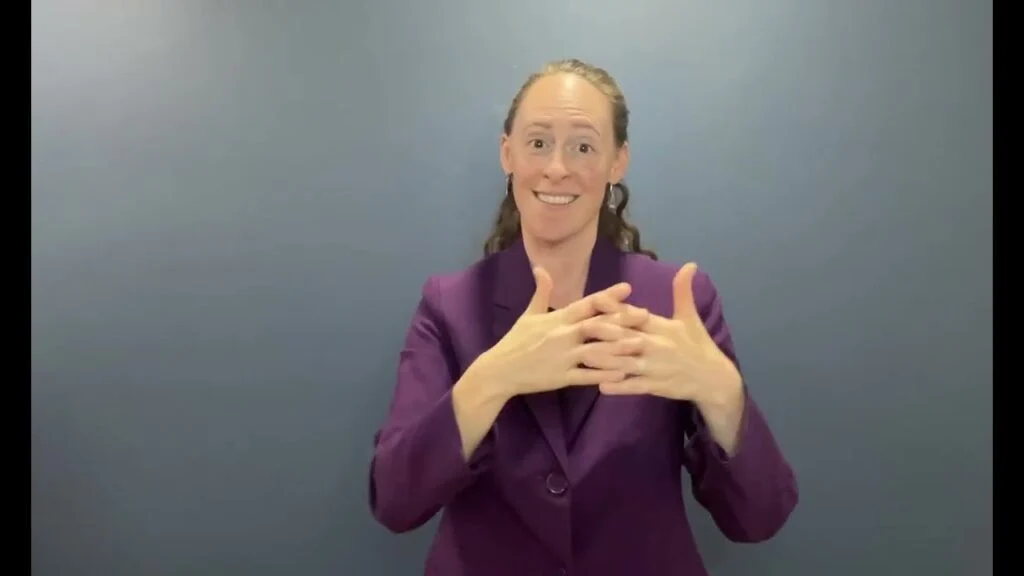
At the heart of the dispute is an order issued in November 2025 by Judge Amir Ali, which mandated that the White House immediately reinstate American Sign Language (ASL) interpretation for all publicly announced press briefings. This judicial intervention served as a direct response to the administration’s decision in January 2025 to discontinue the use of ASL interpreters—a move that advocacy groups argued stripped millions of citizens of their ability to engage with critical government updates simultaneously with their hearing counterparts.
A Chronology of the Legal Struggle for Accessibility
The fight for inclusive communication from the White House is not a new phenomenon but rather a continuation of a struggle that intensified during the global health crises of the early 2020s.
- 2020: The NAD successfully litigated National Association of the Deaf v. Trump, establishing a judicial precedent that the White House must provide ASL interpretation during major national briefings, specifically those related to the COVID-19 pandemic.
- January 2025: Following a change in administrative policy, the White House ceased providing ASL interpretation for press briefings, effectively reversing the progress established by the 2020 ruling.
- May 28, 2025: The NAD and Derrick Ford filed a new lawsuit, arguing that the removal of interpreters constituted a violation of the equal access rights of Deaf and hard-of-hearing individuals.
- November 2025: Judge Amir Ali ruled in favor of the plaintiffs, ordering the immediate reinstatement of ASL interpreters.
- Post-November 2025: The White House filed an appeal against Judge Ali’s decision, leading to the upcoming proceedings in the D.C. Circuit.
- October 6, 2026: The U.S. Court of Appeals for the D.C. Circuit is scheduled to hear oral arguments at 2:00 P.M.
The Significance of Real-Time Information
For the Deaf and hard-of-hearing community, the distinction between captioned text and ASL interpretation is profound. ASL is a distinct language with its own complex grammar and syntax, and for many, it is their primary means of communication. While closed captioning technology has improved, it often suffers from significant latency issues, transcription errors, and a failure to convey the nuanced tone or emotional inflection of a speaker—elements that are vital in the context of political and emergency communications.
Nicholas Kiego, Chief Executive Officer of the NAD, has been vocal about the implications of the administration’s actions. "This case is about whether Deaf and hard of hearing Americans can receive information from the White House at the same time as everyone else," Kiego stated. The organization maintains that in an era of instantaneous digital communication, forcing a segment of the population to wait for delayed or inaccurate transcripts is a form of structural disenfranchisement.
Data and Accessibility Standards in the Federal Sector
The legal arguments in this case draw heavily from the Rehabilitation Act of 1973, specifically Section 504 and Section 508. Section 504 prohibits discrimination on the basis of disability in programs conducted by federal agencies, while Section 508 requires that all electronic and information technology developed, maintained, or used by the federal government be accessible to people with disabilities.
Statistics from the National Institute on Deafness and Other Communication Disorders (NIDCD) suggest that approximately 15 percent of American adults (37.5 million) aged 18 and over report some trouble hearing. For a large subset of this population, ASL is a fundamental necessity for full civic participation. Legal experts suggest that the failure to provide interpretation during high-stakes government briefings constitutes a systemic failure to meet the standards set by the federal government’s own accessibility mandates.
Official Responses and Administrative Positioning
The White House’s decision to appeal the November 2025 ruling suggests a legal strategy rooted in the interpretation of executive discretion. While the administration has not provided a singular public comment on the pending litigation, court filings indicate that government attorneys have challenged the scope of the judicial mandate, arguing that the White House possesses the prerogative to determine the methods by which it communicates with the public.
Conversely, the NAD and its legal team, spearheaded by the NAD Law and Advocacy Center, argue that the accessibility of the White House is not a matter of administrative preference, but a constitutional and statutory obligation. The plaintiffs contend that because the White House is the primary source of national news and crisis management information, its failure to be accessible essentially marginalizes millions of voters.
Broader Implications for Disability Rights
The outcome of the October 6, 2026, hearing will likely set a lasting precedent for how government agencies interact with disabled citizens in the digital age. If the D.C. Circuit upholds Judge Ali’s ruling, it will reinforce the principle that government accessibility is a non-negotiable component of a functioning democracy. Conversely, a reversal could empower other federal agencies to adopt more restrictive policies regarding accessibility accommodations, potentially rolling back decades of progress in disability rights advocacy.
Legal observers are watching the case closely to see how the court balances executive branch authority against the rights of protected classes. The case is expected to center on whether the 2020 precedent creates an ongoing obligation for the White House to maintain interpretation services or if such requirements are subject to periodic review and administrative discretion.
Public Participation and Community Engagement
Recognizing the gravity of the proceedings, the NAD has invited members of the Deaf and hard-of-hearing community, as well as their allies, to attend the oral arguments at the U.S. Court of Appeals for the D.C. Circuit. The event is open to the public, though the NAD has cautioned attendees to allow for substantial time to clear security screenings at the courthouse.
The mobilization of the community highlights the cultural significance of the case. For many, the courtroom proceedings represent more than just a legal dispute; they are a manifestation of the ongoing fight for linguistic rights and visibility in the public sphere.
The Role of the NAD Law and Advocacy Center
The National Association of the Deaf, established in 1880, has functioned as the nation’s premier civil rights organization for the Deaf and hard-of-hearing for over 140 years. Its Law and Advocacy Center (LAC) is specifically tasked with addressing systemic discrimination through impact litigation. By pursuing high-profile cases like this one, the LAC seeks to ensure that the civil and human rights of Deaf individuals are protected at the highest levels of government.
The current litigation is supported by the association’s members and donors. As the legal costs associated with such high-stakes appellate work are substantial, the NAD continues to solicit public support to sustain its efforts. By advocating for equal access, the organization aims to secure a future where the Deaf community is no longer an afterthought in the communication strategies of the federal government.
Looking Ahead
As the October 6, 2026, date approaches, the legal community and disability rights advocates are bracing for what will undoubtedly be a defining moment in the history of accessibility law. Whether the D.C. Circuit upholds the mandate for ASL interpretation or offers a new framework for how the executive branch must address the needs of its disabled constituents, the ruling will carry significant weight for the future of democratic participation.
The NAD remains resolute in its mission. As Kiego stated, the organization is committed to "vigorously defending the right of Deaf and hard of hearing Americans to equal access to White House communications." As the case moves forward, the focus remains on the core principle that in a democratic society, access to information must be universal, inclusive, and equitable, regardless of an individual’s hearing status or preferred method of communication. For now, the nation waits for the D.C. Circuit to decide if that right will be protected for years to come.