
The Perils of Delayed Intervention and Communication Breakdowns
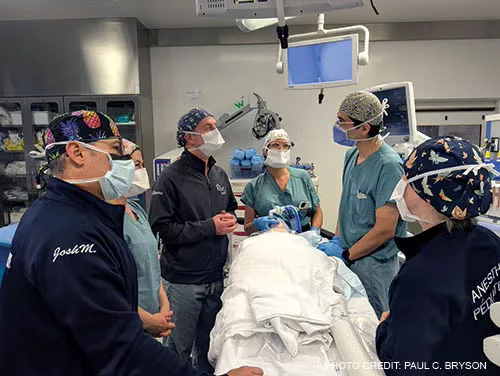
A recurring theme among the experts is the detrimental effect of delayed ENT involvement. Dr. Paul C. Bryson, Director of the Cleveland Clinic Voice Center and Section Head of Laryngology, highlighted that ENT surgeons are often summoned only when a patient’s condition has become critical, transforming them into a "surgical airway team of last resort." This reactive approach, he argues, significantly diminishes the opportunity for early assessment, problem anticipation, and preventative measures. "Bring us in early," Dr. Bryson urged, "so we can help with a more thorough assessment and anticipate and avoid problems before they occur."
This sentiment is echoed by Dr. Tyler Crosby, an Assistant Professor at the University of California, San Francisco School of Medicine. He recounted a recent case involving a cancer patient slated for an interventional radiology procedure. His team received only a perfunctory "heads-up" call, only to discover upon examination that the patient’s neck was "hard as a rock from previous radiation, with no palpable landmarks." The stark reality was that any emergent surgical airway would have been exceptionally challenging, even with optimal conditions and prior planning. This highlights a pervasive misconception: that the ENT team is merely "down the hall" and can be summoned to "save the day." Dr. Crosby stressed that this is not a viable management plan; proactive consultation is paramount for optimal outcomes.
Communication breakdowns within the multidisciplinary team pose another significant threat. With numerous specialists involved in managing a difficult airway, meticulous preparation and clear, consistent communication are indispensable. Dr. Bryson emphasized the lost opportunity when prior airway management events, such as a previously challenging intubation, are not reviewed or shared with anesthesia colleagues. Furthermore, the failure to conduct pre-procedure CT scans and video laryngoscopies to visualize key airway anatomy represents a missed chance for crucial preoperative insights. "These exams provide incredibly useful conversation points in terms of what the upper airway looks like before you initiate airway care," Dr. Bryson explained. While they may not prevent every difficulty, they significantly enhance preparedness when routine cases deteriorate and emergency interventions become necessary.
Dr. Mathieu Bergeron, a pediatric otolaryngologist at CHU Sainte-Justine Hospital in Montreal, exemplifies a proactive approach by routinely reviewing difficult airway case details with nursing, anesthesia, ENT, and OR technicians. This ensures that the entire team is aligned and fosters crucial trust and rapport. His philosophy is simple: "The best airway rescue is the one that you never have to use because you anticipated the problems before even starting the case."
To institutionalize this level of preparedness, Dr. Taher Valika, Medical Director of the Aerodigestive Program at Ann & Robert H. Lurie Children’s Hospital of Chicago, and his team implement daily, focused ENT/anesthesia airway huddles. These sessions meticulously review patients at risk for difficult intubation, those likely manageable with mask ventilation, the necessary equipment and airway devices, and the safest plan involving spontaneous ventilation or paralysis. The discussions extend to intraoperative strategies, backup options, and postoperative airway management.
The Underestimated Fragility of Pediatric Airways and Pre-existing Conditions
The unique vulnerabilities of pediatric patients with difficult airways cannot be overstated. Dr. Valika warned that children can appear stable one moment and then suddenly decompensate. The narrow margin for error means that a seemingly controlled airway situation can rapidly escalate into a crisis. The limited airway reserve in these young patients is a challenge that is sometimes overlooked. Dr. Valika recalled a child who initially presented with a subtle stridor, only to be found to have a "pinpoint airway" that rendered him unable to be discharged safely. This case served as a stark reminder that severe airway obstruction can be deceptively subtle, with some children compensating until their airway function is critically compromised.
Pre-existing medical conditions significantly complicate airway management. Jonathan M. Bock, MD, FACS, a Professor at the Medical College of Wisconsin, identified cancer patients with airway fibrosis from prior radiation treatments as particularly challenging. In such instances, he employs a technique of probing the airway with a large-bore IV catheter or needle filled with saline, withdrawing until air is aspirated. Leaving the needle in place allows for dissection to localize the airway even within scar tissue.

Congenital disorders also present formidable challenges, especially in pediatric populations. Dr. Bergeron cited complete tracheal rings (CTR) as an example, describing them as a rigid, unforgiving airway that can rapidly obstruct with even minor swelling or secretions, making intubation extremely difficult. He has witnessed instances where teams, lacking full knowledge of CTR, repeatedly attempted intubation, exacerbating edema and worsening the airway. More effective strategies, he noted, include using high-flow nasal cannulas with heliox (a helium-oxygen mixture that reduces turbulence in narrowed airways) or, in more severe cases, extracorporeal membrane oxygenation (ECMO).
Dr. Crosby further cautioned that congenital airway anomalies, such as micrognathia and macroglossia, are not confined to pediatric patients. These conditions can persist into adulthood, complicating both mask ventilation and tracheal intubation due to associated hypotonia and poorer emergence from anesthesia.
The Strategic Role of Tracheostomies and Awake Intubation
Dr. Bryson has increasingly embraced recommending and managing tracheostomies for patients with difficult airways, prioritizing safety. This approach is particularly beneficial for patients with airway scarring, bilateral vocal cord paralysis, and multi-level obstruction. A tracheostomy ensures their functional needs are met and can be lifesaving for those living far from specialized centers. The key, he explained, is to have a well-defined plan for eventual safe decannulation.
Dr. Bock highlighted the pitfall of ENT physicians hesitating to be involved in the long-term care of tracheostomy patients. He asserted that as "masters of the upper airway," otolaryngologists possess unparalleled experience in managing these structures and their sequelae. This expertise, he argued, carries a responsibility to actively participate in ongoing patient care, viewing such requests not as an imposition but as an acknowledgment of their specialized knowledge.
The benefits of awake intubation, often overlooked, are also significant. Dr. Bock stressed that this strategy is crucial when a patient’s own respiratory drive is the primary factor maintaining their airway patency. This approach is particularly valuable in cases involving upper airway tumors, obstructions, or post-radiation changes that render the airway exceptionally challenging. In the awake setting, clinicians can navigate around difficult anatomy while avoiding anesthetic complications like excessive upper airway relaxation and subsequent obstruction.
Equipment Planning and Patient Positioning: Foundational Elements
The selection of the correct endotracheal tube size is paramount, as improper sizing can lead to severe long-term sequelae, including laryngeal injuries and stenosis requiring lifelong tracheostomies. Dr. Crosby debunked the common fallacy that larger tubes are necessary for morbidly obese patients to maintain airway pressure. He clarified that a patient’s height, not weight, dictates airway size. He has treated short, high-body-weight patients intubated with tubes that were two sizes too large, resulting in significant airway complications.
The availability of appropriate equipment and a well-trained response team are critical. Dr. Valika’s institution utilizes a Rapid Difficult Airway Response (RaDAR) team, supported by dedicated instrument carts in each ICU. These carts provide immediate access to specialized personnel and essential pediatric airway equipment, including flexible bronchoscopes, supraglottic airway rescue devices, and pediatric tracheostomy trays. The RaDAR team comprises anesthesia for ventilation management, ENT for endoscopic or surgical airway intervention, and a technician to ensure equipment readiness. This integrated approach ensures that expertise and tools arrive simultaneously, enabling rapid, safe, and effective responses.
Dr. Bergeron learned the hard lesson of inadequate equipment planning firsthand when a pediatric case required a size three tracheostomy tube, but only a size five was available, which was four times too large. This experience underscored the importance of never taking difficult airway equipment and planning for granted. He recommended video laryngoscopes or rigid endoscopes like the Hopkins rod as potential "lifesavers" for pediatric cases, enabling direct visualization of tube placement and facilitating prompt recognition of intubation failure.

Dr. Crosby advised a thorough mental walkthrough of the surgical plan and contingencies, ensuring all necessary equipment is present and functional before a patient enters the operating room. The absence of essential items like a functioning light source, suction, or a dilator can be catastrophic in time-critical situations. He also noted that in centers where difficult airway cases are high-acuity but low-frequency, teams may lack extensive experience, making minimizing chance and guesswork absolutely critical.
The Importance of Comprehensive Assessment and Resident Empowerment
Dr. Crosby expressed concern over patients being transferred for ENT management without a foundational airway assessment. He cautioned against assuming stability based solely on the absence of obvious distress or acceptable oxygen saturation. A basic bedside flexible scope examination can provide invaluable information prior to transfer.
Within the team, the empowerment of residents is crucial. Dr. Bock recounted instances where residents offering assistance during airway emergencies were sidelined, only to successfully secure the airway when given the opportunity. He stressed the importance of respecting and relying on residents’ skills, particularly in procedures like awake intubations where they often gain extensive experience.
The Role of Training and Education in Airway Management
Robust training and education are cornerstones of effective difficult airway management. The Chicago Advanced Airway Course, led by Dr. Valika, brings together multidisciplinary trainees and faculty for simulation-based training. Through high-stress, worst-case scenarios, participants hone their technical skills and team-based decision-making in pediatric difficult airway management. Dr. Valika emphasizes that while trainees may not encounter a high volume of true emergencies, simulation provides the critical experience of stress and decision-making under pressure, building essential "muscle memory."
Dr. Bock’s annual "ENT! 911!" lecture series for residents and medical students focuses heavily on emergency airway management. He advocates for mental preparation, encouraging trainees to approach cases with the mindset that the patient has already "passed." This reframing, he explains, alleviates the overwhelming pressure of individual responsibility and allows them to function as one component of the surgical team. He also advises trainees to "take their own pulse at the bedside" to achieve a calm state necessary for making the correct decisions.
The Impact of Poor Patient Positioning
Even experienced airway teams can fall victim to poor patient positioning, a pitfall noted by Dr. Bock. He has observed anesthesiologists attempting emergency intubations with patients lying flat, when simply repositioning the patient forward can significantly improve airway visualization. This simple adjustment, he emphasizes, is the first principle taught to students and residents for effective laryngeal scoping, making the procedure much easier and more effective.