
Published May 18, 2026
The subtle nuances of daily life can often be overlooked until they become challenges. For individuals with hearing loss, particularly those who utilize cochlear implants, the home environment plays a pivotal role in communication, safety, and overall quality of life. While technological advancements in hearing implant systems continue to push boundaries, the acoustic properties of living spaces can inadvertently create barriers to optimal sound perception. Understanding these challenges and implementing simple, strategic adjustments can significantly improve the auditory experience for cochlear implant recipients, fostering greater independence and connection.

The acoustical landscape of a home is a critical, yet often underestimated, factor influencing the effectiveness of hearing technologies. Modern architectural trends, characterized by open-plan living, high ceilings, and hard surfaces like hardwood floors and large windows, can contribute to increased sound reverberation and echo. This phenomenon, known as the reverberation effect, can significantly degrade the clarity of speech, making it difficult for anyone to understand conversations, but posing a particular challenge for individuals with hearing loss who rely on their cochlear implants to process sound. The intricate processing of auditory signals by a cochlear implant, while remarkable, can be overwhelmed by excessive background noise and distorted sound waves.
According to the National Institute on Deafness and Other Communication Disorders (NIDCD), reverberation time, measured in seconds, is a key indicator of a room’s acoustic quality. Spaces with longer reverberation times make speech intelligibility poorer. For instance, a living room with plush carpeting and upholstered furniture might have a reverberation time of around 0.5 seconds, which is generally considered good for speech. In contrast, a room with bare hard floors, high ceilings, and minimal soft furnishings could easily exceed 1.5 seconds, making it a challenging listening environment. This acoustic challenge is not merely an inconvenience; it can lead to auditory fatigue, social isolation, and a diminished sense of security.
Furthermore, the ability to detect crucial environmental sounds, such as a doorbell ringing, a smoke alarm, or a kitchen timer, is paramount for safety and daily functioning. Without intentional modifications, these sounds can be easily missed by individuals who may not be wearing their audio processors at all times, or whose implants may not be optimized to capture the specific frequencies of these alerts. This underscores the importance of a multi-faceted approach to home adaptation, one that addresses both the enhancement of desired sounds and the mitigation of acoustic disruptions.
Enhancing Auditory Input Through Direct Streaming
One of the most impactful advancements for cochlear implant users is the ability to stream audio directly from electronic devices to their audio processors. This bypasses the acoustic challenges of the environment, delivering a clean, clear audio signal. MED-EL, a leading provider of hearing implant solutions, offers a range of connectivity options designed to facilitate this direct streaming. Devices like AudioLink and AudioLink XT function as versatile remote microphones and audio streamers.

During family gatherings or dinners, placing an AudioLink near the speaker allows the sound to be transmitted directly to the recipient’s audio processor. This can dramatically improve speech understanding in noisy or reverberant settings, such as a bustling dining room. Similarly, streaming audio from televisions, smartphones, or music players directly to the processor eliminates the need to rely on the device’s built-in speakers and the room’s acoustics. This direct connection not only enhances enjoyment but also significantly reduces the listening effort required, thereby mitigating auditory fatigue.
The availability and ease of use of these connectivity solutions have been a significant factor in improving the daily lives of cochlear implant recipients. A study published in the Journal of the American Academy of Audiology highlighted that telecoil and direct audio input technologies consistently lead to improved speech recognition scores in noisy environments compared to traditional hearing aid use. The integration of Bluetooth and other wireless protocols in modern audio processors further simplifies this process, allowing for seamless pairing with a wide array of personal electronic devices.
Mitigating Echo and Reverberation for Clearer Conversations
The physical characteristics of a home’s interior play a crucial role in how sound propagates. Hard, smooth surfaces reflect sound waves, leading to echo and reverberation. Conversely, soft, absorbent materials tend to absorb sound, reducing these unwanted acoustic effects. Implementing simple changes can significantly improve the clarity of conversations within the home.
Introducing soft furnishings is a highly effective strategy. Thick carpets and area rugs can absorb a substantial amount of sound energy, particularly at mid and high frequencies, which are critical for speech intelligibility. Wall-to-wall carpeting offers the most significant acoustic benefit. Upholstered furniture, such as sofas and armchairs, also contributes to sound absorption.

Drapery, particularly heavy fabric curtains, can further reduce reverberation. When closed, these curtains create a softer boundary that absorbs sound rather than reflecting it. Even strategically placed throw pillows and blankets can make a subtle yet noticeable difference in reducing echo within a room. The cumulative effect of these additions can transform a reverberant space into a more acoustically friendly environment, making it easier for cochlear implant recipients to follow conversations.
The impact of these material choices has been well-documented in architectural acoustics. Materials with high sound absorption coefficients, such as acoustic foam panels or specialized fabric wall coverings, are often employed in professional settings like recording studios and auditoriums to control reverberation. While these may not always be aesthetically suitable for a home environment, the principle of using absorbent materials remains valid and can be integrated through more conventional furnishings.
Enhancing Communication Through Optimal Lighting
For individuals with hearing loss, visual cues are an indispensable part of communication. Lip-reading, or speech-reading, is a skill many individuals employ to supplement auditory information, particularly in challenging listening situations. This reliance on visual cues makes good lighting a critical component of an accessible home environment.
Facial expressions, gestures, and, most importantly, lip movements provide vital contextual information that aids in understanding speech. When a person’s face is cast in shadow or poorly illuminated, these crucial visual cues become obscured, hindering communication. Therefore, ensuring that individuals speaking to a cochlear implant recipient are well-lit is paramount.

This can be achieved through a combination of natural and artificial lighting. Maximizing natural light by keeping windows unobstructed is a good starting point. When using artificial lighting, it is beneficial to employ diffused light sources that illuminate the face evenly, rather than harsh, direct spotlights that can create shadows. Positioned lamps that cast light forward onto the speaker’s face are often more effective than overhead lighting alone, which can sometimes cast shadows downwards.
The importance of visual communication for individuals with hearing loss has been a consistent theme in audiology and rehabilitation. Studies have shown that the combination of auditory and visual information can significantly improve speech perception, especially in noisy environments. A meta-analysis of research on speech-reading published in the Journal of Speech, Language, and Hearing Research concluded that visual cues can improve speech recognition by as much as 20-30% in certain conditions. This highlights that optimizing lighting is not merely a matter of aesthetics but a fundamental aspect of inclusive communication design.
Integrating Smart Alerts for Enhanced Safety and Awareness
Beyond improving speech comprehension, creating a secure home environment for cochlear implant recipients necessitates ensuring they are aware of critical auditory signals. For individuals who may not always be wearing their audio processors, or in situations where ambient noise might mask important sounds, assistive alert systems that do not rely solely on hearing are essential.
Smart alert systems, which utilize visual or vibrating notifications, provide a crucial layer of safety and independence. Examples include:
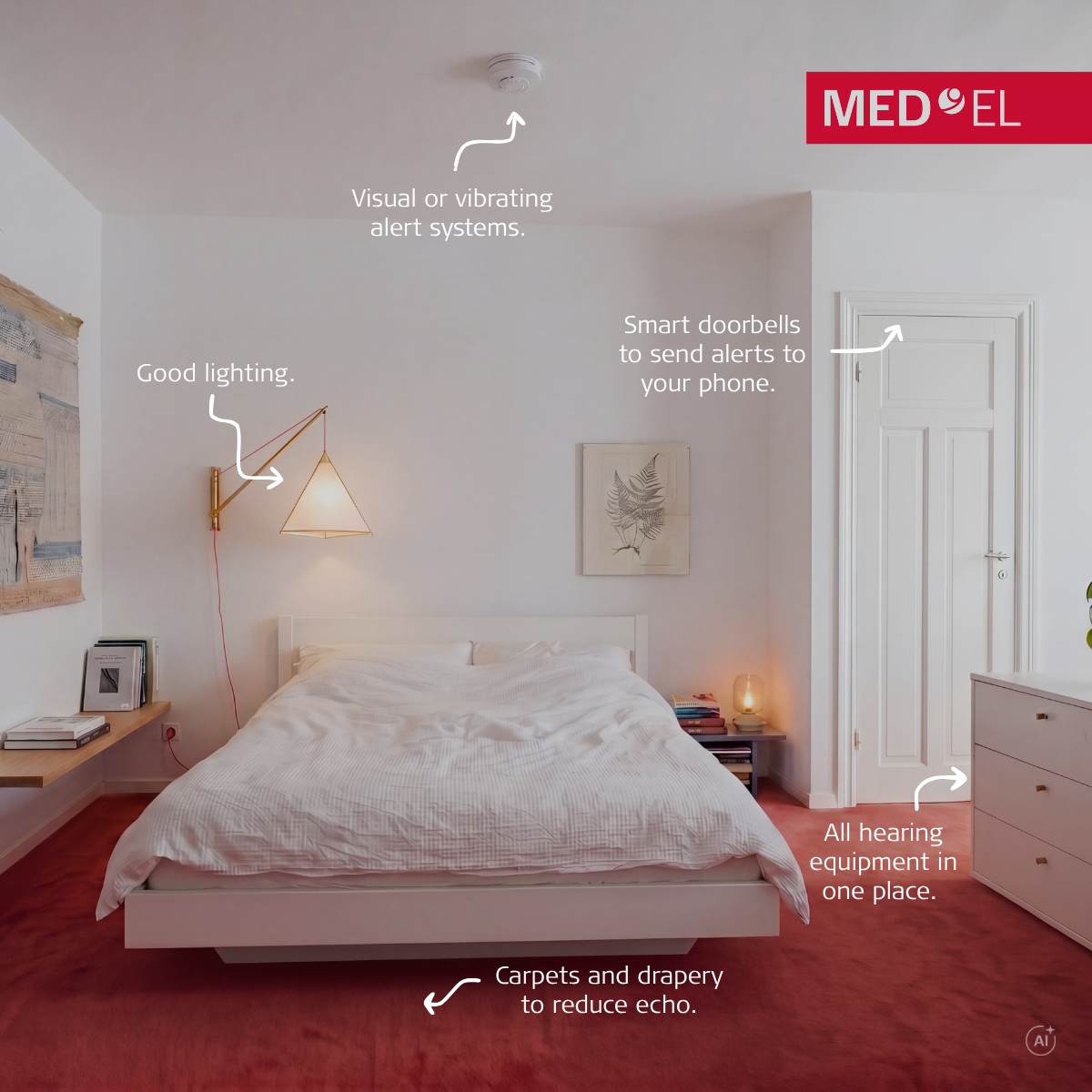
- Smart Smoke Alarms: These alarms can be linked to visual strobes or vibrating devices, ensuring that a fire emergency is immediately communicated. Many modern systems can also send alerts directly to a smartphone.
- Vibrating Alarm Clocks: These devices can wake individuals without auditory cues, ensuring they do not oversleep and can maintain their daily routines.
- Smart Doorbells and Intercoms: These systems can alert recipients to visitors through visual indicators on a smartphone app or a dedicated receiver, preventing missed deliveries or unexpected guests. Some systems also offer two-way audio communication, allowing for immediate interaction.
The development of these technologies has been driven by the increasing need for accessible solutions for individuals with diverse sensory needs. The integration of Internet of Things (IoT) technology has enabled a new generation of smart home devices that can be customized to provide notifications through multiple modalities. For example, a smart doorbell can be configured to trigger a flashing light in the living room and send a push notification to a smartphone when someone is at the door, offering a robust solution for individuals who might miss a traditional doorbell chime.
These systems are particularly valuable during periods when the audio processor is removed, such as during sleep or while swimming. By providing alternative channels for crucial alerts, they ensure that the individual remains connected to their environment and can respond promptly to important events. The proactive adoption of such technologies can significantly enhance a sense of security and self-reliance.
Organizing Hearing Equipment for Convenience and Preparedness
A final, yet significant, aspect of creating a hearing-friendly home environment involves meticulous organization of hearing equipment. Cochlear implant systems, like any complex technological device, require regular maintenance and charging. Misplacing essential components can lead to disruption and stress.
Establishing a dedicated space for all hearing-related items is a practical and effective strategy. This designated area should ideally be easily accessible and include:

- Charging Stations: Ensuring that battery chargers for audio processors and other accessories are always plugged in and ready for use.
- Drying Systems: For those who use their processors in humid conditions or sweat heavily, a dedicated drying system is crucial for device longevity.
- Backup Equipment: Storing spare batteries, microphones, or even a backup audio processor in a secure and easily identifiable location.
- Cleaning Supplies: Keeping cleaning tools and solutions for the audio processor and external components readily available.
This organized approach minimizes the risk of losing or damaging essential equipment. It also streamlines the process of putting on and taking off the audio processor, reducing the cognitive load associated with managing the technology. A well-organized system can contribute to a smoother daily routine and greater confidence in the reliable functioning of the hearing implant system.
The implications of these home adjustments extend beyond mere convenience. By actively creating a more acoustically supportive and visually accessible living space, individuals with hearing loss, including cochlear implant recipients, can experience a marked improvement in their ability to communicate, engage socially, and feel secure in their own homes. This proactive approach empowers individuals to maximize the benefits of their hearing technology and live more fulfilling lives.
About the Author:
Natalie Teakle is a Speech and Language Therapist and a Rehabilitation Manager at MED-EL. She provides training and mentoring support globally for professionals working in the field of hearing loss and hearing implants. Her expertise lies in helping individuals adapt to and thrive with hearing implant technology, with a strong emphasis on practical strategies for daily living.