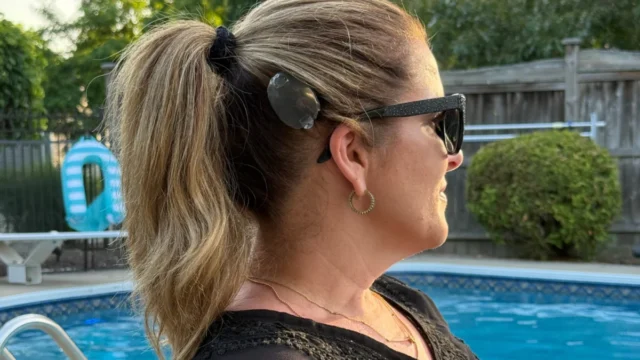
The pursuit of natural hearing is a central tenet in the development of cochlear implant technology. While early iterations focused on restoring audibility, the evolution of the field has increasingly emphasized the quality of sound perception and its seamless integration into a user’s life. Anatomy-based fitting represents a significant leap in this direction, moving beyond generic fitting protocols to a highly individualized calibration. This personalized approach aims to replicate the tonotopic organization of the natural cochlea, where different frequencies are processed at specific locations. By precisely mapping sound frequencies to the physical locations of the electrode array within a user’s unique cochlear anatomy, ABF seeks to optimize the clarity, naturalness, and overall comfort of the auditory signal.
The Genesis of Anatomy-Based Fitting
The development of ABF stems from a deep understanding of the intricacies of the human auditory system and the technological advancements in medical imaging and signal processing. Traditional cochlear implant fitting often relies on standardized maps, which, while effective, may not fully account for the unique variations in individual cochlear structures and electrode insertion depths. Recognizing this limitation, MED-EL embarked on developing a method that could bridge this gap.
The process begins with post-operative imaging, typically high-resolution CT scans, which provide a detailed three-dimensional map of the individual’s cochlea. This anatomical data is then integrated with MED-EL’s proprietary OTOPLAN software. OTOPLAN analyzes the imaging data, precisely identifying the location and orientation of the implanted electrode array. This detailed anatomical information is crucial for the audiologist. It allows them to move beyond generalized frequency maps and instead assign specific frequency ranges to the electrode contacts based on their actual physical position within the cochlea. This precision ensures that sounds are delivered to the auditory nerve in a manner that more closely mimics natural hearing.
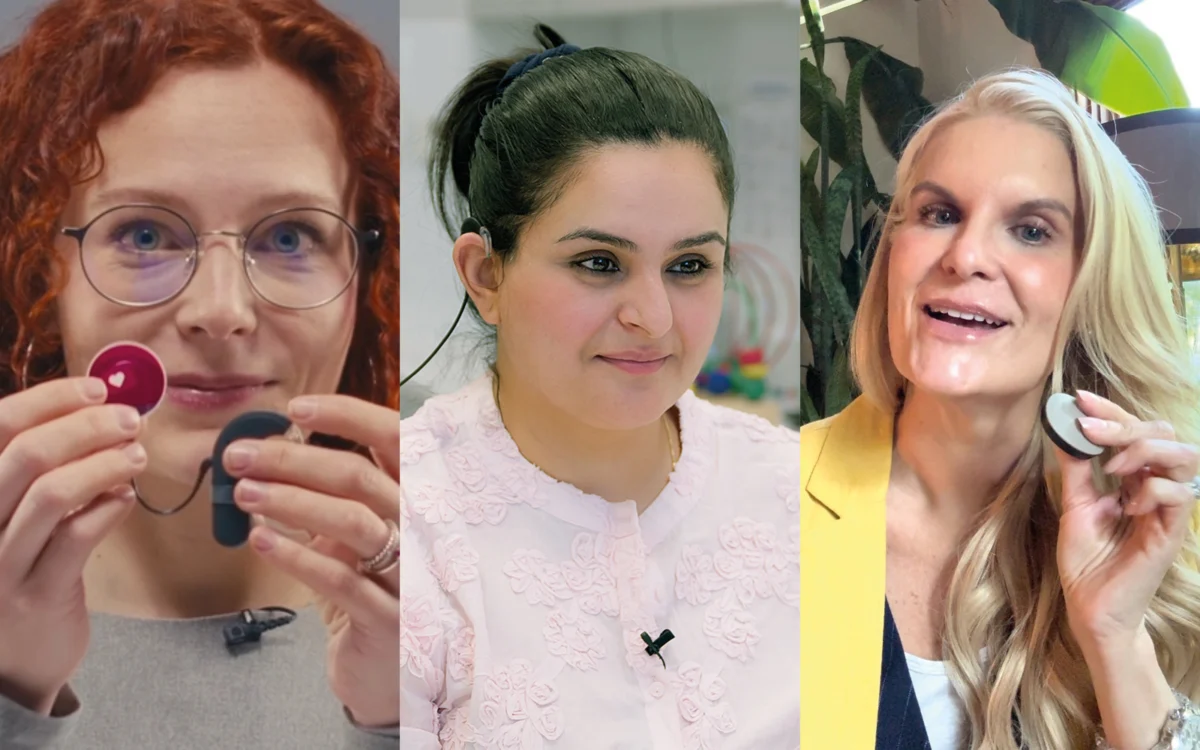
User Journeys: Mariia, Nandini, and Tracie
The impact of ABF is best understood through the lived experiences of its users. Mariia, a neuroscientist from Russia who uses bilateral cochlear implants, had years of experience with conventional fittings before transitioning to ABF. Her initial motivation was to refine her auditory perception, particularly concerning her own voice, which had always sounded slightly “off” despite previous adjustments.
“For years, my own voice had this subtle, almost imperceptible disconnect,” Mariia explained. “It wasn’t jarring, but it was a constant reminder that my hearing wasn’t fully natural. Switching to anatomy-based fitting was a revelation. Suddenly, my voice sounded like me again. It was a profound sense of relief and familiarity. Music, too, felt fuller, richer. ABF didn’t feel like a miracle cure; it felt like the removal of the last barrier to truly natural hearing, replacing it with an effortless ease I hadn’t experienced before.”
Nandini, a bimodal user from the UK with a history of lifelong progressive hearing loss, found ABF offered immediate and tangible improvements. Bimodal hearing involves using a cochlear implant in one ear and a hearing aid in the other, a configuration that often requires careful calibration to ensure optimal integration of sound. For Nandini, ABF smoothed out the auditory experience significantly.
“Before ABF, sounds could sometimes feel a bit tinny or robotic,” Nandini recounted. “It often required a significant cognitive effort to process. With ABF, the sound became noticeably smoother, less artificial, and much easier on my brain. It wasn’t just about the clarity of the sound; it was about how listening felt. It was a sense of relief, as if my auditory system could finally relax and function more efficiently. The difference was palpable, impacting my overall well-being and reducing listening fatigue.”
Tracie, who experienced sudden single-sided deafness in the US, offers a unique perspective. Initially, after months on a default fitting map, the transition to ABF required a period of adjustment and renewed effort. However, she persisted, recognizing the potential for enhanced integration with her remaining natural hearing ear.
“There was a brief period where it felt like a slight reset, and I had to actively re-learn some listening strategies,” Tracie shared. “But I trusted the process because I could sense the underlying improvement. Over time, ABF allowed my cochlear implant to synchronize much better with my natural ear. The comfort level increased dramatically, and the sound quality became something I’d describe as truly natural. It wasn’t just about hearing more; it was about hearing in a way that felt integrated and harmonious.”
The Science Behind the Natural Sound
Anatomy-based fitting fundamentally redefines how sound is processed by a cochlear implant. In natural hearing, the cochlea functions as a frequency analyzer, with different regions responsible for processing different pitches. This tonotopic organization is critical for understanding speech and appreciating the nuances of music. Traditional cochlear implant fittings often approximate this organization by assigning frequency bands to electrode contacts based on their general position along the array.
ABF, however, elevates this by utilizing precise anatomical data. The post-operative imaging, coupled with OTOPLAN software, allows audiologists to determine the exact depth and location of each electrode contact within the individual’s cochlea. This allows for a highly personalized frequency allocation. For example, if an electrode contact is found to be positioned in a region of the cochlea that naturally corresponds to high frequencies, ABF will ensure that the sound signal coded for those high frequencies is delivered through that specific contact. This precise alignment minimizes the distortion and cognitive load often associated with less precise fittings.
Data from MED-EL trials indicate that users of ABF report significant improvements in speech understanding, particularly in noisy environments, and a greater appreciation for music. While specific clinical trial data is often proprietary, anecdotal evidence from users and audiologists consistently points to enhanced spectral resolution and a more natural pitch perception. The ability to distinguish subtle variations in pitch and timbre is crucial for enjoying music and for accurately interpreting the nuances of human speech.
Moments of Revelation: The "Wow" Factor
The impact of ABF often manifests in unexpected yet deeply meaningful moments. For Mariia, the most striking revelation was the sound of her own voice. “Hearing myself and thinking, ‘That’s me,’ was a significant ‘wow’ moment,” she stated. “You hear your own voice constantly, so even a minor discrepancy can be noticeable. ABF eliminated that for me. I also noticed that sounds on my newly implanted side felt closer to natural much sooner than with my previous fitting.”
Nandini’s “wow” moment was sensory and detailed. “I remember distinctly hearing a can of soda being opened and not just the pop, but the fizz – the tiny bubbles, the texture, the intricate details I had almost forgotten existed,” she recalled. “The sound world became less artificial, less robotic, and more genuinely natural.”
Tracie’s transformative experience occurred in a challenging acoustic environment. “I was in a loud, crowded place, and instead of being overwhelmed by a cacophony of layered sounds, I noticed my brain actively beginning to organize it,” Tracie explained. “It shifted from being an exhausting experience to something purposeful – an opportunity to build new auditory skills and confidence. That was my ‘wow’ moment, realizing the potential for my hearing to not just cope, but to thrive.”
Adaptation and the Importance of Brain Plasticity
While ABF offers a sophisticated fitting approach, it is crucial to understand that it is not an instant solution for everyone. The brain plays a pivotal role in processing auditory information, and adapting to a new or significantly altered soundscape requires time and effort. MED-EL emphasizes that ABF is a highly individualized fitting, but its full benefits are realized through a process of auditory rehabilitation.
Mariia, for instance, adapted within days, finding the transition remarkably smooth. Nandini, on the other hand, felt she reached her optimal hearing level over several months, a testament to the brain’s capacity for learning and neuroplasticity. Tracie’s experience highlights the necessity of active engagement; her initial adjustment period demanded commitment and practice. This variability underscores the importance of patience and consistent effort from users. The brain’s ability to rewire and adapt to new auditory inputs is a key factor in maximizing the benefits of any cochlear implant fitting.
The Enduring Value of Personalized Hearing
The consistent recommendation of ABF by users like Mariia, Nandini, and Tracie stems from its ability to foster a deeper, more positive relationship with sound. It moves beyond mere access to auditory information to enhancing the overall quality of life through improved communication, increased confidence, and richer experiences.
The key advantages highlighted by users include:
- Enhanced Naturalness: Sounds are perceived as more realistic, less artificial, and better aligned with expectations.
- Improved Comfort: Reduced listening fatigue and a more relaxed auditory experience, particularly in challenging environments.
- Greater Confidence: Increased assurance in social settings, professional interactions, and everyday communication.
- Deeper Music Appreciation: The ability to discern more nuances and enjoy music more fully.
For individuals willing to invest in the adaptation process, ABF offers a pathway to a more rewarding and personalized hearing journey. This approach acknowledges that hearing is not just a mechanical process of sound reception but a complex interplay between technology and the individual’s unique auditory processing capabilities.
A Future of Tailored Auditory Experiences
At its core, anatomy-based fitting embodies the principle that hearing solutions should be as unique as the individuals they serve. By integrating cutting-edge imaging technology with sophisticated software and a deep understanding of cochlear physiology, MED-EL is pioneering a future where cochlear implantation offers a hearing experience that is not only functional but feels truly natural.
For Mariia, Nandini, and Tracie, this shift has translated into tangible improvements in how they communicate, connect with their environment, and experience the world. The journey with ABF underscores a fundamental truth: sometimes, the most profound change is not simply hearing more, but hearing in a way that finally feels intrinsically right. This personalized approach to hearing restoration holds immense promise for further enhancing the lives of cochlear implant recipients worldwide.