
The research team, spearheaded by Dr. Andrew Sommerlad and Puyu Shi from UCL Psychiatry, conducted an extensive meta-analysis of data spanning 28 global studies. Their analysis included 2,409 participants, categorizing them into groups based on whether they exhibited mild cognitive impairment (MCI) or various forms of dementia, primarily Alzheimer’s disease and frontotemporal dementia (FTD). The results provided a nuanced map of how social cognition shifts as the brain ages and diseases progress, identifying a specific divergence between the ability to understand thoughts (cognitive empathy) and the ability to share feelings (emotional empathy).
The Nuances of Social Cognition in Neurodegeneration
To understand the significance of the UCL findings, it is necessary to distinguish between the various domains of social cognition. Broadly, social cognition encompasses the mental processes required to perceive, interpret, and respond to social signals. This includes facial emotion recognition—the ability to identify happiness, sadness, or anger in others—and "Theory of Mind," which refers to the capacity to infer the mental states, intentions, and beliefs of others.
The UCL study confirmed that these specific domains undergo a progressive and devastating decline. Patients with Alzheimer’s disease performed significantly worse in recognizing facial expressions and navigating Theory of Mind tasks than their peers with mild cognitive impairment. This decline is a hallmark of the disease, often leading to social withdrawal as patients struggle to follow the "unspoken rules" of conversation and social interaction.
However, when the researchers turned their attention to emotional empathy—the visceral, affective response to someone else’s emotional state—a different pattern emerged. Surprisingly, those with Alzheimer’s disease scored slightly higher on empathy measures than those in the earlier risk stage of mild cognitive impairment. This suggests that while an Alzheimer’s patient might not cognitively "know" why a loved one is crying (due to a loss of Theory of Mind), they are still capable of "feeling" the sadness and responding with a genuine emotional resonance.
Methodology and the Scope of the Meta-Analysis
The strength of these findings lies in the breadth of the data analyzed. By reviewing 28 independent studies conducted across various international contexts, the researchers were able to mitigate the limitations of smaller, single-site trials. The total cohort of 2,409 participants provided a robust statistical foundation for their conclusions.
The participants were largely divided into two categories:
- Mild Cognitive Impairment (MCI): Often considered the prodromal (preliminary) phase of dementia, MCI is characterized by memory loss or cognitive lapses that are more severe than normal aging but do not yet prevent a person from performing daily activities.
- Dementia: Specifically Alzheimer’s disease and frontotemporal dementia. Alzheimer’s is the most common cause of dementia, characterized by amyloid plaques and tau tangles, while frontotemporal dementia primarily affects the frontal and temporal lobes, often leading to drastic personality changes.
By comparing these groups, the researchers could create a "chronology of decline." They found that while cognitive social skills drop sharply as a patient moves from MCI to Alzheimer’s, emotional empathy does not follow this downward trajectory. In fact, the study noted that the largest effect size for emotional empathy reported a "heightened emotional reactivity" to negative stimuli among Alzheimer’s patients. This suggests that the emotional "volume" may actually be turned up even as the logical "filters" of the brain are stripped away.
Biological Context: The Preservation of the Emotional Brain
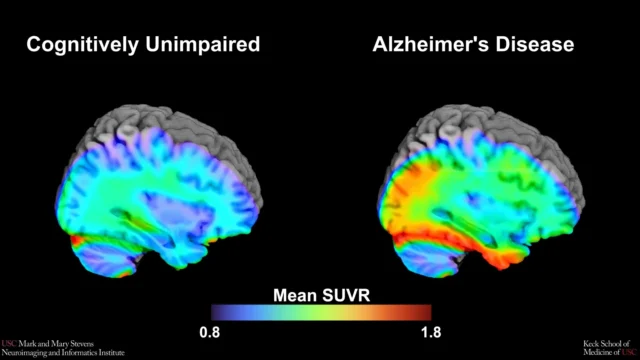
While the UCL study focused on behavioral data and cognitive scores, the results align with what neuroscientists understand about the biological progression of Alzheimer’s disease. In the early and middle stages of Alzheimer’s, the neurodegeneration typically begins in the hippocampus (responsible for memory) and moves into the temporal and parietal lobes. The prefrontal cortex, which governs complex reasoning and "Theory of Mind," also begins to atrophy.
However, the areas of the brain associated with basic emotional processing, such as the amygdala and parts of the limbic system, are often preserved longer than the regions responsible for high-level executive function. Furthermore, the "heightened emotional reactivity" observed in the study may be a result of the loss of the prefrontal cortex’s inhibitory control. In a healthy brain, the prefrontal cortex regulates emotional responses, preventing us from becoming overwhelmed by others’ feelings. As these "brakes" fail in Alzheimer’s, the patient may become more susceptible to emotional contagion, feeling the pain or joy of others more acutely because they no longer have the cognitive tools to modulate that input.
Clinical Implications and Therapeutic Opportunities
The preservation of empathy has profound implications for how healthcare providers and families interact with dementia patients. Dr. Andrew Sommerlad emphasized that this finding represents a unique opportunity for psychological intervention.
"We found compelling evidence of preserved, or potentially even increased emotional empathy in people with Alzheimer’s disease," Dr. Sommerlad stated. "This finding could present an opportunity for researchers and health professionals to leverage these empathy skills in psychological supports for people with Alzheimer’s disease, to help them to build and maintain social connections."
Traditional dementia care often focuses on what is lost—memory, logic, and physical autonomy. By pivoting to what is retained, caregivers can foster deeper emotional bonds. For example, music therapy, animal-assisted therapy, and reminiscence therapy all rely heavily on emotional resonance rather than factual recall. Knowing that a patient still possesses a high capacity for empathy allows therapists to design interventions that emphasize shared emotional experiences, potentially reducing the agitation and depression often associated with the disease.
The Burden on Caregivers and the Risk of "Emotional Overload"
While the retention of empathy is a positive finding in terms of human connection, the study also highlights a potential challenge: the difficulty of emotion regulation. First author Puyu Shi noted that impairments in other areas of social cognition can lead to "distress for both patients and caregivers."
If a patient is highly sensitive to emotions (increased empathy) but lacks the cognitive ability to understand the context of those emotions (decreased Theory of Mind), they may become easily overwhelmed. A caregiver’s stress or frustration might be "picked up" by the patient through emotional empathy, leading to a feedback loop of anxiety.
"Families of people with dementia should be supported so that they can understand and adapt to changes in their loved one’s demeanour," Shi commented. Education for families is crucial so they realize that while their loved one may not remember their name or the date, they are still deeply attuned to the emotional "vibe" of the household.
A Comparative Look at Frontotemporal Dementia
The study also provided important comparative data regarding frontotemporal dementia (FTD). Unlike Alzheimer’s, where emotional empathy appears preserved, FTD is often characterized by a profound loss of empathy early in the disease’s progression. This is because FTD directly attacks the frontal lobes, which are essential for both cognitive and emotional social processing.
By highlighting the difference between Alzheimer’s and FTD, the UCL research provides clinicians with better diagnostic clues. A patient who remains highly sensitive and emotionally "present" despite severe memory loss is more likely to be suffering from Alzheimer’s, whereas a patient who becomes suddenly cold, indifferent, or socially inappropriate may be exhibiting the hallmarks of FTD.
Future Research and the Path Toward Early Diagnosis
Despite the significant findings, the researchers cautioned that more longitudinal data is required. Most of the studies analyzed were cross-sectional, meaning they looked at different people at different stages rather than following the same individuals over many years.
Puyu Shi’s ongoing PhD work at the UCL Division of Psychiatry, funded by Alzheimer’s Research UK, aims to fill this gap. The goal is to track how social abilities change in real-time, starting from healthy aging through to the various stages of dementia. This could lead to the development of more sensitive social-cognitive tests.
"There remains a need for better tests that can enable early identification of these social cognitive impairments," added Dr. Sommerlad. Current diagnostic tools are heavily weighted toward memory and orientation (e.g., "What day is it?" or "Repeat these three words"). Integrating social cognition assessments—measuring how a person interprets a smile or reacts to a story—could provide a much earlier warning system for neurodegeneration, potentially years before major memory loss occurs.
Conclusion: Redefining the Alzheimer’s Narrative
The UCL study serves as a vital reminder that a diagnosis of Alzheimer’s is not the end of a person’s humanity. The preservation of emotional empathy suggests that the "heart" of the patient often outlasts the "mind." In an aging global population where dementia rates are expected to triple by 2050, shifting the narrative from total cognitive erasure to "partial preservation" is essential for dignity and care.
By recognizing that Alzheimer’s patients can still feel, empathize, and connect, society can move toward a more compassionate model of care—one that prioritizes emotional presence and social inclusion. As research continues to unravel the mysteries of the demented brain, the discovery of this resilient empathy provides a rare and hopeful bridge between those living with the disease and the world around them.