The Evolution of Training Methodology: A Historical Perspective
The trajectory of industrial training over the last quarter century reflects a broader technological progression. In the early 2000s, organizations began moving away from paper-based manuals and toward computer-based training (CBT) to reduce costs and standardize curriculum delivery. By 2010, the emergence of mobile devices allowed for "just-in-time" learning, where workers could access safety guidelines via smartphones while on the job site.
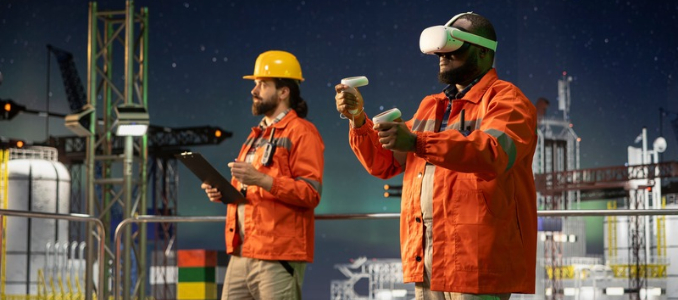
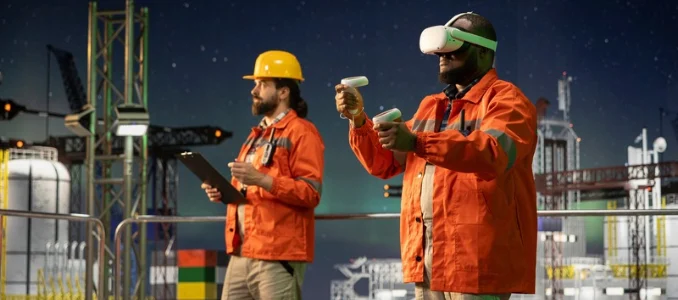
The current decade has seen the rise of immersive technologies. VR headsets allow workers to navigate simulated dangerous environments without actual risk, while AR provides heads-up displays that overlay safety instructions onto physical machinery. Despite the sophistication of these systems, safety professionals are noting a critical realization: simulated knowledge does not always translate into physical competence. The pedagogical "gap" between understanding a procedure in a virtual environment and executing it under the physiological stress of a real-world emergency remains a significant challenge for safety officers.
The Knowledge-Application Gap
A critical point of concern for safety managers is the distinction between cognitive recognition and psychomotor skill acquisition. Cognitive knowledge allows a worker to identify a hazard, but psychomotor skill is required to mitigate it. This discrepancy was highlighted in a landmark 2017 study published in Infection Control and Hospital Epidemiology, which examined health care workers’ performance with personal protective equipment (PPE). The study found that even among staff who had completed standardized safety training, 27 percent made errors while donning (putting on) PPE, and, perhaps more alarmingly, 100 percent of participants made errors during the doffing (removal) process.
This data suggests that while digital training can be effective for theoretical learning, it often fails to instill the muscle memory and procedural discipline required for complex physical tasks. When a worker is under pressure—such as in a fire, a chemical leak, or a structural collapse—the ability to perform a task correctly is often hampered by the lack of prior physical practice. The brain’s ability to recall information is mediated by the context in which it was learned; therefore, learning a task in a 2D or virtual environment may not prime the nervous system to handle the sensory inputs of a physical work environment.

The Science of Engagement and Retention
Educational psychology consistently demonstrates that the efficacy of a training program is directly proportional to its level of interactivity. Passive learning—defined as reading, watching videos, or listening to lectures—is statistically the least effective method for long-term knowledge retention and skill application. In contrast, active learning, which involves physical manipulation of tools, behavioral modeling, and direct feedback loops, creates stronger neural pathways.
A 2020 systematic review regarding PPE protocols underscored this reality. The research indicated that workers who underwent training that included behavioral modeling (watching an instructor demonstrate a task, then performing it themselves) and interactive feedback sessions performed significantly better than those trained via digital or paper-based methods alone. These findings suggest that the human element of training—where a mentor can correct a worker’s posture, grip, or sequence of movement in real-time—is a safety requirement that algorithms cannot currently replicate.
Striking the Balance: Integrating Digital and Physical Approaches
The current consensus among occupational health and safety experts is not to reject technology, but to deploy it strategically. VR and AI-driven platforms are exceptional at teaching risk identification, standard operating procedures (SOPs), and theoretical decision-making. For example, AI can simulate thousands of disaster scenarios to teach a trainee how to prioritize tasks, while AR can help visualize complex machine components that are otherwise hidden from view.

However, once the theoretical baseline is established, organizations must transition to "tried and true" hands-on methodologies. This includes:
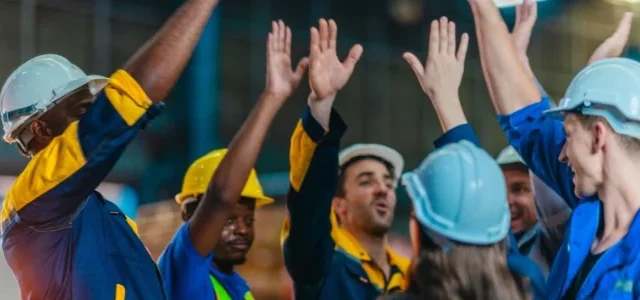
- Physically Staged Simulations: Creating mock-ups of job sites where workers handle actual tools and equipment.
- Behavioral Modeling: Utilizing master tradespeople or safety leads to demonstrate, observe, and correct workers’ physical techniques.
- Active Feedback Loops: Creating an environment where trainees are encouraged to ask questions and receive immediate, live critiques of their movements.
By adopting a hybrid model, organizations can leverage the efficiency of digital tools to cover broad safety mandates while preserving the rigorous, physical practice necessary for high-risk operations.
Broader Implications for Industry Safety
The implications for this findings are far-reaching for sectors such as energy, manufacturing, and public health. Relying solely on digital training platforms, particularly for complex tasks, may lead to a "false sense of competency." If a worker believes they are prepared because they successfully navigated a VR simulation, they may be less vigilant when performing the same task with live electricity, heavy machinery, or toxic substances.

Furthermore, as the workforce demographics shift and institutional knowledge is lost to retirement, the mentorship component of in-person training becomes even more vital. The "tacit knowledge" passed down through years of hands-on work—the feel of a machine, the subtle signs of equipment fatigue, and the unspoken rhythm of a well-coordinated team—is not currently programmable into an AI interface.
The Future of Occupational Training
As we look toward the latter half of the 2020s, the role of the safety trainer is evolving from a lecturer to a facilitator of "blended" learning. The technology will continue to advance, likely leading to more realistic haptic feedback in VR and more responsive AI assistants. Yet, the core of safety remains rooted in the physical world. The goal for safety professionals must be to ensure that workers are not just informed, but capable.
True safety excellence is achieved when the digital efficiency of the modern age is tempered by the human necessity of physical practice. Organizations that prioritize hands-on training for high-risk procedures will continue to see fewer accidents, reduced injury rates, and a more resilient workforce. The digital age provides the tools to learn, but the physical environment provides the context to master. Balancing these two worlds is the definitive challenge—and opportunity—for the future of occupational health and safety.