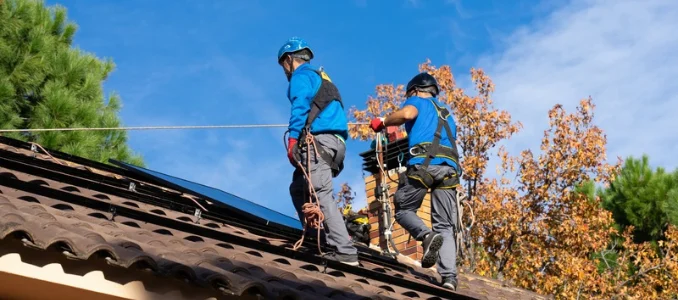

The inspection, triggered by reports of unsafe practices, revealed that workers were operating on the roof of a two-story residence without the required safety protocols. Although the employees were equipped with full-body harnesses, these safety devices remained unattached to any anchor point. This oversight left the workers exposed to potential falls of up to 19 feet. Under Oregon’s stringent workplace safety regulations, employers are legally mandated to implement, install, and enforce the use of fall protection systems whenever employees are working at heights of six feet or greater.
A Chronology of Non-Compliance
The incident in Molalla serves as a critical data point in a series of enforcement actions against Luka’s General Construction. According to Oregon OSHA records, the company’s history of non-compliance is extensive. The recent citations for fall protection and improper ladder usage are classified as "fifth repeat" violations. This designation is reserved for companies that have failed to remediate previously identified hazards despite repeated warnings and monetary penalties.

The timeline of these infractions paints a picture of a company struggling to integrate safety culture into its operational model. In less than two years, the firm has been cited six times for the same specific safety failures. The latest round of fines—$167,294 for fall protection deficiencies and $138,146 for ladder safety violations—reflects a calculated increase in penalties intended to compel compliance. Additionally, a first-repeat citation regarding a lack of certification records—which are required to prove that employees have been trained on identifying and mitigating fall hazards—added another $12,147 to the total bill.
The ladder violation was particularly illustrative of the site’s systemic issues. Inspectors found that the ladder utilized to access the roof failed to extend at least three feet above the landing surface. This requirement is a foundational standard in construction safety, designed to provide workers with a secure handhold when transitioning between a ladder and a roof. The absence of such basic safety infrastructure, coupled with the lack of documented training, suggests that the hazards were not merely accidental oversights but symptomatic of a broader failure in supervisory oversight.

The Lethal Reality of Construction Falls
The importance of the regulations that Luka’s General Construction ignored cannot be overstated. According to the Bureau of Labor Statistics (BLS), falls, slips, and trips remain the leading cause of death in the construction industry. Each year, thousands of workers suffer debilitating injuries or lose their lives due to gravity-related accidents that are almost entirely preventable through the use of proper equipment and adherence to established safety standards.
In the context of the Oregon OSHA standards, the six-foot threshold for fall protection is a bright-line rule. When a worker falls from a height of 19 feet, as was the case at the Molalla site, the force of impact is sufficient to cause catastrophic injury or fatality. By neglecting to anchor the harnesses, the company essentially rendered the workers’ protective gear useless, creating a false sense of security while leaving them vulnerable to a lethal drop.

Regulatory Enforcement and Penalty Structures
The significant increase in the financial penalties issued to Luka’s General Construction is a direct result of Oregon OSHA’s "multiplier" policy for repeat offenders. When a company demonstrates a refusal or inability to correct safety violations after being cited, the state agency systematically increases the monetary stakes. This approach is designed to ensure that the cost of violating safety laws exceeds the cost of implementing the necessary safety equipment and training programs.
The company has taken steps to rectify the specific fall protection and ladder violations identified at the Molalla site, as mandated by the agency. However, the requirement to produce proof of worker training remains an active order that the firm must fulfill. As of the latest update, Luka’s General Construction has exercised its legal right to appeal the citations. Under Oregon law, employers have a 30-day window following the receipt of a citation to file an appeal, a process that allows for a formal review of the evidence and the severity of the penalties.

The Role of Preventive Consultation
Despite the adversarial nature of these citations, Oregon OSHA emphasizes that its primary goal is the prevention of workplace injuries rather than the collection of fines. The agency maintains a robust consultation program that offers professional guidance to businesses on how to improve their safety protocols. These consultations are strictly independent of the enforcement division; they are free of charge, and participating employers are not subject to citations or penalties for hazards identified during the process.
For contractors operating in high-risk environments, such as residential roofing, utilizing these resources can be the difference between a productive work season and a tragedy. The service, reachable via the agency’s toll-free line, provides companies with a roadmap for compliance, helping them navigate the complexities of federal and state safety regulations before inspectors arrive on site.

Implications for the Construction Sector
The case of Luka’s General Construction serves as a cautionary tale for the broader construction sector. In an industry where profit margins are often thin and project timelines are tight, there is a recurring temptation to prioritize speed over safety. However, the legal and financial repercussions of such decisions are becoming increasingly severe. Beyond the immediate fiscal impact of nearly $320,000 in fines, repeat violations often lead to increased scrutiny from state regulators, potential loss of insurance coverage, and damage to professional reputation.
Industry experts note that a "compliance-only" mindset is rarely sufficient for long-term success. Instead, top-tier contractors invest in robust safety management systems that include regular, documented training, the procurement of high-quality fall protection equipment, and a culture where workers feel empowered to stop work if they believe their environment is unsafe.

As the construction industry continues to face labor shortages and increasing pressure to complete projects, the role of regulatory bodies like Oregon OSHA remains critical. By enforcing clear, evidence-based standards, the agency provides a necessary check on firms that might otherwise ignore the well-being of their workforce. The ongoing appeal process for Luka’s General Construction will be monitored closely by stakeholders in the industry, as it may set a precedent for how the state handles firms with chronic histories of non-compliance.
Ultimately, the goal of these regulations is to ensure that every worker returns home at the end of their shift. The failure to secure a harness or to extend a ladder properly is not just a regulatory infraction; it is a breach of the fundamental trust between employer and employee. As this case moves forward, the focus remains on whether the company will move beyond temporary corrections and establish a sustainable safety culture that prevents such dangerous conditions from ever arising again. The outcome of the appeal will determine the final financial toll, but the true cost of these violations—the lives of the workers involved—remains the central concern for regulators and safety advocates alike.