A Chronology of Legal Contention
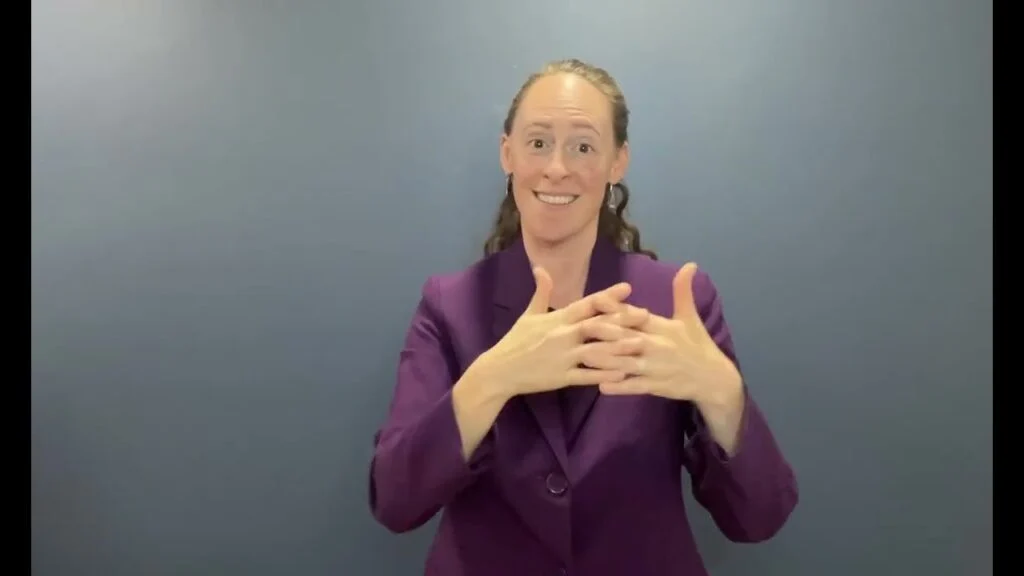
The origins of this specific litigation trace back to early 2025, when the current administration elected to discontinue the provision of dedicated ASL interpreters during publicly announced White House press briefings. This policy reversal prompted immediate alarm among disability rights advocates, who argued that the absence of qualified interpreters created a significant information barrier for the deaf community.
On May 28, 2025, the NAD and Derrick Ford filed a formal complaint, challenging the decision as a violation of the equal access requirements established by federal law. The plaintiffs sought to restore the presence of interpreters, which had become a standard feature of White House briefings following a landmark 2020 ruling in the case of National Association of the Deaf v. Trump. In that instance, the court had mandated the inclusion of ASL services during COVID-19 related briefings, establishing a precedent that the government’s failure to provide such accommodations was discriminatory.
In November 2025, Judge Amir Ali ruled in favor of the plaintiffs, issuing an order requiring the White House to immediately reinstate ASL interpreters for all public press briefings. Judge Ali’s decision reaffirmed the necessity of providing effective communication for deaf and hard of hearing individuals, asserting that the government’s briefings are vital for public awareness and that the omission of ASL services effectively excludes a protected class of citizens from essential democratic processes. The administration subsequently filed an appeal against Judge Ali’s ruling, setting the stage for the upcoming oral arguments in the D.C. Circuit.
The Significance of Equal Access
At the heart of the legal argument is the concept of "equal access." The NAD contends that delayed access—such as relying on delayed transcripts or automated closed captioning, which often suffer from high error rates in live settings—is not equivalent to the real-time, high-fidelity access provided by a qualified ASL interpreter.
For the deaf community, ASL is not merely a tool for communication; it is a primary language with its own distinct grammatical structure. When the White House communicates directly to the American public, the exclusion of ASL serves to marginalize a significant demographic. The NAD emphasizes that in an era of rapid information dissemination, the inability to access presidential briefings in real-time places deaf individuals at a systemic disadvantage compared to their hearing counterparts, who receive information instantly via audio and video broadcasts.
Supporting Data and Legal Precedent
Data from the U.S. Census Bureau and the National Institute on Deafness and Other Communication Disorders (NIDCD) underscores the scale of this issue. With a substantial portion of the population identifying as deaf or hard of hearing, the accessibility of federal communications is a matter of civil rights. Historically, the legal framework for this advocacy rests on the Rehabilitation Act of 1973, which prohibits discrimination on the basis of disability in programs conducted by federal agencies.
The 2020 precedent set during the pandemic served as a catalyst for professionalizing White House communications. Before that ruling, the presence of ASL interpreters at press briefings was inconsistent at best. The pandemic forced the issue into the spotlight, as accurate, real-time information was a matter of public health. Advocates argue that the standard established during that crisis should not be considered a "temporary measure" but rather a baseline for all future executive communications.
Official Statements and Organizational Perspectives
Nicholas Kiego, Chief Executive Officer of the NAD, has been clear regarding the organization’s stance on the upcoming appellate hearing. "This case is about whether Deaf and hard of hearing Americans can receive information from the White House at the same time as everyone else," Kiego stated. The organization maintains that the right to access the executive branch’s messaging is fundamental to civic participation.
The NAD’s Law and Advocacy Center (LAC), which manages the organization’s legal strategy, remains focused on the broader implications of the case. By pursuing impact litigation, the LAC aims to address systemic barriers that go beyond the walls of the White House. The goal is to set a legal standard that forces federal agencies to integrate accessibility into their communication infrastructure from the design phase, rather than treating it as an optional or secondary consideration.
Legal experts following the case note that the administration’s appeal rests on questions of executive discretion and the specific requirements of the Rehabilitation Act. The government has argued that while it strives to be accessible, it must retain flexibility in how it delivers information. The appellate court’s decision will likely hinge on whether the court views the current level of accommodation as "effective communication" under the law, or whether the plaintiffs’ request for a permanent interpreter is a necessary remedy for past and ongoing exclusions.
Broader Impact and Future Implications
The outcome of the October 6, 2026, hearing will have far-reaching consequences for disability rights in the United States. A victory for the NAD would solidify the requirement for ASL interpretation at the highest level of government, creating a mandate that subsequent administrations would be hard-pressed to ignore. Conversely, a reversal of Judge Ali’s ruling could lead to a decline in accessibility standards, potentially emboldening other federal agencies to prioritize cost-cutting or logistical convenience over the civil rights of deaf citizens.
Beyond the specific legal ruling, the case has highlighted the need for greater awareness regarding the technological and human-centric needs of the deaf community. While AI-driven captioning tools continue to advance, advocates consistently argue that they cannot replace the nuance, accuracy, and cultural competency provided by human ASL interpreters. The courtroom debate serves as a public reminder that technological progress must be paired with human rights protections.
Community Engagement and Public Participation
The NAD has encouraged the public to attend the oral arguments, emphasizing the importance of visibility and collective advocacy. For those planning to attend the proceedings at the U.S. Court of Appeals for the D.C. Circuit, the organization advises early arrival due to rigorous security protocols. The presence of the community is seen as a way to demonstrate the sustained public interest in this issue and to show the judiciary that the demand for accessibility remains high.
The work of the NAD is sustained by a robust network of members and donors, reflecting a commitment to civil rights that dates back to the organization’s founding in 1880. As the case proceeds, the organization continues to rely on charitable support to fund the legal costs associated with such high-stakes litigation.
Conclusion
As the date for the oral argument approaches, the focus remains on the fundamental question: Does the executive branch of the United States government have an obligation to provide its official messaging in a format that is fully accessible to its deaf and hard of hearing constituents? The pending decision by the D.C. Circuit will not only define the accessibility standards for the current administration but will also shape the landscape of federal disability law for years to come. The NAD and its allies remain steadfast, viewing this appellate challenge not as a point of retreat, but as an essential step in ensuring that the White House remains truly representative of all Americans, regardless of their linguistic or sensory abilities.
As the legal teams prepare their final briefs and arguments, the deaf community waits with keen interest, knowing that the final verdict will reverberate throughout the halls of government and the lives of millions across the nation. The outcome of this case will stand as a benchmark for how the United States balances the requirements of the executive branch with the civil rights of its citizens.