This groundbreaking research is a direct outgrowth of WSA’s innovative Sound Preference initiative, which was first introduced in April 2026. This comprehensive program was designed with the explicit goal of equipping hearing care professionals (HCPs) with enhanced tools and understanding to better discern how individual patients respond to the myriad of sound processing approaches available in modern hearing aids. The initiative combines cutting-edge research, practical clinical tools, and robust educational resources, all aimed at seamlessly integrating individual listening preferences into the crucial hearing aid selection and fitting process.
Addressing a Long-Standing Challenge in Hearing Aid Adoption
The challenge of ensuring optimal patient satisfaction and sustained use of hearing aids has long been a complex issue within audiology. Despite advancements in technology and fitting protocols, a significant portion of individuals who could benefit from hearing aids either do not adopt them or abandon them shortly after purchase. This phenomenon is often attributed to a disconnect between technical audibility and the subjective listening experience. Patients, even with perfectly fitted devices according to prescriptive targets, can express dissatisfaction if the sound quality does not align with their personal perception of "natural" or "preferred" sound.
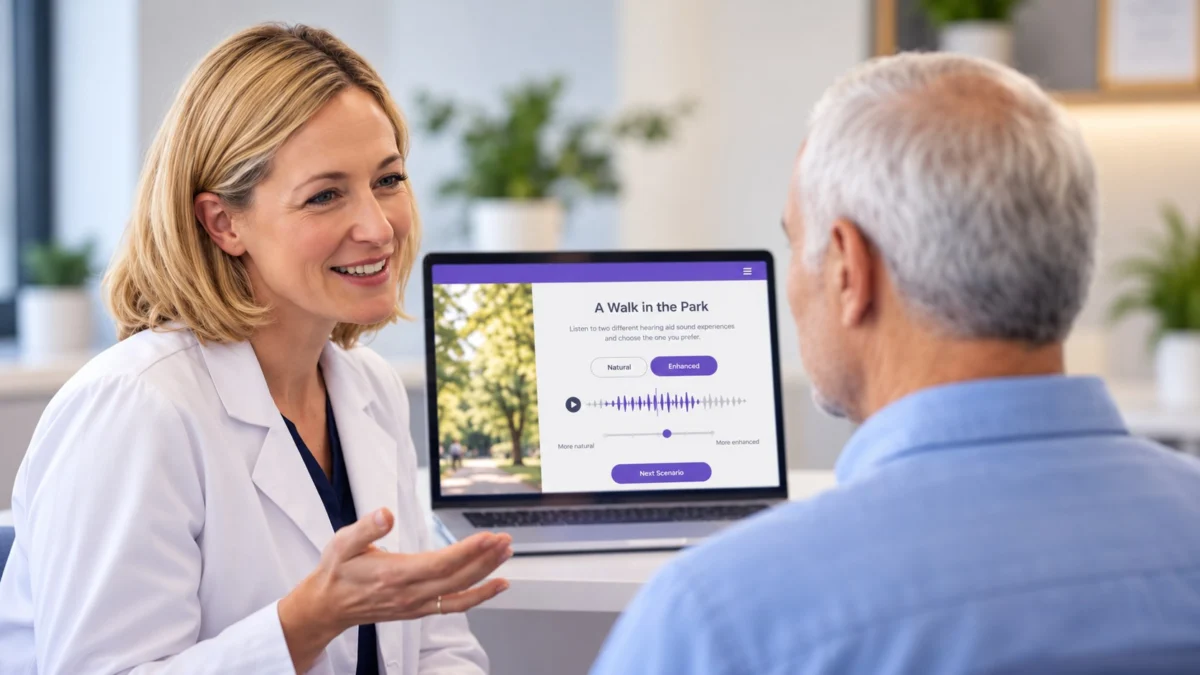
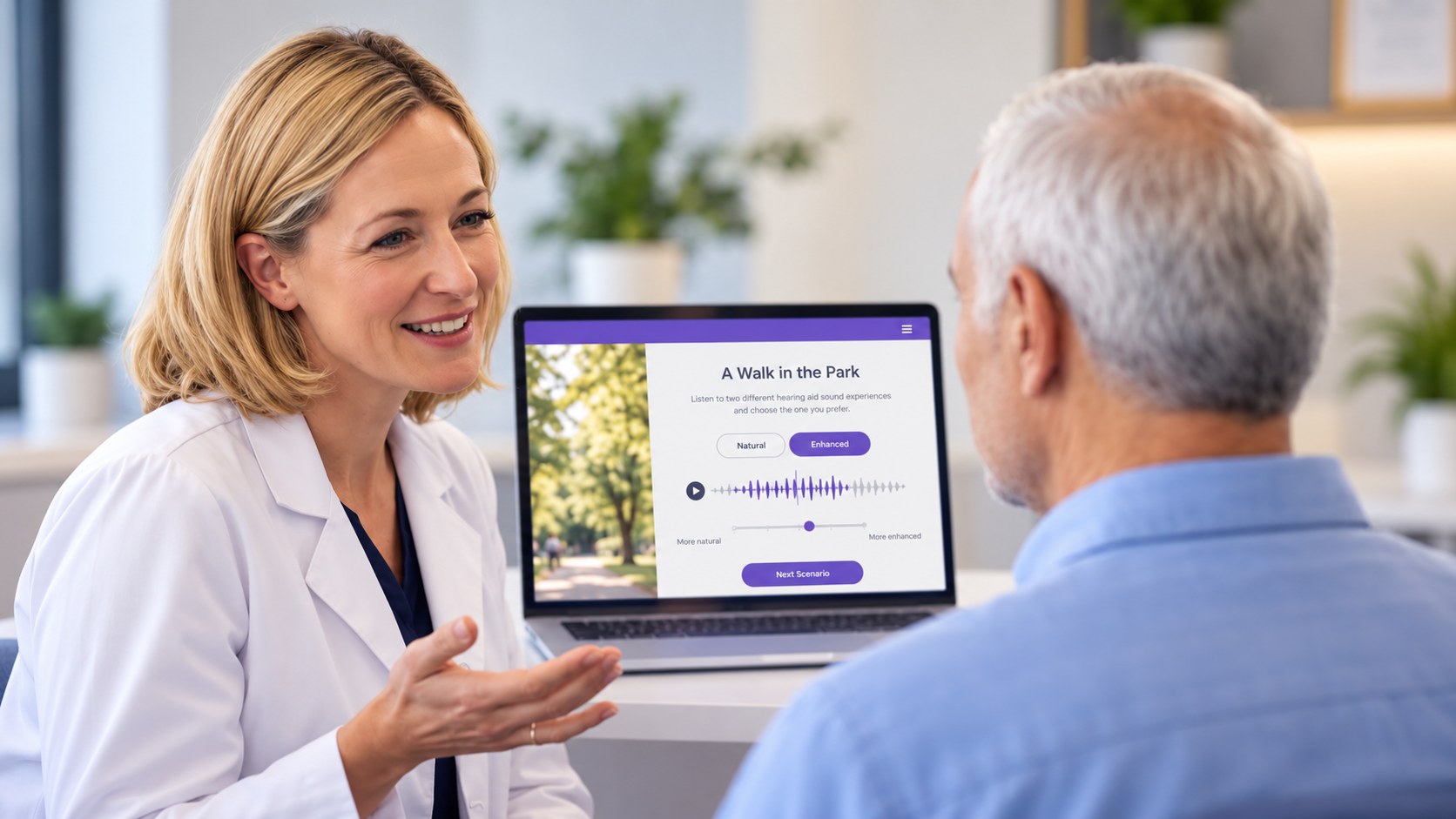
The WSA studies meticulously examined whether empowering patients to actively experience and compare two distinct sound designs – typically categorized as ‘natural’ and ‘enhanced’ – followed by an in-depth discussion with their hearing care professional, could positively influence hearing aid adoption rates. This approach acknowledges that while audiograms provide objective measures of hearing loss, they do not capture the intricate subjective preferences that profoundly impact a user’s acceptance and satisfaction with a hearing aid.
Over a rigorous three-to-four-month period, 63 dedicated hearing care professionals actively participated in these studies. The core methodology involved the use of WSA’s intuitive online Sound Preference tool. This digital platform allows patients to easily compare and contrast natural and enhanced sound designs across a diverse range of five common listening scenarios, from quiet conversations to bustling environments. Crucially, the assessment was designed not to unilaterally dictate the hearing aid recommendation but rather to serve as an informed starting point for a broader, more nuanced conversation. This dialogue encompasses the patient’s unique listening preferences, specific communication needs, lifestyle considerations, and the most appropriate hearing aid options available.
This innovative approach directly reflects a broader industry-wide effort to unravel the enigma of why patients with seemingly identical audiograms can report vastly different experiences and levels of satisfaction with their hearing aids. As highlighted in an earlier "This Week in Hearing" conversation with Dr. Bob Traynor, WSA’s Lise Henningsen eloquently described how patients often receive hearing aids that meticulously meet all prescriptive targets, yet remain profoundly dissatisfied with the overall listening experience. Henningsen elaborated that in many clinical instances, merely switching a patient to a device employing a different sound processing approach can yield a noticeably superior response and higher satisfaction, even when both initial fittings provide appropriate audibility according to standard metrics.
Henningsen underscored that these subtle yet significant differences are intimately familiar to seasoned clinicians worldwide, yet they have historically proven difficult to quantify, measure, or systematically integrate into standardized hearing aid recommendation protocols. She emphasized, “I’ve seen so many clients with similar audiograms and with similar challenges in real-life hearing go with different brands and different sound profiles. This is not news. This is something that every practicing audiologist has seen.” During that same conversation, Henningsen posited that actively enabling patients to identify, articulate, and discuss their preferred sound experience could significantly deepen their involvement in the fitting process, thereby ultimately bolstering hearing aid adoption and long-term adherence. The newly released clinical studies provide robust empirical evidence, lending substantial support to this hypothesis by demonstrating significantly higher conversion rates when individual sound preferences were systematically explored during consultations.
Detailed Findings: Higher Conversion Rates Across Regions
The two pivotal clinical studies yielded consistent and statistically significant improvements in hearing aid conversion rates. The Spanish study, which included a substantial cohort of 1,616 clients, reported a 4.3-percentage-point advantage in hearing aid conversion among those who underwent the Sound Preference assessment. Similarly, the North American study, encompassing 1,598 clients across Canada and the United States, demonstrated an even more pronounced 5.8-percentage-point advantage.
When combining the data from both studies, a total of 1,484 clients experienced the innovative Sound Preference approach, juxtaposed against 1,730 clients who did not. WSA meticulously reported that the overall observed difference in conversion rates was statistically significant, with a p-value of 0.005. This strong statistical significance indicates that the observed increase in conversion rates is highly unlikely to be due to random chance, providing robust evidence for the efficacy of the Sound Preference approach.
Collectively, the studies compellingly demonstrated an approximate 5-percentage-point absolute advantage in hearing aid conversion among clients whose individual sound preferences were systematically explored and discussed during their consultations. It is critical to note that this reported improvement represents an absolute difference in conversion rates, not merely a 5% relative increase. While the research summary does not disclose the underlying baseline conversion percentages for the two groups (those who used the Sound Preference tool versus those who did not), an absolute increase of five percentage points can be highly impactful for clinics and patients alike, potentially translating into thousands more individuals benefiting from hearing care. For instance, if a clinic typically has a 30% conversion rate, a 5-percentage-point increase would raise it to 35%, representing a significant boost in patient adoption.
Patient Preferences Exhibit Significant Diversity
Beyond the improved conversion rates, another crucial finding from the studies concerned the inherent diversity of patient sound preferences. In the Spanish study, approximately 40% of clients expressed either a moderate or strong preference for one of the two distinct sound designs (natural or enhanced). Intriguingly, these preferences were almost evenly divided between the natural and enhanced sound profiles.
These findings are highly consistent with earlier WSA research, which has consistently suggested that sound preference is indeed a measurable and distinct dimension of hearing aid fitting. Furthermore, this body of research underscores that a singular, one-size-fits-all sound processing approach is unlikely to universally appeal to all listeners. This diversity highlights the imperative for personalized fitting strategies that move beyond mere audibility to encompass subjective sound quality.
Clinicians participating in the studies also reported significant perceived benefits from integrating sound preference discussions into their daily appointments. Among the Spanish professionals who engaged with the Sound Preference approach, a remarkable 84% agreed that the method substantially improved the overall clinical experience they could offer to their patients. Moreover, a significant 77% of these professionals believed that the approach directly improved the likelihood of selecting the most appropriate hearing aid for each individual patient. This strong endorsement from clinicians underscores the practical utility and perceived value of the Sound Preference tool in real-world clinical settings.
Laura Winther Balling, Senior Evidence & Research Manager at WSA, eloquently articulated the profound importance of active patient participation in hearing aid decisions. She stated, “Helping patients recognize what sounds right to them gives them a voice in that decision. This study shows how making room for that conversation can help more people move forward with the care they need.” Her statement encapsulates the essence of patient-centered care and the empowering role of shared decision-making.
Implications for Hearing Aid Consultations and the Future of Care
The findings from these robust studies carry significant implications for the future of hearing aid consultations. They strongly suggest that structured and systematic discussions centered around sound quality can provide an invaluable additional opportunity to meaningfully engage patients throughout the often-complex hearing aid selection process. This engagement is crucial for fostering patient buy-in and increasing the likelihood of successful adoption.

WSA has put forth two primary potential explanations for the observed improvement in conversion rates. First, patients may be more intrinsically inclined to purchase hearing aids when the sound processing characteristics align more closely with their deeply held personal preferences. Second, the very opportunity to participate more actively and have a "voice" in the decision-making process may inherently increase their engagement with the treatment pathway, leading to greater commitment. The current studies, while demonstrating a strong association, do not definitively establish which of these factors contributed most significantly to the observed difference, suggesting an avenue for future research.
Additionally, while the research unequivocally demonstrates a strong association between the Sound Preference approach and higher conversion rates, the available summary prudently notes that the studies do not yet establish whether this innovative approach translates into improved long-term hearing aid use, enhanced patient satisfaction over time, or sustained treatment retention. These are critical metrics that warrant further investigation in future longitudinal studies.
For hearing care clinicians, these findings powerfully reinforce the enduring value of shared decision-making. They advocate for an approach where individual sound preferences are thoughtfully considered alongside a comprehensive array of clinical data, including audiometric findings, detailed communication needs, lifestyle considerations, and the invaluable professional judgment of the clinician. This holistic perspective ensures that hearing aid fittings are not just technically correct but also experientially satisfactory.
Connecting Sound Preferences to Widex and Signia Technologies
WSA is strategically positioning this seminal research within its broader corporate strategy of offering distinct and differentiated sound processing approaches through its two leading hearing aid brands: Widex and Signia. This differentiation allows clinicians to cater to a wider spectrum of patient preferences.
The company characterizes Widex Allure AI as a brand that distinctively emphasizes a natural sound experience. Widex Allure AI is engineered to maintain an exquisite balance between speech clarity and the surrounding environmental sounds, aiming for an immersive and authentic auditory experience. Its proprietary W1 chip and Precision Hearing Technology are meticulously designed to support this natural sound philosophy. Furthermore, the innovative Clarity Boost program provides additional AI-assisted speech enhancement capabilities, which can be activated by the user when desired, offering a tailored listening experience.
In contrast, Signia Multi-adaptive Xperience (MaX) places a strong emphasis on enhanced speech clarity and superior listening comfort, particularly in complex and challenging acoustic environments. Signia MaX features a sophisticated Acoustic Intelligence system that leverages four task-specific deep neural networks (DNNs). These DNNs are designed to intricately analyze various auditory inputs: speech, ambient noise, prevailing environmental conditions, and even the wearer’s own voice. This multi-adaptive approach allows Signia MaX to optimize sound processing for maximum clarity and comfort, even in the most demanding listening situations.
WSA asserts that its Sound Preference tool serves as an invaluable bridge, empowering clinicians to effectively explore these fundamentally different listening experiences with their patients. Crucially, the tool is designed to complement, rather than replace, the broader clinical assessment process and the nuanced professional fitting recommendations made by the hearing care expert.
Adina Bahcevanii, Head of Marketing at WSA, articulated the company’s vision and commitment, stating that the findings from these studies robustly support WSA’s continued and substantial investment in differentiated sound processing approaches across its brand portfolio. She commented, “Our investment in Widex and Signia gives hearing care professionals distinct sound designs to work with, while Sound Preference helps them understand what matters to the person in front of them.” This statement highlights WSA’s dedication to providing both advanced technology and the tools for personalized patient care.
Further Research and Clinical Considerations

The results of these WSA-sponsored studies contribute significantly to a growing body of manufacturer-initiated research that aims to systematically examine how individual preferences influence hearing aid selection and, crucially, long-term adoption. This area of research is vital for advancing patient-centered care.
While the observed differences in conversion rates were unequivocally statistically significant, the scientific community would benefit from further independent research. Such studies could help determine whether structured sound preference assessments yield similar positive outcomes across a broader spectrum of clinical settings, diverse hearing aid technologies from various manufacturers, and a wider array of patient populations. This external validation would strengthen the generalizability of WSA’s findings.
Moreover, longer-term longitudinal studies are imperative to clarify whether the initial matching of patients with their preferred sound processing approach ultimately translates into sustained benefits, such as greater daily hearing aid use, consistently higher levels of patient satisfaction over months and years, or improved adherence to treatment protocols. These outcomes are the ultimate measures of successful hearing aid intervention.
The Spanish study’s detailed methodology and findings are comprehensively described in a 2026 WSA white paper titled "Addressing Hearing Aid Sound Preference Improves Clinical Outcomes," authored by Laura Winther Balling, Ingrid Rubio Roldán, and José Antonio Navarrete Salmerón. For those seeking further in-depth information, the full WSA research summary is readily available online, alongside additional resources and insights at SoundPreference.com. A compelling video titled "Sound Preference: Bridging the Gap in Hearing Aid Fit and Satisfaction" is also available, offering a visual and auditory explanation of the initiative and its impact.
References
- Balling, L. W., Rubio Roldán, I., & Navarrete Salmerón, J. A. (2026). Addressing Hearing Aid Sound Preference Improves Clinical Outcomes. WSA White Paper.
- WSA. (2026, October). Addressing Hearing Aid Sound Preference Improves Conversion: Research Summary. Research Summary PDF.
- Balling, L. W., Jensen, N. S., Nielsen, M., Best, S., Lelic, D., Marmel, F., & Engelund, G. (2026). Sound Preference as a Measurable Dimension in Hearing Aid Fitting: Evidence from Comparisons of Time-Domain and Frequency-Domain Processing. WSA White Paper.
- Marmel, F., Balling, L. W., & Rønne, F. (2026). Comparing Time-Domain and Frequency-Domain Processing: Preference Across Platforms. WSA White Paper.
About WSA
WSA is a globally recognized leader in hearing healthcare, with extensive operations in over 130 markets and a dedicated workforce exceeding 12,000 employees. Its comprehensive hearing aid portfolio features the esteemed Widex and Signia brands, complemented by a vast global network of highly skilled hearing care professionals and consumer-facing businesses. WSA is a privately held entity, owned by the Tøpholm and Westermann families, the Lundbeck Foundation, EQT, and ATHOS KG. For more information, please visit www.wsa.com.
Source: WSA