The research provides a critical missing link in our understanding of the relationship between mental health treatments and auditory health. For decades, clinicians have noted anecdotal reports from patients who claimed their tinnitus worsened after starting a regimen of selective serotonin reuptake inhibitors (SSRIs), such as fluoxetine or sertraline. Until now, however, the specific neural pathways responsible for this phenomenon remained largely theoretical. By utilizing advanced optogenetic techniques in animal models, the research team has successfully mapped the circuit that connects serotonin-producing neurons to the brain’s auditory processing centers.
The Global Burden of Tinnitus and the SSRI Connection
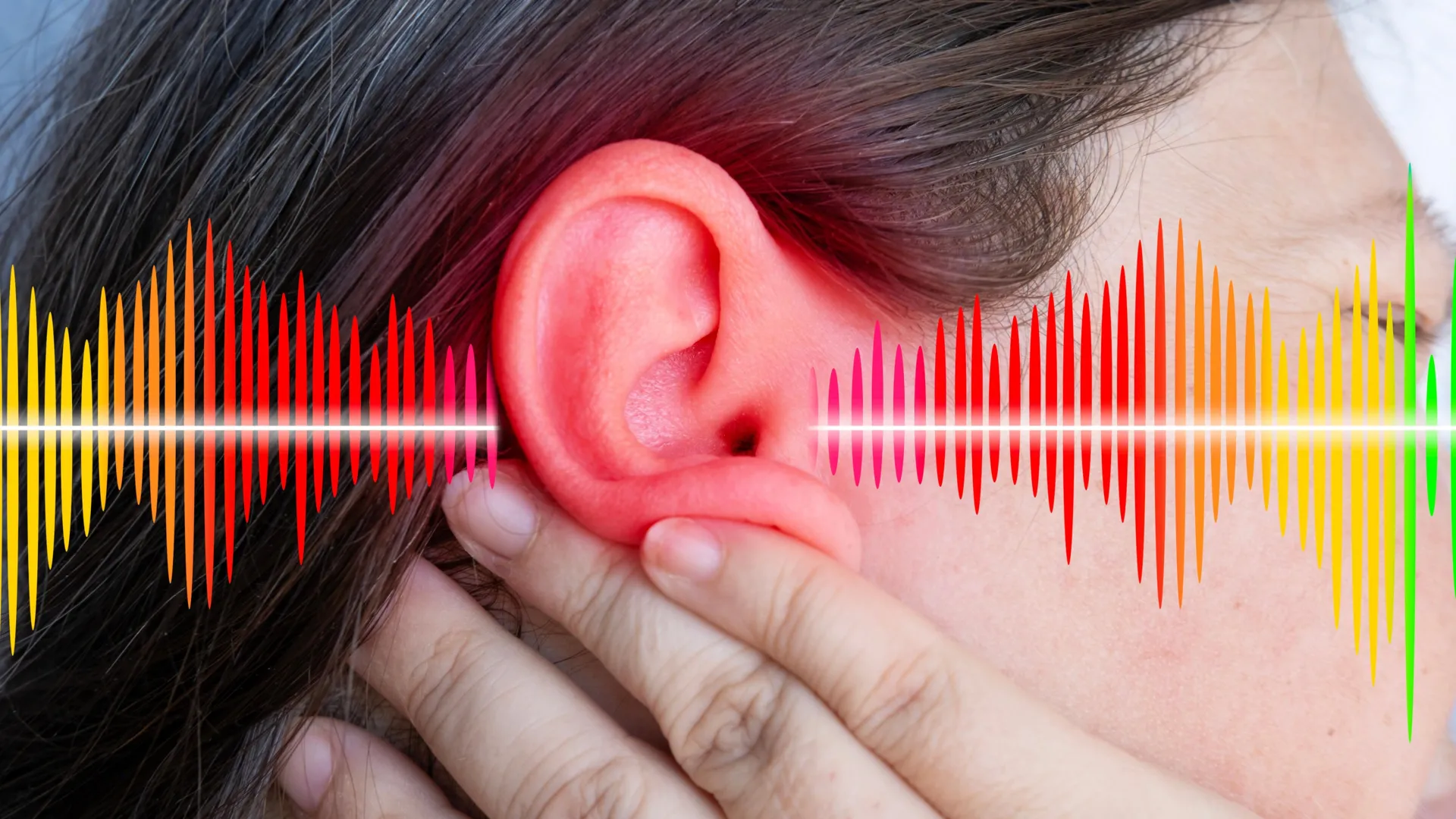
Tinnitus is far more than a minor annoyance; for many, it is a life-altering condition. Global health estimates suggest that approximately 14% of the adult population—nearly one billion people—experience some form of tinnitus. Of these, roughly 2% suffer from a "severe" form that interferes with sleep, concentration, and emotional stability. The condition is frequently comorbid with depression and anxiety, creating a complex clinical cycle where the distress of the ringing fuels mental health struggles, which in turn can make the tinnitus feel more intrusive.
Because of this high rate of comorbidity, many tinnitus patients are prescribed SSRIs. These medications function by blocking the reabsorption of serotonin in the brain, making more of the chemical available to transmit messages between neurons. While this is highly effective for stabilizing mood and treating clinical depression, the new findings suggest it may be a double-edged sword for those with sensitive auditory systems.
Laurence Trussell, Ph.D., a professor of otolaryngology in the OHSU School of Medicine and a scientist at the OHSU Vollum Institute, served as the co-senior author of the study. He emphasized that the findings do not suggest patients should stop taking their medication, but rather that a more nuanced approach to treatment is required. "People with tinnitus should work with their prescribing physician to find a drug regimen that gives them a balance between relief of psychiatric symptoms like depression and anxiety, while minimizing the experience of tinnitus," Trussell stated. He added that the study underscores the necessity for clinicians to validate and monitor patient reports of increased ringing following the initiation of antidepressant therapy.
Mapping the Neural Circuitry: A Multi-Year Effort
The journey to this discovery began several years ago. In 2017, the same research team published preliminary findings suggesting that certain cells in the dorsal cochlear nucleus—the area of the brain where sound processing begins—were sensitive to serotonin. However, the exact "wiring" of this interaction was not yet understood.
Zheng-Quan Tang, Ph.D., now at Anhui University in China, began the project as a postdoctoral scholar in Trussell’s laboratory. Tang explained that while the scientific community had long suspected serotonin’s involvement in tinnitus, the "how" remained elusive. "We’ve suspected that serotonin was involved in tinnitus, but we didn’t really understand how," Tang said. "Now, using mice, we’ve found a specific brain circuit involving serotonin that goes straight to the auditory system."
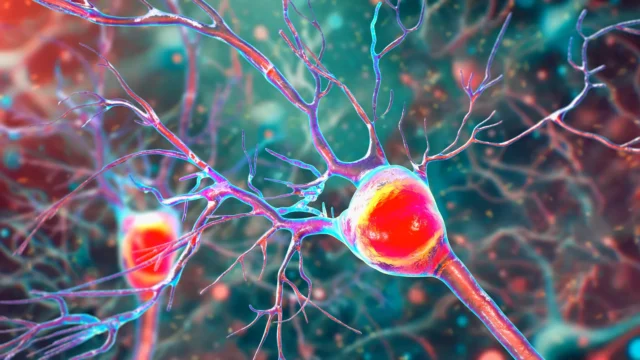
The researchers discovered that serotonin-producing neurons in the raphe nucleus—a cluster of nuclei in the brainstem—send axons directly to the dorsal cochlear nucleus. When serotonin is released into this region, it acts like a volume knob, increasing the sensitivity of the neurons that process sound. In the context of tinnitus, where the brain is already generating "noise" due to damaged hair cells or other auditory trauma, the influx of serotonin effectively turns up the volume on those phantom signals.
Methodology: Optogenetics and Auditory Startle Tests
To prove this connection, the scientists employed optogenetics, a sophisticated biological technique that involves using light to control neurons that have been genetically modified to be light-sensitive. By inserting fiber-optic cables into the brains of mice, the researchers could precisely activate serotonin-producing neurons with pulses of light.
Once these neurons were stimulated, the researchers observed the animals’ behavioral responses. To measure tinnitus in a non-verbal subject like a mouse, the team used a modified version of the auditory startle test. In a normal environment, a sudden loud noise causes a "startle" reflex. If a background sound is played just before the loud noise, the startle reflex is usually diminished—a phenomenon known as pre-pulse inhibition. However, if a mouse has tinnitus, it perceives a constant background noise that "fills in" the gaps in external sound, altering its startle response in a predictable way.
The results were definitive. When the researchers stimulated the serotonin circuit, the mice exhibited behaviors consistent with the perception of tinnitus. Conversely, when the team "turned off" or inhibited this specific circuit, the tinnitus-like symptoms were significantly ameliorated. "When you stimulate these serotonergic neurons, we can see that it stimulates activity in the auditory region in the brain," Trussell explained. "We also saw that animals then behaved as if they were hearing tinnitus."
Data Analysis and Clinical Implications
The data gathered from the mouse models aligns closely with clinical observations in human patients. Medical records have shown that a subset of patients starting SSRIs experience an "ototoxic" side effect where their tinnitus volume increases within days of the first dose. While this was previously dismissed by some as a psychosomatic response to a new medication, the OHSU and Anhui study provides a physiological explanation for the phenomenon.
From a pharmacological standpoint, the study highlights a significant challenge in modern psychiatry: the lack of anatomical specificity in systemic drugs. When a patient swallows an SSRI pill, the medication affects serotonin levels throughout the entire brain and body. While the increase of serotonin in the prefrontal cortex may help with depression, the concurrent increase in the dorsal cochlear nucleus may exacerbate tinnitus.
This research points toward a future of "precision pharmacology." Trussell suggests that the next generation of treatments could involve drugs designed to target serotonin receptors in specific regions of the brain while avoiding others. "It may be possible to develop cell- or brain region-specific drugs that steer the elevation of serotonin in some brain regions but not others," Trussell noted. "In that way, it may be possible to separate the beneficial and important effects of the antidepressant from the potentially harmful effects on hearing."
Chronology of Research and Future Directions
The timeline of this research reflects a growing interest in the neurobiology of hearing disorders over the last decade:
- 2010–2015: Increasing clinical reports of SSRI-induced tinnitus lead researchers to investigate the dorsal cochlear nucleus.
- 2017: Trussell and Tang publish early evidence that serotonin-sensitive neurons exist in the auditory pathway.
- 2018–2022: The team develops the optogenetic mouse model to isolate the specific raphe-to-auditory circuit.
- 2023–2024: Final data collection and peer review process for the PNAS publication.
- Future: The team plans to investigate whether other neurotransmitters, such as dopamine or norepinephrine, play a similar role in modulating the "volume" of tinnitus.
The implications of this study extend beyond the immediate treatment of tinnitus. It provides a blueprint for understanding how various sensory systems—including vision and touch—might be influenced by the brain’s internal chemical state. If serotonin can "hallucinate" sound in the auditory system, it raises questions about how other mood-related chemicals might distort our perception of reality in other ways.
Expert Reactions and Public Health Impact
Audiology experts who were not involved in the study have praised the findings for providing a biological basis for patient complaints. Many audiologists have long advocated for a multidisciplinary approach to tinnitus, involving both ENT specialists and mental health professionals. This study reinforces the need for these two fields to collaborate more closely.
For the millions of people currently managing both depression and tinnitus, the study offers a sense of validation. It suggests that the worsening of their symptoms is not "all in their head" but is a measurable side effect of the very medications meant to help them. This knowledge empowers patients to have more informed discussions with their doctors about dosage adjustments or the exploration of alternative treatments, such as cognitive-behavioral therapy (CBT) for tinnitus or different classes of antidepressants that do not primarily target the serotonin system.
The research was supported by the National Institutes of Health (NIH) through award RO1DC004450. As the scientific community continues to digest these findings, the hope is that this clearer picture of the brain’s "internal wiring" will lead to a new era of tinnitus management—one where the pursuit of mental well-being does not have to come at the cost of auditory peace. By identifying the specific circuit responsible for this "ringing" side effect, researchers have taken the first vital step toward silencing it forever.