
The Growing Global Challenge of Hearing Loss and Cognitive Health
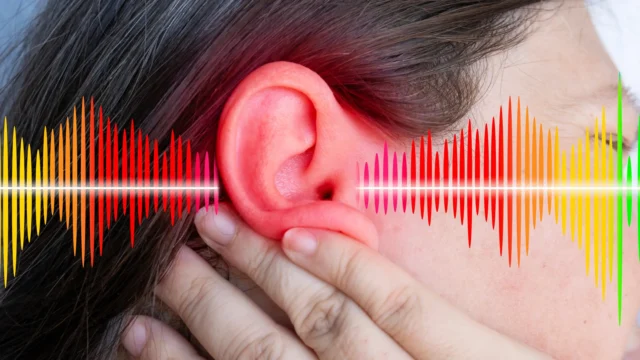
According to the World Health Organization (WHO), the global prevalence of hearing impairment is on a steep upward trajectory. Current projections suggest that by 2050, nearly 2.5 billion people worldwide will live with some degree of hearing loss. Among the population over the age of 60, more than 25% already suffer from disabling hearing impairment. While often dismissed as an inevitable part of aging, hearing loss is increasingly recognized by the medical community as a primary modifiable risk factor for dementia and other forms of cognitive impairment.
Research indicates that individuals with untreated hearing loss may face a risk of cognitive decline that is two to three times higher than their peers with normal hearing. The UNIGE study sought to delve deeper into this correlation by examining the mediating roles of social isolation and loneliness—two distinct but often conflated concepts. While social isolation refers to an objective lack of social contact, loneliness is the subjective, painful feeling of being disconnected from others. The UNIGE team, comprising experts from the Lifespan Developmental Psychology Lab and the Cognitive Ageing Lab, hypothesized that these psychological factors might dictate the severity of the cognitive impact caused by hearing loss.
Methodology: The SHARE Study and Long-Term Data Analysis
To reach their conclusions, the researchers utilized data from the Survey of Health, Ageing and Retirement in Europe (SHARE). Launched in 2002, SHARE is a multidisciplinary, longitudinal database that tracks the health, socio-economic status, and social networks of individuals aged 50 and older across Europe. The study’s sample size of 33,000 participants provided a robust statistical foundation, covering countries including Switzerland, Germany, France, and Sweden.
The longitudinal nature of the SHARE data allowed the UNIGE team to track changes over time rather than providing a mere snapshot. Participants were surveyed every two years on various aspects of their lives, including their physical health, frequency of social interactions, and their perceived quality of life. Crucially, the survey included standardized cognitive assessments, specifically focusing on episodic memory—the ability to recall specific events, times, and places.
"We used data from twelve countries, which gave us a diverse representation of European aging experiences," explained Andreas Ihle, assistant professor at the Lifespan Lab and the study’s director. By correlating these cognitive scores with self-reported hearing difficulties and social metrics, the team was able to map the trajectory of mental decline over several years.
Identifying the Three Profiles of Social Connection
One of the most significant contributions of the UNIGE study is the categorization of participants into three distinct profiles based on their social and psychological circumstances. These profiles allowed the researchers to isolate how different types of "aloneness" interact with sensory loss:
- Socially Isolated and Lonely: Individuals with few social contacts who also report high levels of subjective loneliness.
- Socially Isolated but Not Lonely: Individuals who live relatively solitary lives but do not report feeling distressed or disconnected by their lack of social interaction.
- Socially Integrated but Lonely: Individuals who maintain regular social contacts and activities but nevertheless experience a persistent sense of loneliness or lack of meaningful connection.
By applying these profiles to the data, the researchers discovered that the "explosive cocktail" for cognitive decline was not necessarily the objective lack of friends or family, but the internal feeling of loneliness when combined with hearing impairment.
The "Explosive Cocktail": Loneliness as a Catalyst
The study found that while hearing loss is generally associated with cognitive decline, the rate of that decline accelerates dramatically in individuals who feel lonely. Most notably, this acceleration was prominent in the third profile: those who are socially integrated but feel lonely.
Matthias Kliegel, a full professor in the Cognitive Ageing Laboratory at UNIGE and co-author of the study, noted that these findings highlight a specific vulnerability. Even if an individual attends social gatherings or lives with family, if they cannot hear properly and consequently feel "alone in a crowd," their brain health suffers more rapidly. The inability to follow conversations in a social setting leads to a form of cognitive overstrain and emotional withdrawal that appears to degrade memory functions faster than the biological aging process alone.
"We found that people who were not socially isolated but who felt lonely saw their cognitive decline accelerate when they were deaf," Kliegel stated. This suggests that the psychological distress of loneliness acts as a stressor that, when paired with the sensory deprivation of hearing loss, creates a synergistic negative effect on the brain’s plasticity.
The Biological and Psychological Mechanism of Decline
The link between hearing and the brain is often explained through the "Cognitive Load Hypothesis." When a person has difficulty hearing, the brain must redirect significant resources toward the basic task of decoding sounds and speech. This leaves fewer resources for higher-level functions, such as processing information and storing it in memory.
When loneliness is added to the equation, the impact is doubled. Loneliness is associated with increased levels of cortisol (the stress hormone) and systemic inflammation, both of which are known to damage the hippocampus—the region of the brain responsible for memory. Furthermore, those who feel lonely are less likely to benefit from the "cognitive reserve" built through stimulating, meaningful social interactions. If a person cannot hear, they may physically attend a social event but remain mentally and emotionally disengaged, effectively losing the protective benefits of social stimulation.
Implications for Public Health and Early Intervention
The findings of the UNIGE study have profound implications for healthcare policy and the management of aging populations. As cognitive decline and dementia represent one of the largest economic burdens on global healthcare systems, identifying low-cost, high-impact interventions is a priority.
The researchers argue that hearing care should be viewed as a cornerstone of preventive medicine. "These individuals [who are socially integrated but lonely] are already socially integrated, so it’s a matter of removing a sensory barrier in order to reinforce their engagement and protect their cognitive health," said Charikleia Lampraki, the study’s first author.
In many European countries, hearing aids are often underutilized due to social stigma, high costs, or a lack of awareness regarding their cognitive benefits. The UNIGE team suggests that by normalizing the use of hearing aids and ensuring they are accessible, healthcare providers can help older adults remain cognitively sharp. By restoring the ability to communicate, hearing aids do more than improve sound; they reduce the feeling of loneliness by allowing for genuine connection, thereby slowing the rate of memory loss.
Chronology of Research and Future Directions
The UNIGE study is part of a broader shift in gerontology that began in the early 2010s, moving away from viewing cognitive decline as purely genetic or biological. The use of the SHARE data, which has been collected since 2002, provides a twenty-year perspective on how European health has evolved.
Moving forward, the UNIGE team and other research bodies are expected to investigate whether other sensory impairments—such as vision loss—produce similar "explosive" results when paired with loneliness. There is also growing interest in how digital communication technologies might mitigate or exacerbate these issues. While video calls can help with social isolation, they often present unique challenges for those with hearing impairment, potentially worsening the sense of loneliness.
Conclusion: A Call for Holistic Geriatric Care
The University of Geneva’s research serves as a reminder that the health of the aging brain is inextricably linked to the quality of an individual’s sensory and emotional life. The study underscores that addressing hearing loss is not merely a matter of comfort, but a vital intervention for maintaining mental autonomy.
For healthcare systems, the message is clear: screening for hearing loss should be accompanied by assessments of social and emotional well-being. By treating the "whole person"—addressing both the physical sensory deficit and the psychological feeling of loneliness—medical professionals can offer a more effective defense against the rising tide of cognitive decline. As the global population continues to age, such integrated approaches will be essential in ensuring that longer lives are also lives of higher quality and mental clarity.