The new guidance, titled "Preventing Logging Deaths," serves as both a post-mortem analysis of recent tragedies and a technical manual for field safety. It highlights the inherent dangers of manual felling—a task that requires immense precision, physical endurance, and constant situational awareness. As the industry faces pressures to maintain productivity amidst complex environmental conditions, state regulators are emphasizing that speed must never take precedence over the fundamental laws of physics and forest safety.
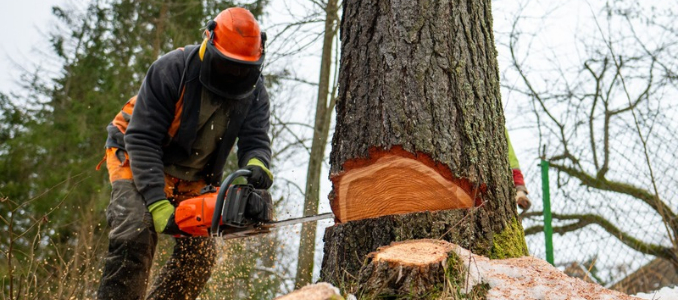
A Chronology of Recent Tragedies
The three fatalities recorded in 2025 share common threads of environmental complexity and procedural error, illustrating the unpredictable nature of logging even for experienced professionals.
The first incident involved a 33-year-old faller who was working in a stand of hemlock. The worker was engaged in "bucking"—the process of cutting a felled tree into specific lengths—when they were struck by a portion of a tree. Investigators noted that the proximity of a partially cut hemlock created a hazardous environment, where structural instability was not adequately accounted for before the bucking operation commenced.
The second fatality, also involving a 33-year-old logger, occurred under distinct but equally dangerous circumstances. In this instance, the faller was cutting into a maple tree. A snag—a dead or dying tree that remains standing—which had been previously felled by the wind, was lodged against the maple. As the logger worked on the maple, the shifting tension caused the lodged snag to dislodge and fall, striking the worker. This highlights the "domino effect" that characterizes many logging accidents, where one piece of forest architecture can unexpectedly compromise the stability of another.

The third fatality involved a 45-year-old logger who was working in close proximity to a trainee. While the trainee was engaged in cutting a separate tree, the veteran faller was struck, despite being approximately 18 feet away. This incident underscores the catastrophic risk posed by poor spatial coordination in the woods. When multiple fallers are operating in the same vicinity, the radius of potential impact—often determined by the height of the tree being felled—is frequently underestimated, leading to fatal oversights.
Data and Environmental Risk Factors
The logging industry has long been recognized as one of the most dangerous occupations in the United States. According to data from the Bureau of Labor Statistics (BLS), the fatality rate for logging workers consistently ranks among the highest of all civilian professions. In Washington, the terrain—often steep, rugged, and densely forested—adds a layer of difficulty that requires more rigorous safety standards than those found in flatter, less complex timber environments.
The recent WA FACE report identifies several critical environmental hazards that must be identified during the initial site assessment phase. These include:

- Snags and Dead Limbs: Often referred to as "widowmakers," these standing dead trees are highly susceptible to wind, vibration from chainsaws, or minor contact with other falling trees.
- Decay: Internal rot, which is often invisible from the surface of the bark, can drastically change how a tree reacts to a notch cut.
- Wind Hazards: Sudden shifts in wind speed can alter the trajectory of a falling tree or dislodge hanging debris.
- Rolling Logs: On uneven, sloped terrain, logs that have been bucked can become projectiles, posing a severe threat to workers located downhill.
The 2025 fatalities have reignited a conversation about the "human factor" in these accidents. While equipment failure is possible, investigations overwhelmingly point to procedural drift—the gradual relaxation of safety rules over time—as a primary contributor to workplace injuries.
Regulatory Requirements and Safety Protocols
Washington State law is explicit regarding the dangers of felling operations. Under current Department of Labor and Industries (L&I) standards, it is strictly prohibited for a worker to make an undercut while other personnel are within the potential fall zone of the tree. Furthermore, trees that have been partially cut—those with face or back cuts that remain standing—are considered "danger trees."
The regulations dictate that such trees cannot be left unattended unless a specific set of protocols is followed:

- Marking: The tree must be clearly identified as a hazard to all crew members.
- Notification: Any worker entering the area must be made aware of the specific hazard.
- Work Stoppage: Activities in the immediate vicinity must be suspended until the hazard is mitigated.
- Safe Felling Plan: A professional, written plan must be developed to bring the tree down safely, ensuring that no personnel are in the line of fire.
The WA FACE program emphasizes that employers are legally and ethically obligated to maintain a written accident-prevention program. This program must be more than a document filed in an office; it must be a living, breathing component of the daily morning safety huddle.
Best Practices for Mitigation
To reverse the trend seen in 2025, the state is pushing for a more rigorous adoption of "landing zone" management. The following recommendations are being disseminated to logging companies across the Pacific Northwest:
- Two-Tree-Length Rule: Perhaps the most vital rule for worker spacing is the mandate to keep fallers at least two tree lengths away from any other worker or piece of heavy equipment. This creates a buffer zone that accounts for the maximum potential reach of a falling tree or a "barber chair"—a condition where a tree splits vertically during the fall.
- Retreat Paths: Before the chainsaw touches the trunk, a faller must establish two distinct, 45-degree angle retreat paths. These paths must be clear of brush, limbs, and other tripping hazards, ensuring that the logger can move quickly to safety once the tree begins to tip.
- Continuous Site Monitoring: The forest is a dynamic environment. A site that is safe at 7:00 a.m. may become hazardous by 11:00 a.m. due to changing wind conditions or the progress of other felling operations. Routine, ongoing site checks are non-negotiable.
Broader Industry Implications
The impact of these three deaths extends far beyond the immediate families and coworkers of the deceased. In the logging community, such losses have a profound psychological effect, often leading to a period of heightened anxiety and a re-evaluation of current practices.

From an economic perspective, insurance premiums and state-mandated safety oversight often tighten following a string of fatalities. Logging firms may face increased scrutiny from L&I inspectors, and there is a growing trend toward integrating technology—such as drone-based forest surveys—to identify hazardous snags before crews arrive on site.
Furthermore, the integration of new, less-experienced workers into the workforce presents a mentorship challenge. The incident involving the trainee and the experienced faller suggests that the presence of a novice on a worksite requires an even higher level of communication. Experienced loggers often develop an intuition for the forest, but that intuition must be codified into explicit instructions when working alongside those still learning the trade.
A Call for a Safety-First Culture
The WA FACE alert serves as a somber reminder that the logging industry is one where the margin for error is razor-thin. As the state moves forward, the focus will remain on the implementation of these safety protocols and the cultivation of a "stop-work" culture. In this environment, any worker—regardless of seniority—should feel empowered to call for a halt to operations if they perceive a risk that has not been adequately addressed.

The preliminary nature of the current investigations underscores that these deaths are still under review. However, the themes are clear: the forest is unforgiving, and the safety of the logger depends entirely on the rigorous, disciplined application of established best practices. As Washington’s timber industry continues its work, the goal is to ensure that every faller returns home safely, regardless of the challenges posed by the terrain or the timber they harvest. The 2025 fatalities are a heavy toll, but they provide a necessary, albeit painful, impetus to renew the industry’s commitment to the most important resource in the woods: the workers themselves.