The Scope of the OSHA Inspection
The investigation into the Sicklerville site was triggered by concerns regarding the facility’s operational safety standards. OSHA inspectors conducted a comprehensive audit of the car wash, focusing specifically on the maintenance procedures performed on the high-powered machinery required to operate the wash bay.
The findings painted a grim picture of daily operations. Investigators documented that employees were routinely tasked with servicing and cleaning automated equipment without the implementation of required energy-control measures. In an industrial environment, these machines—which often rely on high-voltage electricity, pressurized hydraulics, and mechanical movement—pose an immediate risk of amputation, crushing, or electrocution if not properly de-energized. The "willful" citation issued by the agency indicates that OSHA found the employer knowingly failed to comply with legal safety requirements or acted with plain indifference to employee safety.

Understanding the Lockout/Tagout Failure
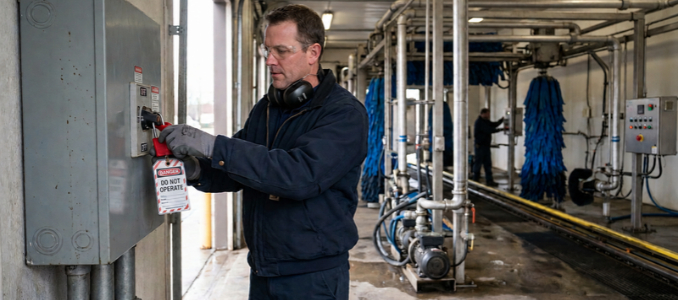
Lockout/tagout procedures are the cornerstone of industrial safety. They are designed to ensure that dangerous machines are properly shut off and unable to be restarted while maintenance or service work is in progress. According to OSHA’s report, the ModWash facility lacked both the physical devices necessary to secure energy sources and the formal, written procedures required to guide workers through the lockout process.
Beyond the lack of physical hardware, the investigation revealed a systemic failure to train staff. OSHA mandates that all employees who work around or maintain equipment must be thoroughly trained in LOTO protocols. By failing to provide this training, the employer left workers vulnerable to the "unexpected startup" of equipment, a leading cause of industrial fatalities. The absence of written safety protocols further exacerbated the risk, as there was no standardized manual for employees to consult when navigating the complexities of the car wash’s mechanical systems.

Occupational Health: The Hidden Noise Hazard
While the LOTO violations represent the most immediate threat to life, the agency’s findings also highlighted a significant neglect of long-term occupational health. OSHA cited the company for failing to maintain a compliant hearing-conservation program.
At a standard automated car wash, the combination of high-pressure air dryers, water pumps, and mechanical brushes creates an environment where noise levels frequently exceed 85 decibels—the threshold at which the risk of permanent, noise-induced hearing loss begins. OSHA’s regulations require employers to perform noise monitoring to identify hazardous areas, provide baseline hearing tests for staff, and deliver comprehensive training on the use of personal protective equipment (PPE). The ModWash facility allegedly failed on all three fronts, leaving employees to navigate a high-decibel work environment without the necessary medical surveillance or protective measures to prevent long-term sensory damage.

Chronology of Regulatory Oversight
The road to these penalties reflects a broader trend of OSHA’s aggressive oversight of the retail and service industries. While the Sicklerville inspection occurred recently, the agency’s data suggests that repeat violations are a persistent issue. The fact that OSHA issued two "repeat" citations indicates that this facility—or perhaps the parent company’s broader operations—had been previously flagged for similar failures.
When a company is cited for a repeat violation, it indicates a failure to institutionalize safety improvements following an initial warning. In this case, the proposed fines reflect the agency’s "egregious penalty" policy, which aims to make the cost of non-compliance higher than the cost of implementing a robust safety program. The company now enters a mandatory 15-business-day window to respond. During this time, the employer must decide whether to pay the penalties, seek an informal conference with an OSHA area director to discuss the findings, or formally contest the citations before the Occupational Safety and Health Review Commission, an independent federal agency.

Broader Implications for the Car Wash Industry
The scale of this fine is relatively high for an industry that historically flies under the radar of federal safety inspectors. Many small-to-medium-sized car washes operate as decentralized service stations, where safety culture often takes a backseat to production speed and customer throughput. However, as the industry consolidates and moves toward more complex, highly automated machinery, the risk profile of these workplaces has evolved.
Safety experts note that this case serves as a warning to other operators. The intersection of high-voltage systems and high-noise environments makes car washes "high-risk" areas that require rigorous documentation and safety culture. When a company fails to provide basic LOTO training, they are not only violating federal law; they are betting against the statistical probability of a workplace injury. In this instance, OSHA’s intervention aims to shift that calculus, forcing the operator to prioritize life-safety over the convenience of quick equipment maintenance.

The Financial and Reputational Weight of Compliance
A fine of nearly half a million dollars is a significant blow to any localized business operation. Beyond the immediate financial impact, the publicity surrounding an OSHA investigation can lead to increased scrutiny from state labor departments, potential litigation from workers, and a degradation of brand reputation.
For the employees at the Sicklerville facility, the OSHA intervention represents a necessary check on their working conditions. The agency’s role is to ensure that no worker is forced to choose between their livelihood and their physical integrity. The findings demonstrate that regardless of the size of the business, the requirements for a safe workplace are non-negotiable under federal law.

Looking Forward: The Path to Resolution
The coming weeks will be critical for ModWash. Should they choose to contest the findings, the case could move to a prolonged legal battle that would require the company to justify its safety practices in front of a federal judge. Alternatively, by choosing to comply, the company must commit to a comprehensive overhaul of its safety management system, including the procurement of LOTO hardware, the drafting of standard operating procedures, and the implementation of a professional-grade hearing-conservation program.
For the wider business community, this case serves as a stark reminder that "safety first" is not merely a slogan, but a set of enforceable legal mandates. OSHA continues to leverage data-driven inspections to target workplaces that present the highest risk of injury. As the agency increases its presence in the service sector, companies are being encouraged to conduct internal audits before federal inspectors arrive.

The $446,864 fine is a severe corrective measure, but it is one that reflects the gravity of the violations found in New Jersey. As the industry watches this case unfold, the takeaway remains clear: in an era of sophisticated machinery and increased federal oversight, the failure to prioritize employee safety is a liability that no business can afford to ignore. Protecting the workforce is not only a moral imperative but a fundamental requirement for long-term operational viability in the modern service landscape.