A recent discussion on "This Week in Hearing," hosted by Shari Eberts, featured Dan Reiner, HLAA’s Director of Communications and Marketing, shedding light on how the organization’s extensive network and diverse materials can serve as invaluable extensions of professional hearing care. The conversation underscored the profound impact of community, education, and peer support in fostering resilience and promoting a higher quality of life for those affected by hearing loss.
The Unseen Challenges of Hearing Loss: Beyond the Clinic Walls
Hearing loss, affecting an estimated 48 million Americans and over 1.5 billion people globally, is more than just a physiological impairment. Its impact reverberates through various facets of an individual’s life, often leading to feelings of frustration, exhaustion, and isolation. Simple social interactions, like dinner table conversations, can become arduous, while professional environments demand constant strain to comprehend. These non-clinical challenges, though less tangible than an audiogram or a hearing aid fitting, are profoundly significant to a patient’s overall well-being.
Audiologists, with their limited appointment times—often less than an hour per patient—are primarily focused on the technical aspects of hearing care, including diagnosis, fitting devices, and initial adjustments. While crucial, this timeframe rarely permits an in-depth exploration of the emotional adjustment process or the ongoing practical hurdles patients encounter. This is precisely where organizations like HLAA become indispensable, providing a vital bridge to sustained support.
HLAA: A Legacy of Empowerment and Advocacy
Founded in 1979, the Hearing Loss Association of America emerged from a pressing need for a national voice and support system for individuals with hearing loss. For 47 years, HLAA has championed the rights and needs of this community, evolving from a grassroots advocacy group into a multi-faceted organization that convenes patients, healthcare providers, researchers, device manufacturers, and policymakers. Its mission is to open the world of communication to people with hearing loss through information, education, advocacy, and support.
Dan Reiner, who joined HLAA in October 2025, brings nearly two decades of non-profit communications experience, including a decade at the National Council on Aging. His expertise lies in making complex health topics accessible and building supportive communities. Reiner emphasizes that HLAA operates at the intersection of all stakeholders contributing to an individual’s hearing health story. "We are primarily an organization that engages people who themselves have hearing loss," Reiner stated, "but we also convene healthcare providers, researchers, students, device manufacturers, policymakers, and anyone else interested in improving accessibility in hearing health across the board."
Reiner’s personal connection to hearing loss, though not initially the driving force behind his career, deepened through his family history, noting that "every man in my family older than me has had hearing aids." This proximity to the issue, coupled with his professional background, reinforces his commitment to HLAA’s holistic approach.
Strengthening the Continuum of Care: The HLAA Advantage
Reiner articulates HLAA’s role as strengthening the "continuum of care" that experts provide. Just as a primary care physician and an audiologist work towards the common goal of improved patient health, HLAA contributes by addressing the social and emotional dimensions of living with hearing loss. "For 47 years, we have understood the range of questions and feelings that people may face as they learn about their changes in hearing, whether sudden or gradual," Reiner explained. "But also, we know the importance of saying to people that, you know, you’re not alone. And, you know, we have a community ready and waiting."
The psychological impact of hearing loss, including increased risks of depression, anxiety, and cognitive decline, is well-documented. Social isolation, a common consequence, further exacerbates these issues. By providing a community where individuals can share experiences, learn coping strategies, and find reassurance, HLAA directly counters these negative effects. Shari Eberts, a member of the New York City chapter, affirmed this, noting how joining HLAA transformed her own experience with hearing loss, alleviating feelings of loneliness and fostering a sense of belonging. The organization’s ability to connect individuals with shared experiences offers a unique and irreplaceable form of support that clinical settings, by nature, cannot fully provide.
A Toolkit for Living Well: HLAA’s Diverse Resources
HLAA offers an array of free, readily accessible resources that audiologists can integrate into their patient care workflows, extending support far beyond the confines of an office visit.
1. A Vibrant Network of Chapters and Peer Support Groups:
At the heart of HLAA’s community are its 125 chapters and state associations across the country. These local groups serve as vital hubs for in-person connection, peer support, and localized advocacy. Reiner highlighted their importance: "There is always someone who has been where you are. And I can’t think of a better way to give people the confidence and the wisdom to make decisions for themselves than connecting them with someone or a group of people who can accept the process and help them through the process." These chapters provide a safe space for individuals to share challenges, celebrate successes, and exchange practical advice on everything from device maintenance to navigating noisy environments. Research consistently shows that peer support significantly improves self-efficacy, reduces feelings of stigma, and enhances overall psychological well-being in individuals with chronic conditions.
2. Hearing Life Magazine: An Accessible Window into the World of Hearing Loss:
Hearing Life magazine, HLAA’s flagship publication, serves as a comprehensive resource covering a vast spectrum of topics related to hearing loss. Recently redesigned for enhanced aesthetic appeal and readability, the magazine lives up to its name by exploring the "life" aspects of hearing loss. Content ranges from in-depth articles on genetic hearing loss research to lighthearted interviews, such as a recent feature with fictional characters Mummy and Daddy Pig from the children’s cartoon "Peppa Pig," discussing their son George’s hearing aid journey. This diverse editorial approach ensures that the magazine appeals to a broad audience, from newly diagnosed individuals to seasoned advocates.
Critically, Hearing Life adheres to the highest accessibility standards, with carefully managed screen reader components, optimized font, and contrast for its digital version. Physical copies are also available, and Reiner suggests that audiologists keep a few copies in their waiting rooms. "There’s something to be said for being able to hold something in your hands," he noted, emphasizing how a colorful, engaging magazine can offer a comforting and informative alternative to general interest publications, subtly introducing patients to a community and a world of shared experiences.
3. Educational Webinars and Practical Toolkits:
HLAA’s digital presence includes a robust webinar series and a growing library of practical toolkits, all designed to be accessible and easily shareable. The webinars cover a wide range of topics, often led by experts, and are fully captioned and archived for on-demand access. Specific examples include peer support groups for veterans and parents of children with hearing loss, as well as lecture-style series from HLAA’s workplace task force on self-advocacy and accommodations in professional settings. Upcoming webinars include sessions on advocacy efforts and a new peer support group for parents of children with genetic hearing loss.
The organization’s toolkits provide concise, actionable guidance on various aspects of living with hearing loss. A notable recent addition, developed in partnership with Hasbro, is a guided activity for parents to facilitate low-stakes, positive conversations with their children about their experiences with hearing loss. This toolkit helps parents understand their child’s preferences and fears, informing their advocacy efforts with audiologists, teachers, or coaches. Other adult-focused toolkits offer entry-level introductions to hearing loss, self-assessment guidance, and recommendations for navigating the diagnostic process. These printable resources are invaluable for patients to review at home or share with family members, extending the educational impact beyond the clinical appointment.
4. Workplace Resources and Advocacy Initiatives:
Recognizing the unique challenges faced by individuals with hearing loss in professional environments, HLAA provides specific resources on workplace accommodations and self-advocacy. This includes webinars and guides that empower employees to request necessary adjustments and strategies for thriving in their careers. Beyond individual support, HLAA is a prominent advocate for policy changes, working with lawmakers, standards makers, and regulators to improve accessibility and communication for people with hearing loss across all sectors. This systemic advocacy creates a more inclusive society, benefiting all individuals with hearing loss.
5. Walk4Hearing Events: Community, Awareness, and Fundraising:
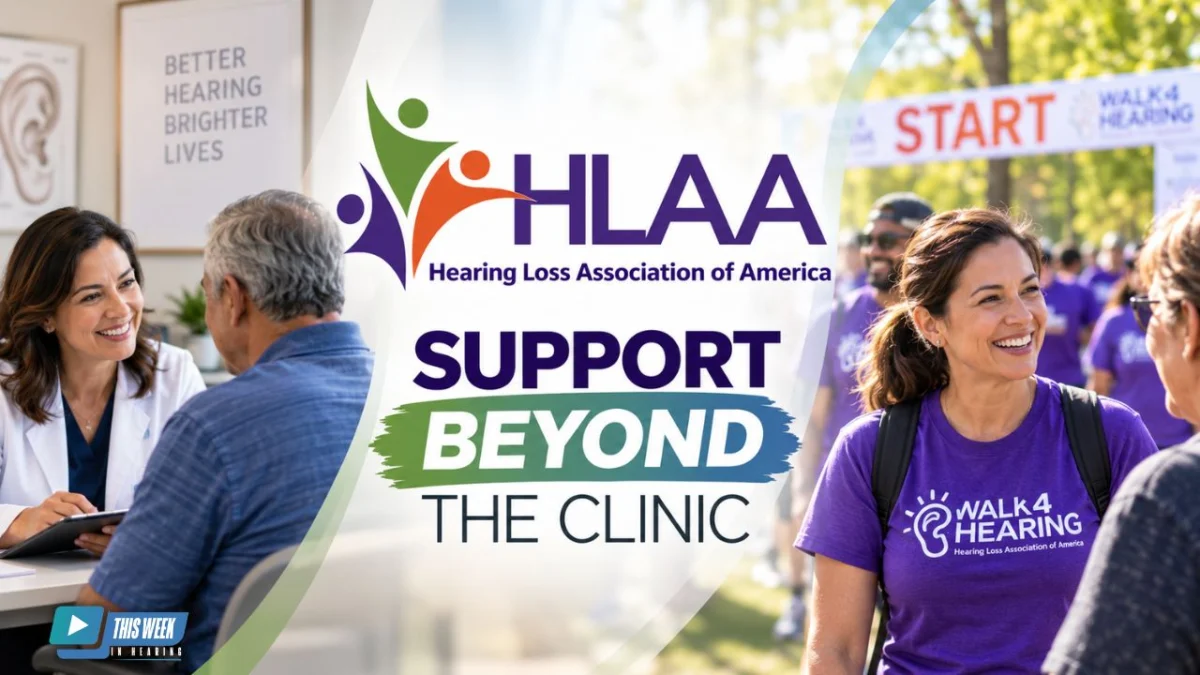
The Walk4Hearing events, held in cities nationwide during spring and fall, are hallmark HLAA initiatives. These family-friendly fundraising events not only raise crucial funds for local hearing health programs but also serve as powerful community-building and awareness-raising platforms. They provide an opportunity for individuals, families, and allies to come together, celebrate, and show solidarity. Such events contribute significantly to reducing the stigma associated with hearing loss and fostering a sense of collective identity.
Integrating HLAA into Clinical Practice: Practical Steps for Audiologists
For audiologists seeking to enhance their patient care, incorporating HLAA resources can be seamless and highly impactful. Reiner suggests a few simple, yet effective, strategies:
- Mention HLAA: Even a brief mention of the organization and its website (hearingloss.org) can empower patients to explore resources independently. In the digital age, a simple referral can open a world of support.
- Provide Handouts: Keeping readily available copies of HLAA’s free, printable handouts on topics like assistive listening devices or coping strategies can directly address patient needs identified during appointments.
- Display Hearing Life Magazine: Placing current issues of the magazine in waiting rooms offers a subtle yet effective way to introduce patients to HLAA’s community and content.
- Direct Patients to Social Media: HLAA maintains an active presence on platforms like Instagram, X (formerly Twitter), Facebook, LinkedIn, and YouTube. These channels offer a low-commitment entry point for patients to engage with the community, access success stories, and stay informed about advocacy wins and resources.
- Utilize the HLAA Inbox: For audiologists unsure which specific resources would best suit their patient population, HLAA offers a dedicated inbox for questions, providing tailored recommendations.
The Broader Impact: A Holistic Approach to Hearing Health
The integration of HLAA’s community-based support with clinical hearing care represents a paradigm shift towards a more holistic and patient-centered approach to health. By addressing the psychological, social, and practical dimensions of hearing loss, this collaborative model can lead to numerous benefits:
- Improved Patient Outcomes: Enhanced emotional well-being and practical support can lead to better adherence to treatment plans, more effective use of hearing devices, and greater overall satisfaction with care.
- Reduced Stigma: Open conversations and community engagement help normalize hearing loss, reducing the stigma that often prevents individuals from seeking help or fully embracing their hearing journey.
- Empowered Patients: Access to information, peer experiences, and advocacy tools fosters greater self-efficacy, enabling patients to advocate for their needs in all aspects of life.
- Comprehensive Care: Audiologists, by referring patients to HLAA, can confidently extend their care beyond the clinical walls, knowing that their patients have access to ongoing support and education. This shared responsibility ensures that no aspect of the patient’s journey is overlooked.
Conclusion: Meeting People Where They Are
The Hearing Loss Association of America stands as a testament to the power of community and comprehensive support in navigating chronic health conditions. From its extensive network of chapters and peer support groups to its accessible publications, webinars, and advocacy efforts, HLAA offers a vital lifeline for millions affected by hearing loss. As Dan Reiner aptly summarized, "Whatever your interest level or availability, we have something for you." By fostering connections, providing education, and advocating for accessibility, HLAA empowers individuals to live fulfilling lives with hearing loss, long after their clinical appointments conclude. Audiologists have a powerful, free, and ready-made ally in HLAA, capable of making a profound difference in their patients’ ongoing journey toward better hearing health and overall well-being. All resources and further information can be found at hearingloss.org.