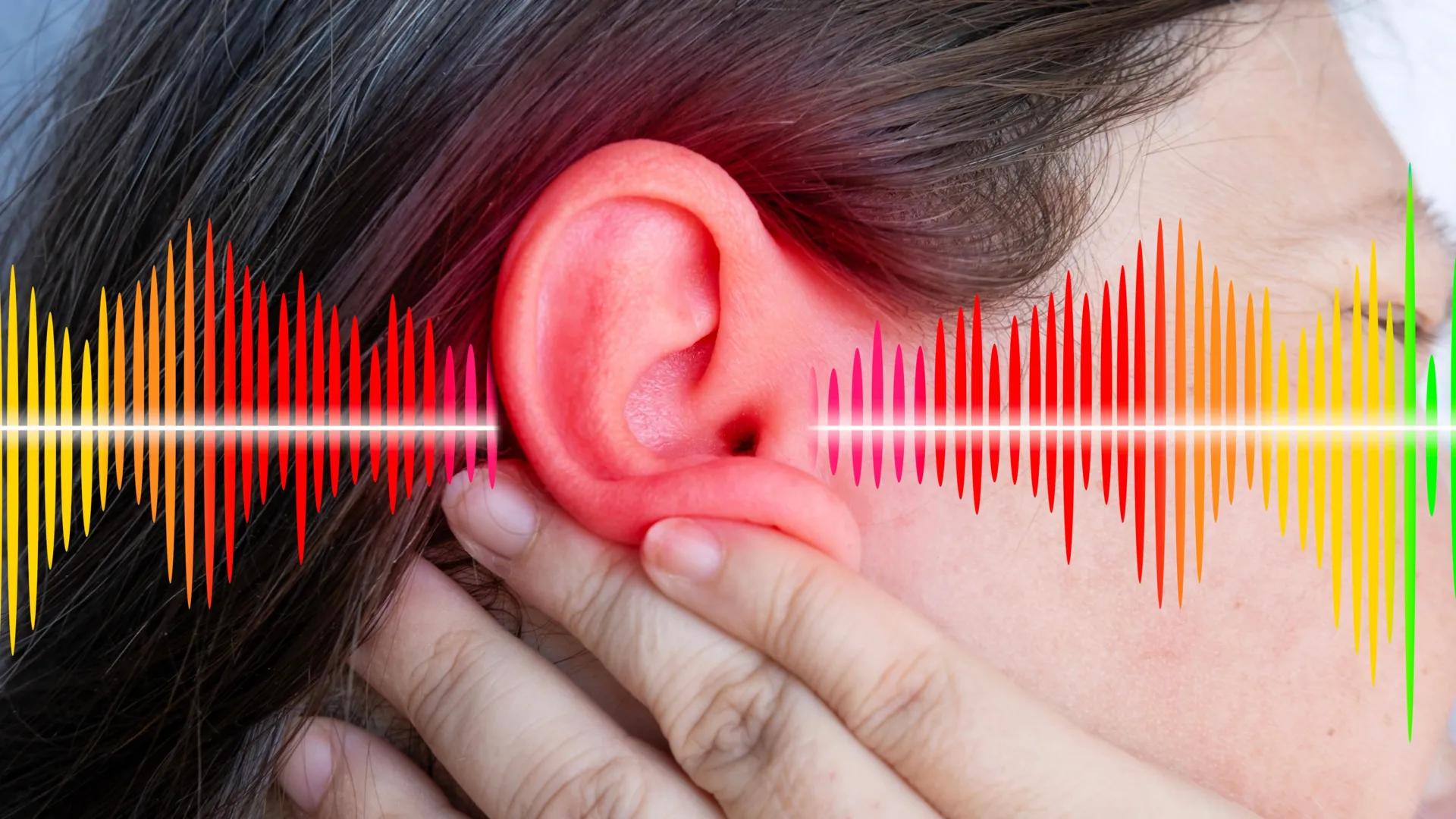
Tinnitus is characterized by the persistent sensation of ringing, buzzing, or hissing in the ears in the absence of an external sound source. While often dismissed as a minor annoyance, the condition is a significant public health issue. Global estimates suggest that approximately 14% of the adult population—more than 740 million people worldwide—experience tinnitus to some degree. For roughly 2% of the population, the condition is severe enough to cause profound psychological distress, leading to sleep deprivation, cognitive impairment, and heightened rates of anxiety and depression. The discovery of a direct link between serotonin levels and the auditory system’s sensitivity marks a pivotal shift in how clinicians may approach the dual treatment of hearing disorders and mental health.
The Biological Mechanism of Phantom Sound
At the heart of the study is the complex relationship between the brain’s mood centers and its sensory processing units. Serotonin, or 5-hydroxytryptamine, acts as a messenger between nerve cells, influencing everything from sleep cycles to emotional stability. However, the OHSU research team, led by co-senior author Laurence Trussell, Ph.D., a professor of otolaryngology and a scientist at the OHSU Vollum Institute, discovered that serotonin’s reach extends deep into the auditory brainstem.
Specifically, the researchers focused on the dorsal cochlear nucleus (DCN), a region where sensory information from the ears first enters the brain. In many cases of tinnitus, the neurons in the DCN become hyperactive, firing spontaneously even when the environment is silent. The study utilized mice to observe how increased serotonin levels affected these specific neurons. Using optogenetics—a sophisticated technique that involves genetically modifying neurons to respond to light—the team was able to activate serotonin-producing cells with high precision.
The results were definitive: the stimulation of these serotonergic neurons triggered a surge of activity in the auditory region. The mice exhibited behaviors consistent with the experience of tinnitus, such as a modified response to auditory startle tests. Essentially, the serotonin acted as a volume knob, not for external sounds, but for the internal "noise" generated by the brain’s own circuitry.
The SSRI Paradox in Clinical Practice
The findings have immediate and profound implications for the use of SSRIs, which include common medications such as fluoxetine (Prozac), sertraline (Zoloft), and escitalopram (Lexapro). These drugs work by preventing the reabsorption of serotonin, thereby increasing its availability in the brain to combat depression and anxiety. Because tinnitus is frequently accompanied by these psychological conditions—either as a cause or a consequence—SSRIs are often prescribed to patients struggling with the emotional toll of the ringing in their ears.
"People with tinnitus should work with their prescribing physician to find a drug regimen that gives them a balance between relief of psychiatric symptoms like depression and anxiety, while minimizing the experience of tinnitus," stated Dr. Trussell. He emphasized that the study highlights a critical need for clinicians to validate patient reports. For years, patients who claimed their tinnitus worsened on antidepressants were often met with skepticism or told their symptoms were merely a side effect of their underlying anxiety. This research provides the physiological evidence necessary to treat those reports as a direct pharmacological response.
The "SSRI Paradox" refers to the difficult choice patients and doctors must make: treating the debilitating emotional symptoms of depression while potentially exacerbating the sensory symptoms of tinnitus. This research suggests that for a subset of patients, the standard dose of an SSRI may be over-stimulating the dorsal cochlear nucleus, making the phantom sounds louder and more intrusive.
Evolution of the Research: A Five-Year Timeline
The recent publication is the culmination of years of focused investigation into the auditory brainstem. The groundwork was laid in 2017 when the OHSU team published initial findings suggesting that the DCN was highly sensitive to various neurotransmitters. At that time, researchers noted that the auditory system was not a closed loop but was heavily influenced by "non-auditory" inputs, including those related to touch and mood.
In the intervening years, Dr. Zheng-Quan Tang, who began the project as a postdoctoral scholar in Trussell’s lab before moving to Anhui University, refined the methodology. The transition from general chemical observation to the use of optogenetics allowed the team to prove a causal link rather than just a correlation. By "turning off" the specific serotonin circuit in the mice, the researchers were able to significantly ameliorate the tinnitus-like effects, proving that the circuit was the primary driver of the increased noise perception.
This timeline reflects a broader shift in neuroscience toward "circuit-based" understanding. Rather than viewing the brain as a soup of chemicals where more serotonin is always better for mood, researchers are increasingly recognizing that the location of the chemical release is just as important as the amount.
Supporting Data and Public Health Impact
The scale of the tinnitus problem underscores the urgency of this research. According to data from the American Tinnitus Association (ATA), tinnitus is the leading service-connected disability for U.S. veterans, surpassing even post-traumatic stress disorder (PTSD). The economic impact is also substantial; in the United Kingdom alone, the National Health Service (NHS) spends millions annually on tinnitus management, while the loss of productivity due to the condition is estimated in the billions.
Supporting studies have shown that approximately 40% of people with chronic tinnitus also suffer from hyperacusis, a decreased tolerance to everyday sounds. The discovery that serotonin increases neuronal excitability in the DCN helps explain the overlap between these two conditions. If the auditory system is in a state of "high gain" due to elevated serotonin, both phantom sounds and external noises may be perceived with painful intensity.
| Demographic Group | Estimated Tinnitus Prevalence |
|---|---|
| General Global Adult Population | 14.4% |
| Adults Over Age 65 | 23.6% |
| Military Veterans | >30% |
| Severe/Disabling Cases | 2.3% |
Expert Analysis: Toward Precision Pharmacology
The long-term goal of this research is not to discourage the use of antidepressants, which remain life-saving medications for many. Instead, the focus is on the development of more targeted therapies. Dr. Trussell suggested that the future of tinnitus treatment may lie in "region-specific" pharmacology.
"It may be possible to develop cell- or brain region-specific drugs that steer the elevation of serotonin in some brain regions but not others," Trussell noted. Current SSRIs are systemic, meaning they affect the entire brain and body. A precision medication could, in theory, boost serotonin in the prefrontal cortex to improve mood while leaving the serotonin receptors in the dorsal cochlear nucleus unaffected, or even inhibited.
This approach aligns with the growing field of personalized medicine. By identifying the specific receptors involved in the DCN—potentially the 5-HT2A or 5-HT1A receptors—pharmacologists could design "antagonist" drugs to be taken alongside SSRIs. These would act as a shield for the auditory system, preventing the mood-boosting medication from triggering the phantom noise circuit.
Broader Implications for Neuroscience and Audiology
The OHSU and Anhui University study serves as a reminder of the "cross-talk" that occurs between different systems in the human body. For decades, audiology and psychiatry were treated as separate disciplines. This research forces a convergence, suggesting that hearing health is inextricably linked to the neurochemical state of the brain.
Furthermore, the study sheds light on the phenomenon of neuroplasticity. Tinnitus is often the result of the brain trying to compensate for hearing loss. When the ears stop sending signals to the brain, the brain "turns up the gain" to find those signals, often resulting in the creation of phantom noise. The discovery that serotonin influences this gain-control mechanism suggests that other lifestyle factors that affect serotonin—such as diet, exercise, and stress—may also play a role in managing tinnitus.
As the scientific community continues to digest these findings, the immediate impact will likely be felt in the consultation rooms of audiologists and psychiatrists. There is now a clear, evidence-based reason to monitor the hearing health of patients on SSRIs more closely. For the millions of people who live with the relentless sound of silence, this research offers more than just an explanation; it offers a roadmap toward future treatments that could finally provide a way to turn the volume down.
The research was supported by the National Institutes of Health (NIH), specifically through the National Institute on Deafness and Other Communication Disorders. While the study was conducted on animal models, the high degree of conservation in the mammalian auditory brainstem provides a strong foundation for future human clinical trials. As neuroscience moves forward, the "ringing in the ears" may eventually be silenced by the very science that sought to understand the complexity of the human mind.