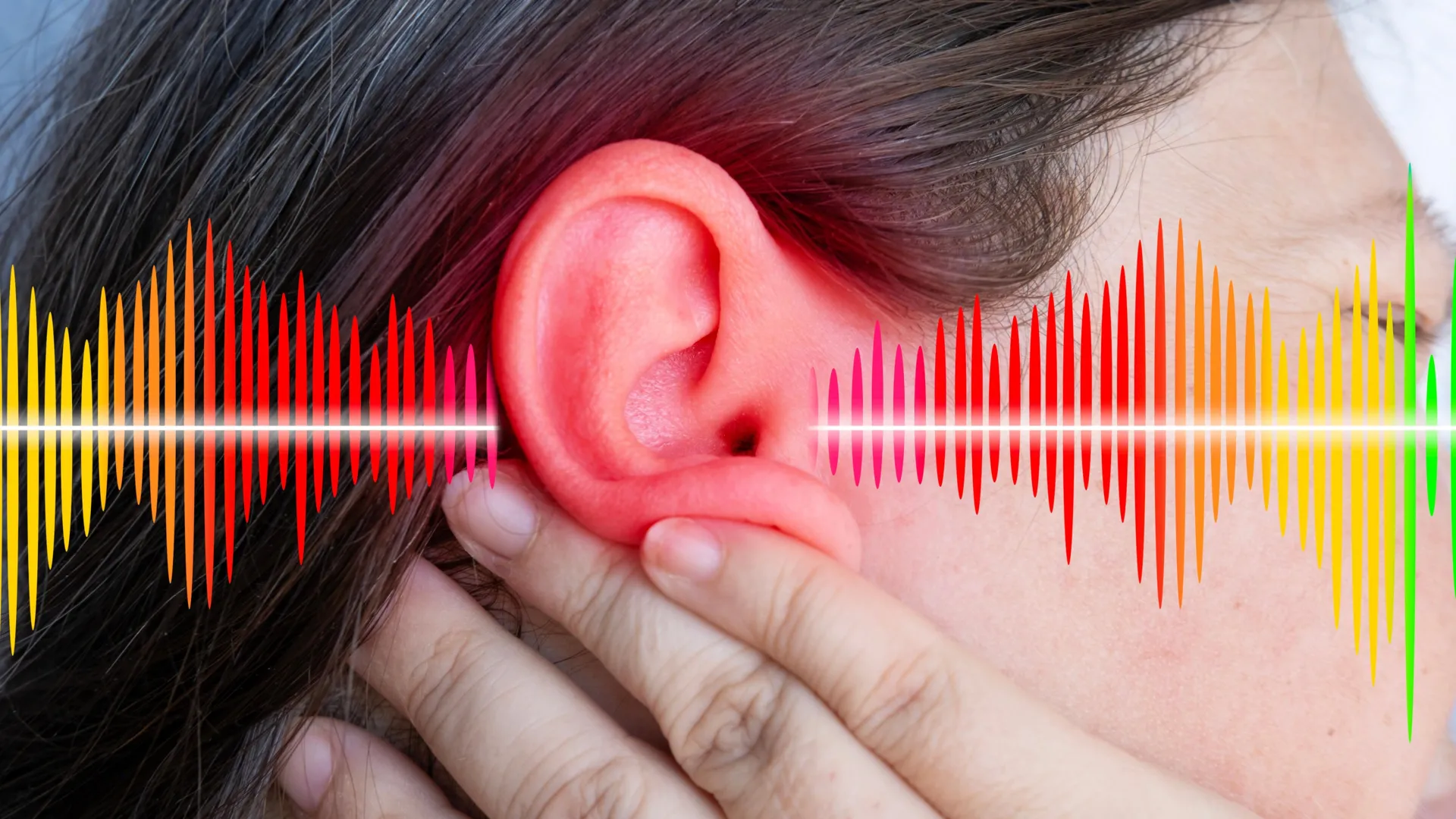
Tinnitus is a complex sensory phenomenon characterized by the perception of sound in the absence of an external acoustic stimulus. While often dismissed as a minor nuisance, for a significant portion of the population, the condition is debilitating. It is frequently comorbid with anxiety, insomnia, and severe depression, creating a feedback loop where the distress of the noise worsens the patient’s psychological state, which in turn may heighten the perception of the noise. The new research suggests that the very chemicals used to treat the psychological distress associated with tinnitus—specifically Selective Serotonin Reuptake Inhibitors (SSRIs)—might be contributing to the intensity of the auditory symptoms.
The Global Burden and Psychological Impact of Tinnitus
To understand the weight of these findings, one must consider the scale of the condition. Epidemiological data indicates that approximately 14% of the global adult population experiences some form of tinnitus. In severe cases, which account for roughly 2% to 3% of the population, the condition can lead to cognitive impairment and a profound decrease in quality of life. In the United States alone, the American Tinnitus Association estimates that over 50 million people experience the condition to some degree, with nearly 20 million struggling with chronic, burdensome symptoms.
The condition is particularly prevalent among military veterans and industrial workers exposed to high-decibel environments, though it can also be triggered by aging, ear infections, or cardiovascular issues. Despite its prevalence, there is no "cure" in the traditional sense. Current treatments focus on management, such as sound masking, cognitive behavioral therapy (CBT), and occasionally, the prescription of antidepressants to manage the secondary symptoms of anxiety and depression. However, the OHSU study suggests that this pharmacological approach requires a more nuanced execution than previously understood.
Identifying the Dorsal Cochlear Nucleus Connection
The research team, led by co-senior author Laurence Trussell, Ph.D., a professor of otolaryngology in the OHSU School of Medicine, focused on a specific region of the brain called the dorsal cochlear nucleus (DCN). The DCN is the first station in the brain where auditory information from the ears is processed. It serves as a relay point where sensory inputs are integrated and modulated before being sent to the higher auditory cortex.
For years, scientists have suspected that tinnitus is not an "ear problem" but a "brain problem." When the ears are damaged—whether by loud noise or age—the brain’s auditory circuits receive fewer signals. In response, the brain appears to "turn up the gain," increasing the sensitivity of neurons to compensate for the loss of input. This compensatory mechanism is thought to create the phantom sounds of tinnitus.
The OHSU and Anhui University study utilized mice to explore how serotonin influences this "gain" in the DCN. By examining the synaptic level of the brain, researchers discovered that serotonin-producing neurons send axons directly into the DCN. When serotonin levels rise, these neurons stimulate specialized cells called fusiform cells. These cells, which are highly sensitive to sound, become hyper-excitable under the influence of serotonin. This hyper-excitability effectively mimics the neural activity associated with hearing a sound, even when the environment is silent.
Methodology: Optogenetics and the Auditory Startle Test
The study employed cutting-edge neurological techniques to isolate the effects of serotonin. The primary tool used was optogenetics, a method that involves genetically modifying specific neurons so they can be controlled using light. By using fiber-optic cables to deliver light pulses to the serotonin-producing neurons in the mice, the researchers could "switch on" the serotonin flow to the auditory system with millisecond precision.
To determine if the mice were actually experiencing tinnitus, the team used a modified version of the "gap-startle" test, also known as the Gap Prepulse Inhibition of Acoustic Startle (GPIAS). In a normal environment, a sudden loud noise causes a "startle" reflex in a mouse. If a brief period of silence (a gap) precedes the loud noise, the mouse’s startle reflex is normally reduced because the gap serves as a warning.
However, if a mouse is experiencing tinnitus, the "phantom" ringing fills the silence of the gap. Consequently, the mouse does not perceive the gap and is startled just as intensely as if there had been no warning. By observing this lack of inhibition in the startle reflex when serotonin neurons were activated, the researchers confirmed that the mice were exhibiting behaviors consistent with the experience of tinnitus.
The SSRI Dilemma: A "Catch-22" for Patients
The most significant clinical implication of the study involves Selective Serotonin Reuptake Inhibitors (SSRIs). SSRIs, such as fluoxetine (Prozac), sertraline (Zoloft), and escitalopram (Lexapro), are among the most commonly prescribed drugs in the world. They work by preventing the reabsorption of serotonin in the brain, thereby increasing its availability to improve mood and emotional stability.
Because tinnitus is so frequently accompanied by depression and anxiety, many patients are prescribed SSRIs to help them cope with the mental strain of the condition. However, the OHSU findings suggest that by increasing serotonin, these medications may be inadvertently "fueling the fire" of the tinnitus itself.
"People with tinnitus should work with their prescribing physician to find a drug regimen that gives them a balance between relief of psychiatric symptoms like depression and anxiety, while minimizing the experience of tinnitus," stated Dr. Trussell. He emphasized that the goal is not to discourage the use of antidepressants, which are life-saving for many, but to encourage a more tailored approach to treatment.
This research validates long-standing anecdotal reports from patients who have complained that their tinnitus worsened shortly after starting an SSRI regimen. Historically, these reports were sometimes dismissed by clinicians as a side effect of the patient’s underlying anxiety rather than a direct result of the medication. The OHSU study provides the physiological evidence needed to take these patient reports seriously.
A Chronology of Research: From 2017 to the Present
The recent publication in PNAS is the culmination of years of collaborative effort. The foundation for this work was laid in 2017, when Trussell and his colleagues first identified that the DCN was highly sensitive to serotonin. That initial study suggested a correlation but did not fully map the specific circuit or demonstrate the behavioral outcome in live subjects.
Zheng-Quan Tang, Ph.D., now of Anhui University in China, played a pivotal role in bridging these discoveries. Tang began the project as a postdoctoral scholar in Trussell’s laboratory at OHSU’s Vollum Institute. By moving from cellular observations in 2017 to behavioral optogenetic studies in the current paper, Tang and the team were able to prove that the serotonin circuit not only exists but is capable of inducing the sensory experience of tinnitus.
"We’ve suspected that serotonin was involved in tinnitus, but we didn’t really understand how," Tang said. "Now… we’ve found a specific brain circuit involving serotonin that goes straight to the auditory system. When we turned that circuit off, we were able to ameliorate the tinnitus significantly."
Future Directions: Precision Medicine and Targeted Therapies
The discovery of this specific circuit opens the door to a new generation of tinnitus treatments. Currently, pharmacological treatments for tinnitus are broad-spectrum, affecting the entire brain and often resulting in a wide array of side effects. The OHSU researchers believe that the future lies in precision medicine—developing drugs that can target serotonin receptors in the mood centers of the brain while leaving the auditory centers untouched.
There are many different types of serotonin receptors (such as 5-HT1A, 5-HT2C, etc.) distributed throughout the brain. If scientists can identify exactly which receptor subtype is responsible for the excitation of the fusiform cells in the dorsal cochlear nucleus, they could potentially develop a "blocker" to prevent serotonin from affecting the ears, even while a patient continues to take an SSRI for depression.
Furthermore, the study suggests that "turning off" this circuit can reduce tinnitus symptoms. This could lead to the development of localized therapies, such as deep brain stimulation or specialized sound therapies designed to desensitize the DCN to serotonergic input.
Conclusion and Expert Validation
The research was supported by the National Institutes of Health (NIH) through award RO1DC004450. While the findings are currently limited to animal models, the biological parallels between the mouse and human auditory systems are strong enough to warrant immediate attention in clinical settings.
The study serves as a call to action for the medical community to adopt a more holistic view of sensory and mental health. For the 14% of the world living with the "unbearable ringing," the research offers hope that their condition is being decoded at the most fundamental level. By understanding the delicate balance of brain chemistry, researchers are moving closer to a day where the treatment for a troubled mind no longer comes at the cost of a patient’s silence.