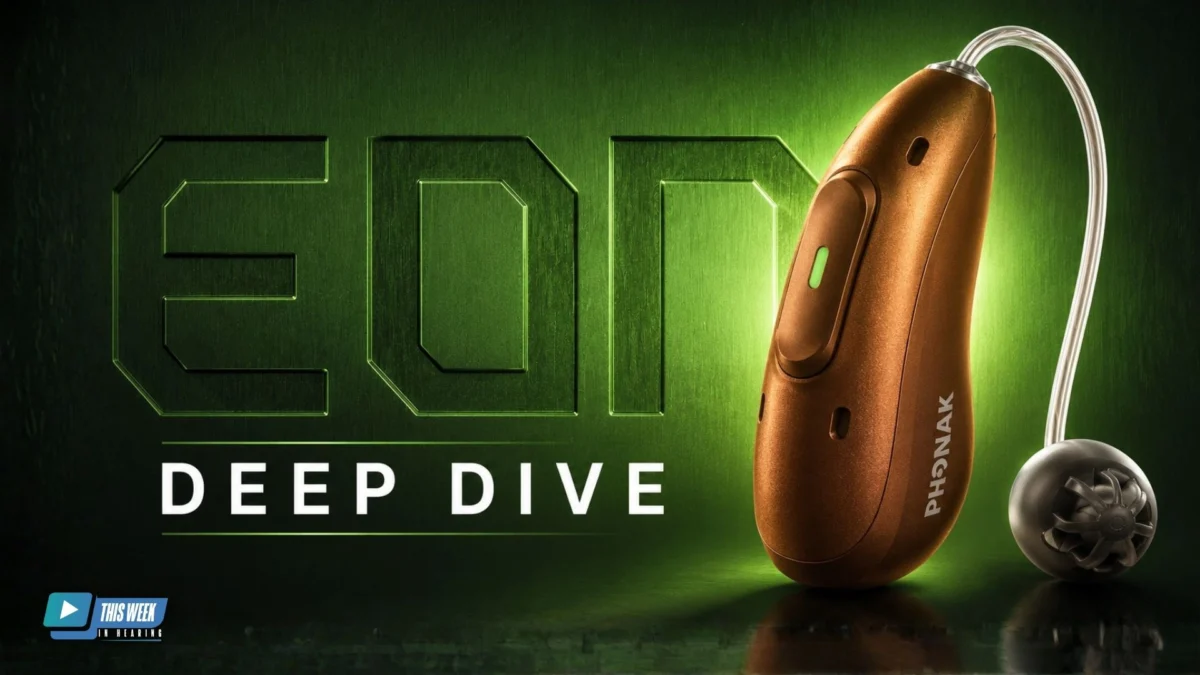
The EON platform represents a concerted effort to address long-standing user demands for enhanced performance without compromising on comfort or aesthetics. By leveraging a more efficient deep neural network (DNN) and a redesigned chip architecture, Phonak has achieved a substantial reduction in the physical size of its flagship Sphere hearing aid. This miniaturization is coupled with an extension of AI-based speech processing capabilities throughout the day, ensuring consistent clarity and reduced listening effort across diverse and challenging environments.
Strategic Launch at Ravinia Festival: A Testament to Accessibility
The choice of Ravinia Festival as the launch venue was highly symbolic and strategically significant. Located north of Chicago, Ravinia is one of the region’s most iconic live music destinations, established over a century ago by a railroad company to boost ridership. Its sprawling grounds feature multiple indoor and outdoor concert venues, including the 2,800-seat Hunter Pavilion, the summer home of the Chicago Symphony Orchestra since 1936, and an adjacent lawn accommodating up to 9,000 picnickers. The festival hosts a wide array of musical genres, from classical to contemporary, often enjoyed by patrons bringing elaborate dinner spreads.
The nature and popularity of Ravinia directly underscore a critical element of the EON launch: accessibility. Traditional assistive listening systems (ALS) often struggle in large, open-air venues due to factors like live sound delay and signal dispersion. The festival’s commitment to improving the experience for all patrons made it an ideal partner for Phonak’s new Auracast initiative. During the plenary session, it was announced that Phonak, in collaboration with Ravinia and Andrew Bellavia’s AuraFuturity, plans a permanent Auracast installation across the festival grounds. This pioneering project aims to make Ravinia’s popular outdoor lawn concerts significantly more accessible to individuals with hearing loss, a clear demonstration of Auracast’s real-world potential.
Technological Core: The HYPERSONIC AI Chip and Miniaturization
At the heart of the EON platform is the new HYPERSONIC AI chip, a marvel of miniaturized computing. This chip, alongside a completely retrained DNN architecture, has enabled Phonak to achieve a 16% efficiency improvement in DNN operation and a 25% increase in chip efficiency compared to previous generations. These gains are crucial, allowing Phonak to offer the powerful Spheric Speech Clarity features in a significantly smaller Receiver-In-Canal (RIC) form factor, comparable to their Paradise Lives models, which were praised for their comfort. The reduction in size and weight addresses a common concern among users, particularly those who wear glasses, by making the device less obtrusive and "more easily forgotten." Despite the smaller footprint, EON maintains a robust 22 hours of daily listening, ensuring all-day performance.
The new design philosophy, dubbed "Sphere," prioritizes hearing performance while eliminating previous trade-offs related to device size. This advancement means that users no longer have to choose between cutting-edge sound processing and a discreet, comfortable fit. The positive feedback from hearing care professionals (HCPs) and early testers regarding the reduced size indicates a strong market reception for this design evolution.
Enhanced Auditory Processing: Spheric Speech Clarity 3.0 and AutoSense OS AI 8.0
EON introduces Spheric Speech Clarity 3.0, an evolution of Phonak’s AI-based speech processing. This third generation of DNN technology is now accessible to a broader range of users, extending to the 50 technology level (with manual activation), in addition to the existing 70 and 90 levels (with full automatic control). The core enhancement lies in how the system engages and disengages its advanced speech processing modes.
AutoSense OS AI 8.0, the latest iteration of Phonak’s adaptive operating system, has been re-engineered to activate Spheric Speech Clarity sooner and maintain its engagement more consistently, even in transient or fluctuating listening environments. This "hysteresis" in activation ensures a smoother and more seamless experience, preventing the disruptive "hopping in and out" of processing modes that could occur in previous generations. This improvement directly responds to user feedback requesting more consistent benefit from Spheric Speech Clarity throughout the day, now made possible by the increased power efficiency of the HYPERSONIC chip.
Dynamic Compression and Wind Noise Management
Beyond speech clarity, EON brings significant improvements to overall sound quality and environmental awareness. The new APD 4.0 (Adaptive Phonak Digital) system redefines the hearing aid’s compression strategy. Unlike previous models where AutoSense would classify a scene before adjusting compression, APD 4.0 moves the determination of the compression strategy "out in front." This means the compression adapts in real-time to sudden changes in sound levels, such as an espresso machine starting or a sudden increase in background chatter. This dynamic adjustment, measured by the "envelope difference index," ensures higher fidelity and a more natural sound quality, particularly beneficial for complex soundscapes like live music. The system intelligently differentiates between speech-in-noise scenarios and purely musical environments, applying a slower compression rate for music to prevent an "hopping" sound quality, a common critique from musicians and audiophiles.
Another standout feature is WindBlock 2.0, a crucial enhancement for active users. This technology intelligently identifies wind shear on specific microphones and reduces their focus, shifting processing to microphones less exposed to the wind. This innovative approach achieves a remarkable reduction of up to 50 dB in wind noise and delivers a substantial 30 dB improvement in speech-to-noise ratio (SNR) in windy conditions, a 24 dB leap over the previous generation. Michael Preuss, discussing the data, noted that wind noise can reach up to 80-85 dB at microphone level, making a 50 dB reduction profoundly impactful. Beyond just reducing discomfort, WindBlock 2.0 significantly improves "transparency," allowing users to remain aware of their environment, such as hearing an approaching car while running, even in windy conditions. This feature is integrated across all EON technology levels, reflecting Phonak’s commitment to universal outdoor accessibility.
Universal Connectivity: Auracast, Bluetooth, and Roger Ecosystem
Connectivity remains a cornerstone of Phonak’s strategy, and EON reinforces this with the addition of Auracast™ alongside its established universal Bluetooth® and Roger™ ecosystems. Auracast is a new broadcast audio technology that allows an audio transmitter to broadcast to an unlimited number of nearby compatible receivers, offering a new paradigm for public accessibility. Phonak reports impressive Auracast reception at distances up to 211 meters (692 feet) under test conditions, demonstrating the robustness of its implementation. This extended range is particularly vital for large public venues like museums, airports, and concert halls, where a single transmitter can cover vast areas, enhancing the listening experience for individuals with hearing loss.
The strategic importance of Auracast was further highlighted by the announcement that existing Phonak Infinio and Infinio Ultra users are expected to gain access to Auracast through a future firmware update. This move is expected to significantly accelerate Auracast adoption, as Phonak, a market share leader, will inject a substantial number of compatible devices into the ecosystem. This proactive approach underscores Phonak’s commitment to future-proofing its devices and expanding accessibility on a broader scale. While EON currently lacks a telecoil option, Phonak suggests leveraging its Roger microphone system as an effective alternative for challenging acoustic environments, further integrating its robust connectivity portfolio.
The Science of Listening Effort and Cognitive Load
The EON platform’s advancements are not merely based on anecdotal evidence but are rigorously backed by extensive research, including groundbreaking studies on listening effort and cognitive load. Stefan Launer, a key figure in Phonak’s R&D, elaborated on studies conducted in collaboration with Anne and Dave Eddins from the University of Central Florida. These studies employed a novel paradigm combining behavioral measures (speech intelligibility and reaction time) with neurophysiological measures, including functional near-infrared spectroscopy (fNIRS) and electroencephalography (EEG).
The research demonstrated that DNN-based solutions, like those in Sphere and EON, significantly outperform traditional binaural beamformers in complex, dynamic listening conditions with multiple talkers. Users experienced improved speech understanding, shorter reaction times, and reduced cognitive load. Neurophysiological data revealed a stronger EEG signal, indicating better brain processing and representation of speech, while fNIRS showed reduced blood flow in the brain, correlating with lower energy consumption and less listening effort. These findings underscore a paradigm shift in hearing care, moving beyond mere audibility to address the holistic benefits of reduced cognitive burden, improved memory recall, less fatigue, and greater social participation. Such research directly informs the ongoing refinement of DNN algorithms, though not used for direct model training, it validates the efficacy of the approach and guides future development.
Broader Implications and the Future of AI in Hearing Aids
The launch of EON and its integrated Auracast capabilities carry significant implications for the hearing health industry and public accessibility. By enhancing performance in challenging real-world scenarios, miniaturizing advanced technology, and championing universal connectivity, Phonak is setting new benchmarks. The planned Auracast installation at Ravinia Festival serves as a tangible model for how public venues can transform their accessibility offerings, moving beyond niche solutions to a broadly adopted standard.
The continuous evolution of AI, particularly deep neural networks, in hearing aids points to an exciting future. Experts like Stefan Launer foresee continued performance improvements, with DNNs potentially incorporating more spatial information, replacing traditional gain models, and even handling advanced features like feedback canceling. The vision includes highly personalized sound experiences, where hearing aids might be trained to prioritize specific voices (like a spouse’s) or intelligently reject unwanted background speech. While these advanced capabilities are still a few years away, EON represents a crucial step in this ongoing technological progression, building on the foundational successes of previous generations like Marvel and Infinio.
The EON platform also introduces NAL-NL3 fitting formula support in Phonak Target 12.0, providing hearing care professionals with expanded customization options to optimize fittings for individual patient needs. This attention to professional tools, coupled with the user-centric innovations, positions EON as a comprehensive solution designed to improve daily life for individuals with hearing loss.
The EON platform embodies a holistic approach to hearing health, focusing on clarity, connectivity, and design. By delivering uncompromised performance in a smaller, more discreet package, while simultaneously enhancing real-world listening experiences and championing universal accessibility through Auracast, Phonak is poised to significantly impact the lives of hearing aid wearers worldwide. The industry will closely watch the adoption of Auracast and the continued evolution of AI-driven features as Phonak leads the charge into the next generation of hearing technology.