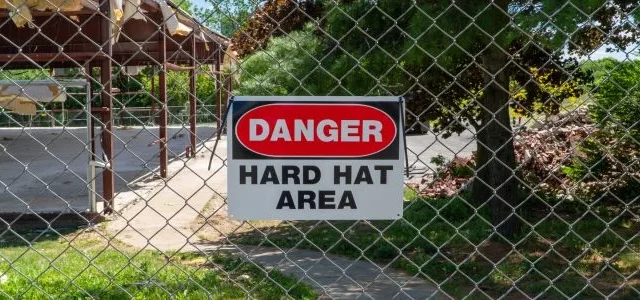

The persistence of a damaged guardrail, the chronic absence of inspection logs, or the recurring obstruction of emergency egress points are rarely the result of individual negligence alone. Instead, these patterns indicate systemic failures in the underlying safety management architecture. By failing to look beyond the immediate fix, companies often find themselves trapped in a cycle of reactive maintenance, leaving them vulnerable to catastrophic incidents that could have been prevented with deeper analytical rigor.
The Anatomy of a Systemic Failure
To understand why recurring findings remain a persistent challenge in industrial safety, one must differentiate between symptoms and root causes. In a standard safety workflow, a hazard is identified, a work order is issued, and the physical issue is resolved. However, if the hazard returns, the safety professional must pivot from asking, "Why did this happen?" to "What institutional conditions allowed this to recur?"

Chronologically, the failure cycle often follows a predictable path:
- The Detection Phase: An inspector identifies a deficiency.
- The Remediation Phase: A short-term fix is applied, often characterized by patching rather than replacing or re-engineering.
- The Normalization Phase: Staff and management return to standard operations without addressing the behavioral or systemic incentives that caused the hazard.
- The Regression Phase: The hazard re-emerges, confirming that the initial "fix" was insufficient.
Data from the Occupational Safety and Health Administration (OSHA) suggests that the most frequently cited standards—such as 1910.147 (Control of Hazardous Energy) and 1910.178 (Powered Industrial Trucks)—frequently appear on the "Top 10" list of violations annually. These are rarely new hazards; they are the same regulatory breaches occurring in different facilities across the country. The persistence of these violations highlights a disconnect between corporate safety policy and the operational reality on the factory floor.
The Statistical Reality of Latent Risks
Industry research indicates that for every major industrial accident, there are hundreds of near-misses and thousands of unsafe conditions that go uncorrected. The "Safety Pyramid," originally popularized by H.W. Heinrich and later adapted by modern safety scientists, posits that repeat minor findings are the precursors to major loss-of-life events.
When a company experiences recurring inspection findings, it is not merely dealing with a maintenance backlog; it is operating in a state of "latent failure." These failures remain dormant in the system—hidden in poor training modules, ambiguous safety protocols, or conflicting production pressures—until a specific set of circumstances aligns to trigger an accident.

For example, if a facility logs an issue with "missing machine guards" three times in a single year, the implication is that the facility’s culture prioritizes production throughput over machine integrity. If management does not address the production schedule that incentivizes the removal of those guards, they are effectively sanctioning the behavior that leads to injury.
Bridging the Gap: Policy vs. Practice
One of the most significant contributors to recurring findings is the "gap" between written procedures and actual work practices. In many organizations, safety manuals are drafted by corporate teams who may not fully grasp the ergonomic or mechanical constraints of the production floor.
When employees find that a procedure is impractical or hinders their ability to meet production quotas, they will invariably develop "workarounds." These workarounds are the primary source of recurring findings. If an emergency exit is blocked by pallets, it is rarely because the floor manager is indifferent to safety. It is often because the facility design lacks adequate storage space, and the pressure to maintain inventory flow forces employees to choose between productivity and compliance.
The Role of Accountability and Leadership
Effective safety management requires a shift in how accountability is structured. In many organizations, the responsibility for safety rests solely on the safety manager. However, data-driven safety programs suggest that when safety is treated as a core operational metric—comparable to quality control or production yield—the rate of recurring findings drops significantly.

Professional safety consultants emphasize that leaders must move toward "active supervision." This involves not only conducting inspections but also analyzing the data trends over 12 to 24 months. If a specific department consistently reports issues with lockout/tagout (LOTO) procedures, management must investigate whether the tools provided are sufficient, whether the training was effective, or if the time allocated for LOTO is perceived as a barrier to production.
Official Perspectives on Root Cause Analysis
OSHA’s Recommended Practices for Safety and Health Programs advocate for a transition toward "Systems-Based Safety." The agency argues that correcting a hazard without addressing the root cause is a failure of the safety program. By moving from a reactive to a proactive model, organizations can utilize recurring findings as a roadmap for system improvement.
Industry reactions from safety board members and insurance risk assessors suggest that companies with the lowest insurance premiums are those that have digitized their inspection findings. Digital platforms allow for real-time tracking, enabling safety directors to see, for instance, that a specific machine in the Midwest facility has had a recurring electrical issue every quarter for two years. This allows for an intervention—such as replacing the machine or upgrading the electrical infrastructure—rather than just resetting a breaker.
The Broader Implications for Industry
The cost of ignoring recurring findings extends beyond the risk of human injury. There is a quantifiable financial impact on organizations:

- Regulatory Fines: Repeat violations are often categorized by OSHA as "Willful" or "Repeat" violations, which carry significantly higher monetary penalties than first-time offenses.
- Operational Downtime: Every time a recurring hazard forces a shutdown or a corrective work stoppage, the organization suffers a loss in productivity that exceeds the cost of a permanent fix.
- Employee Retention: A workplace that ignores repeated safety hazards signals to its workforce that their well-being is secondary to production. This leads to higher turnover rates, lower morale, and a loss of institutional knowledge.
Implementing a Sustainable Path Forward
To break the cycle of recurring inspection findings, organizations must adopt a structured analytical framework. The following steps are recommended for safety departments looking to move beyond surface-level fixes:
- Trend Analysis: Aggregate inspection data to identify "hot spots." If a deficiency appears more than twice in a rolling 12-month period, it should trigger a formal root cause analysis (RCA).
- Employee Engagement: Engage those closest to the hazard. If an exit is blocked, ask the floor staff why. They are often the best source of information regarding the systemic pressure causing the violation.
- Resource Reallocation: If a hazard persists because of insufficient equipment or space, management must recognize this as a resource issue, not a behavioral one, and provide the necessary capital investment.
- Verification of Effectiveness: After a corrective action is taken, perform a follow-up audit after a specified interval to ensure the fix has actually solved the problem rather than just masking the symptoms.
Conclusion
The message contained within recurring inspection findings is one of the most valuable resources a company has. While it is easy to view these findings as an annoyance or a sign of poor performance, they should be reframed as a free consulting report on where the organization’s management system is breaking down. By treating these repeat issues as systemic warnings, organizations can preempt the catastrophic failures that define so many workplace tragedies.
Safety is not a static destination reached once a policy is written; it is a continuous process of calibration. When an organization listens to what its inspections are trying to say, it transforms from a reactive entity into a resilient one, capable of sustaining both high production standards and a culture of genuine, deep-seated safety. The transition from fixing problems to preventing them is the ultimate marker of a mature and effective safety management program.