For decades, the scientific community has understood that sound travels from the ear to the auditory cortex, where it is registered as electrical impulses. However, the internal mechanisms that govern how the brain manages continuous streams of sound—such as a steady musical beat or a sequence of tones—have remained largely opaque. The new findings suggest that the brain acts more like a high-performance orchestra than a simple recording device, constantly retuning its various "instruments" or networks to align with the frequency and structure of the external environment.
The Technological Breakthrough: Understanding FREQ-NESS
The cornerstone of this research is the introduction of the FREQ-NESS methodology. Developed by Dr. Mattia Rosso and Associate Professor Leonardo Bonetti at the Center for Music in the Brain (MIB) at Aarhus University, in collaboration with the University of Oxford, FREQ-NESS represents a significant leap forward in computational neuroscience. Traditional neuroimaging techniques, such as Magnetoencephalography (MEG) or Electroencephalography (EEG), have long been used to monitor brainwaves, but they often struggle to distinguish between overlapping signals that occur simultaneously across different regions of the brain.
FREQ-NESS addresses this limitation by utilizing advanced algorithms to disentangle these overlapping networks based on their dominant frequencies. In the past, scientists typically categorized brain activity into fixed bands: delta (0.5–4 Hz), theta (4–8 Hz), alpha (8–12 Hz), beta (12–30 Hz), and gamma (above 30 Hz). While these categories are useful, they often oversimplify the fluid nature of neural communication. The FREQ-NESS approach is entirely data-driven, meaning it does not rely on these predefined categories. Instead, it identifies the unique frequency signature of a neural network and then traces how that specific signal propagates across the brain’s physical space.
By applying this "source separation" technique, the researchers were able to see how different networks emerge and dissolve in response to sound. This provides a high-resolution map of the brain’s functional architecture, showing that the brain’s "anatomy" in terms of activity is far more plastic and frequency-dependent than previously believed.
Chronology of the Research and Experimental Design
The journey toward this discovery began several years ago as part of a broader effort to understand the neurological basis of music cognition. The Center for Music in the Brain, a world-leading institution in this field, sought to answer a fundamental question: why does rhythm have such a profound impact on human consciousness and physical movement?
The study involved a series of controlled experiments where participants were exposed to varying auditory stimuli, ranging from simple metronomic beats to complex melodic structures. Using MEG sensors to capture the magnetic fields produced by neuronal activity, the researchers collected massive datasets of brain responses. The challenge, however, was the "noise" of the brain—the fact that millions of neurons are firing for different reasons at any given moment.
Between 2022 and 2024, Dr. Rosso and Professor Bonetti refined the FREQ-NESS algorithm to filter this noise. They focused on how the brain’s internal oscillations "entrain" or synchronize with external rhythms. The results, finalized in early 2024, showed that when a person hears a steady rhythm, the brain’s large-scale networks do not just vibrate at that frequency; they physically reorganize their connectivity patterns to optimize the processing of that specific input.
Supporting Data: The Mechanics of Neural Reconfiguration
The data gathered during the study revealed several key insights into the brain’s rhythmic structure. One of the most significant findings was the observation of "cross-frequency coupling," where different brainwave frequencies interact to coordinate information transfer between distant brain regions. For example, while the auditory cortex might register a beat at a low frequency, higher-frequency networks in the frontal lobe—associated with attention and prediction—reorganize themselves to anticipate the next beat.
The study demonstrated that this reconfiguration happens in "real time," with latencies measured in milliseconds. This suggests that the brain is constantly running a predictive model of the world. When the external rhythm changes, the FREQ-NESS analysis showed a near-instantaneous shift in the spatial distribution of the brain’s networks.
Furthermore, the research highlighted the high reliability of the FREQ-NESS method across different datasets. Whether the stimulus was a simple beep or a complex musical phrase, the algorithm consistently identified the core networks involved in the reorganization. This reliability is crucial for the scientific method, as it suggests that the findings are not artifacts of a specific experiment but represent a fundamental property of human neurobiology.
Official Perspectives and Academic Reactions
The implications of the study have been met with enthusiasm from the international neuroscience community. Dr. Mattia Rosso emphasized that this method moves beyond the static view of brain anatomy. "We’re used to thinking of brainwaves like fixed stations and of brain anatomy as a set of distinct regions," Rosso noted. "But what we see with FREQ-NESS is much richer. Starting from the fundamental principle that brain activity is organized through different frequencies, we’ve designed a method that finds how each frequency is expressed across the whole brain."
Professor Leonardo Bonetti, who holds positions at both Aarhus and Oxford, highlighted the broader philosophical and clinical implications of the work. "The brain doesn’t just react: it reconfigures. And now we can see it," Bonetti stated. He suggested that this ability to visualize real-time reconfiguration could change how scientists study not just music, but the very nature of consciousness itself. "This could change how we study brain responses to music and beyond, including consciousness, mind-wandering, and broader interactions with the external world."
Other experts in the field of neuroimaging have pointed out that the data-driven nature of FREQ-NESS removes much of the human bias inherent in traditional analysis. By letting the data define the networks rather than forcing the data into "predefined regions of interest," the researchers have provided a more objective lens through which to view neural dynamics.
Analysis of Implications: Clinical Diagnostics and BCI
The development of the FREQ-NESS method and the discovery of dynamic neural reorganization have far-reaching implications that extend well beyond the study of music.
1. Clinical Diagnostics for Neurological Disorders
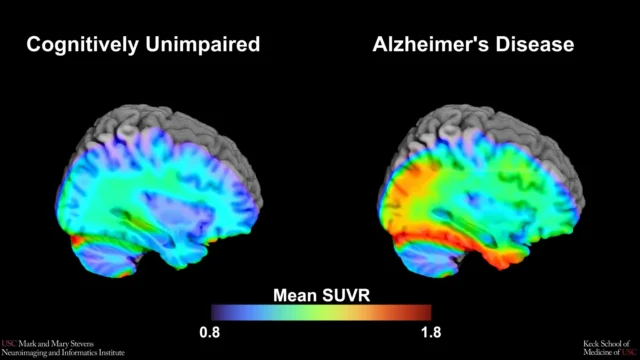
One of the most promising applications of this research is in the field of clinical neurology. Many neurological and psychiatric conditions, such as Alzheimer’s disease, schizophrenia, and epilepsy, are characterized by disruptions in how brain networks communicate. Current diagnostic tools often catch these disruptions only after significant damage has occurred.
With the high spectral and spatial precision of FREQ-NESS, clinicians may eventually be able to identify "network dysrhythmias"—subtle failures in the brain’s ability to reorganize in response to stimuli—long before physical symptoms manifest. For instance, if a patient’s brain fails to reconfigure its networks correctly when listening to a simple rhythm, it could serve as an early biomarker for cognitive decline.
2. Brain-Computer Interfaces (BCI)
The field of Brain-Computer Interfaces, which seeks to allow individuals to control external devices (like prosthetic limbs or computers) using only their thoughts, relies heavily on the accurate interpretation of brainwaves. The ability of FREQ-NESS to disentangle overlapping signals in real time could significantly improve the "signal-to-noise" ratio in BCI technologies. By understanding how specific frequencies propagate through the brain, engineers can design more responsive and intuitive interfaces for paralyzed patients or those with locked-in syndrome.
3. Understanding Consciousness and Mind-Wandering
The study also opens new doors in the study of "internal" states. If the brain reconfigures itself to handle external sounds, how does it reconfigure during states of meditation, dreaming, or mind-wandering? Professor Bonetti’s work at the Centre for Eudaimonia and Human Flourishing at Oxford specifically looks at how these neural dynamics relate to human well-being. Understanding the "rhythmic structure" of a healthy, flourishing brain could lead to new therapeutic interventions for depression and anxiety, where the brain often becomes "stuck" in maladaptive patterns of activity.
Future Directions: Individualized Brain Mapping
The research team has already launched a large-scale international research program to expand on the FREQ-NESS methodology. Supported by a global network of neuroscientists, the next phase of the project aims to create individualized brain maps.
Because every human brain is unique, a "one-size-fits-all" model of neural activity is often insufficient for precision medicine. The researchers believe that FREQ-NESS can be used to create a personalized "frequency fingerprint" for individuals. This would allow for highly tailored treatments, whether in the form of targeted neurostimulation, personalized music therapy, or specific pharmacological interventions.
The study’s conclusion underscores a shift in the paradigm of cognitive science: the brain is not a static map, but a dynamic, ever-changing landscape that shapes itself to the rhythms of the world around it. As this methodology is applied to more diverse populations and experimental conditions, the scientific community moves closer to a unified theory of how the human mind interacts with reality.
The work of Rosso, Bonetti, and their colleagues at Aarhus and Oxford provides a new set of tools to explore the "symphony" of the human brain, ensuring that the study of auditory perception remains at the forefront of neurological discovery for years to come. By revealing the hidden choreography of brainwaves, they have not only enriched our understanding of music but have provided a clearer window into the very essence of human thought and perception.