The reality is that persistent heel and arch pain—often manifesting as plantar fasciitis—is not merely a nuisance. It is a biomechanical feedback loop. Over months, pain alters how a worker stands, shifts their weight, and navigates uneven jobsite surfaces. This adjustment phase causes a cascade of secondary musculoskeletal issues, ranging from knee and hip misalignment to chronic lower back strain. Furthermore, the persistent distraction of pain erodes cognitive focus, accelerates physical fatigue, and prematurely pushes experienced tradespeople toward light duty or out of the industry entirely.
The Regulatory Gap: ASTM F2413 in Context
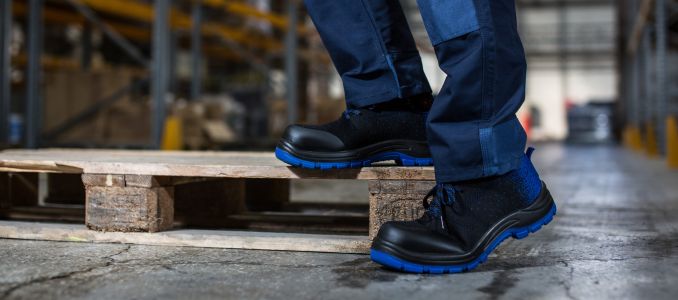
The fundamental disconnect in modern safety policy lies in the reliance on the ASTM F2413 standard as the singular benchmark for "safe" footwear. OSHA’s foot protection rule, 29 CFR 1910.136, mandates protective footwear wherever hazards exist from falling objects, rolling machinery, punctures, or electrical currents. To achieve compliance, employers almost exclusively specify ASTM F2413-rated boots.
While ASTM F2413 is a robust document, its scope is intentionally narrow. It verifies impact and compression resistance for the toe cap, and it includes supplemental testing for metatarsal guards, puncture resistance, and electrical hazard (EH) or static dissipative (SD) properties. It is a standard designed to prevent acute, catastrophic trauma.
However, the standard is silent on the physiological needs of the foot over a 10-hour shift. There are no requirements for arch support, no metrics for midfoot stability, and no specifications for how a boot’s midsole geometry behaves under load on unforgiving surfaces like industrial concrete. By adopting a "check-the-box" procurement policy that prioritizes only F2413 compliance, employers are effectively ensuring that the front of the foot is shielded from a falling hammer, while the bottom of the foot is left to deteriorate through systemic neglect.

Chronology of Foot-Related Occupational Injury
The progression from a compliant boot to a career-limiting injury is rarely instantaneous. Industry data suggests a clear, if often ignored, chronology:
- Months 1–3 (The Adaptation Phase): A worker begins wearing new, rigid safety boots. The worker reports "break-in" pain, which is dismissed as standard. During this period, the lack of arch support causes the plantar fascia to overstretch as the foot flattens against the hard sole.
- Months 4–9 (The Compensatory Phase): Micro-tears in the plantar fascia tissue begin to occur. The worker unconsciously shifts weight to the outer edges of the feet to avoid pain. This alters the gait, causing the knees and lower back to compensate for the imbalance.
- Months 10–18 (The Symptomatic Phase): Clinical plantar fasciitis sets in. The worker experiences intense pain during the first steps of the morning. Performance metrics begin to decline due to fatigue.
- Year 2 and Beyond (The Attrition Phase): The worker begins seeking medical intervention, utilizing pain management, or requesting physical therapy. If the footwear remains unchanged, the condition becomes chronic, often leading to the worker’s departure from the trade due to "wear and tear."
Data and The Economic Cost of Foot Fatigue
The financial implications of this oversight are significant. According to data from the Bureau of Labor Statistics (BLS) and the National Safety Council (NSC), musculoskeletal disorders (MSDs) related to the lower extremities account for a significant percentage of days-away-from-work cases. While acute crush injuries are tracked with precision, the "hidden" cost of foot-related fatigue is embedded within the broader category of "overexertion and bodily reaction."
Recent surveys in the construction industry indicate that nearly 40% of workers report foot pain at least three times per week. When extrapolated across a workforce of 100, the cumulative impact on productivity—measured in reduced pace, increased breaks, and the higher likelihood of secondary accidents—is substantial. Safety professionals have long recognized that a distracted worker is an unsafe worker; when that distraction is rooted in physical pain, the risk profile of the entire jobsite increases.

Comparative Analysis: PPE Failures
The industry’s struggle with foot support mirrors failures in other Personal Protective Equipment (PPE) categories. For instance, a hearing protector may meet an NRR (Noise Reduction Rating) standard, but if the design is so uncomfortable that workers remove it for 20 minutes an hour to get relief, the effective protection drops to near zero. Similarly, a respirator can pass a fit test but fail in practice if it causes skin irritation or poor visibility, leading to improper use.
In the case of footwear, the failure is not that workers stop wearing the boots—the legal mandate ensures they remain on the feet—but that the "worn-in-practice" property fails to address the anatomical reality of the human foot. The industry is currently treating the boot as a piece of armor rather than a piece of athletic equipment, despite the fact that a worker in the construction trades may walk or stand for as many miles as a professional athlete in a given week.
Perspectives from Occupational Health Professionals
Occupational health specialists and podiatrists who consult for industrial firms argue that the current purchasing paradigm is outdated. "The focus has historically been on protecting the foot from the outside in," notes one industrial ergonomics consultant. "We need to pivot to a model that considers the foot from the inside out. ASTM F2413 protects the bone structure from impact, but it does nothing to protect the soft tissue from gravity."

Several forward-thinking firms have begun to integrate "Ergonomic Footwear Policies" that supplement the ASTM standard. These policies require that boots, in addition to being F2413 compliant, must feature removable, anatomical footbeds, high-rebound cushioning systems, and torsional stability shanks. By moving beyond the minimum legal threshold, these companies report a measurable decrease in reports of foot and back pain.
Broader Implications and The Future of Safety Standards
The potential for a shift in safety standards remains high. As the workforce ages and the physical demands of labor-intensive trades continue to evolve, the distinction between "safety" and "health" is blurring. Safety is the prevention of the accident; health is the preservation of the body over a 30-year career.
If the current standard remains static, the burden of change rests on the shoulders of safety managers and procurement officers. The evidence suggests that a dual-layer strategy is required:

- Compliance: Maintain ASTM F2413 requirements for hazard protection.
- Support: Implement specific criteria for orthotic compatibility, midsole shock absorption, and heel stability.
Failure to address the "support gap" will continue to result in the slow-motion attrition of skilled laborers. The assumption that foot pain is an inevitable byproduct of manual labor is a vestige of an era that prioritized immediate survival over long-term physical sustainability. To protect the future of the trade, the definition of a "safe boot" must expand to include the biomechanical needs of the worker who wears it for 2,000 hours a year.
As industrial technology advances, from exoskeleton prototypes to high-tech wearable sensors, it is paradoxical that the most basic interface between the worker and the jobsite—the boot—remains tethered to standards written for a different century. The transition toward a more holistic approach to foot health is not just a benefit for the worker; it is a vital necessity for the operational efficiency and retention goals of the modern industrial organization.