
The Anatomy of Sound Transmission and Retrocochlear Pathways
To fully grasp retrocochlear hearing loss, a foundational understanding of the auditory system is necessary. Sound waves enter the ear canal, vibrate the eardrum, and are amplified by the ossicles in the middle ear. These vibrations then travel to the cochlea in the inner ear, where they are converted into electrical signals by hair cells. These signals are then transmitted to the brain via the auditory nerve (also known as the cochlear nerve or cranial nerve VIII). The auditory nerve carries these signals to the cochlear nuclei in the brainstem, from where they are relayed through various ascending pathways to the auditory cortex in the temporal lobe for interpretation as sound.
Retrocochlear hearing loss occurs when there is a disruption in this transmission pathway after the cochlea. This means the cochlea might be functioning adequately, but the signal cannot be effectively conveyed or processed by the auditory nerve or the early brainstem auditory centers. This can manifest as a loss of clarity in sound perception, even if the loudness of the sound is perceived normally.
Distinguishing Retrocochlear from Cochlear Hearing Loss

The primary distinction between cochlear and retrocochlear hearing loss lies in the location of the pathology. Cochlear hearing loss directly impacts the hair cells or other structures within the cochlea, affecting the initial conversion of mechanical vibrations into neural signals. This often results in a generalized reduction in hearing sensitivity across various frequencies.
Retrocochlear hearing loss, conversely, affects the neural transmission beyond the cochlea. This can involve the auditory nerve itself, the structures within the internal auditory canal, or the brainstem auditory nuclei and their immediate connections. The consequences can be more nuanced than a simple reduction in loudness. While some individuals might experience diminished hearing sensitivity, a hallmark of retrocochlear impairment is often a disproportionate difficulty in understanding speech, even in quiet environments. This is because the integrity of the neural signal’s encoding and transmission is compromised, leading to distorted or incomplete information reaching the brain for auditory processing.
| Feature | Cochlear Hearing Loss | Retrocochlear Hearing Loss |
|---|---|---|
| Location of Problem | Inner ear (cochlea) | Auditory nerve or proximal brainstem pathways |
| Sound Transmission | Difficulty in converting sound into neural signals | Sound reaches the ear, but the neural signal is impaired in transit |
| Speech Intelligibility | Reduced, especially in noise | Significantly reduced, often disproportionately to hearing loss |
| Common Symptoms | Muffled sounds, difficulty in noise, ringing in ears | Unilateral loss, poor speech clarity, tinnitus, dizziness, balance issues, facial numbness |
| Potential Causes | Age-related changes, noise exposure, infections, ototoxic medications | Tumors, neurological conditions (e.g., MS), vascular issues, trauma |
| Diagnostic Focus | Audiometric tests assessing cochlear function | Audiometric tests plus neuroimaging and electrophysiological assessments |
Key Symptoms of Retrocochlear Hearing Loss
The presentation of retrocochlear hearing loss can be diverse, with symptoms varying based on the specific location and cause of the impairment. However, several common indicators warrant attention from healthcare professionals:
- Unilateral or Asymmetric Hearing Loss: A noticeable difference in hearing ability between the two ears is a significant red flag. This can range from mild difficulty in one ear to a complete loss of hearing on that side.
- Difficulty Understanding Speech: This is often the most prominent and frustrating symptom. Individuals may report that while they can hear sounds, words sound unclear, garbled, or distant, particularly in noisy environments. This difficulty can be significantly more pronounced than what would be expected based on pure-tone audiometry results alone.
- Tinnitus: The perception of ringing, buzzing, or other phantom sounds in the ear or head can be a symptom of auditory nerve irritation or damage.
- Dizziness and Balance Problems: Because the auditory nerve also carries balance information from the vestibular system (located in the inner ear alongside the cochlea), damage or compression affecting the nerve can lead to vertigo, unsteadiness, or a general sense of imbalance.
- Facial Numbness or Weakness: In cases where a growth or lesion impacts the auditory nerve, it may also compress or involve the facial nerve, which travels in close proximity within the internal auditory canal. This can result in facial numbness, tingling, or even weakness.
- Auditory Hallucinations: Though less common, some individuals may experience auditory hallucinations as a symptom of retrocochlear pathology.
Underlying Causes of Retrocochlear Hearing Loss
The spectrum of conditions that can lead to retrocochlear hearing loss is broad, ranging from benign growths to more complex neurological disorders. Understanding these causes is critical for accurate diagnosis and targeted treatment.

- Vestibular Schwannoma (Acoustic Neuroma): This is a non-cancerous tumor that arises from the Schwann cells of the auditory or vestibular nerve. It is one of the most common causes of retrocochlear hearing loss, typically presenting with gradual, unilateral hearing loss, tinnitus, and balance disturbances. As the tumor grows, it can compress the auditory nerve and adjacent structures.
- Multiple Sclerosis (MS): This chronic neurological disease affects the central nervous system, leading to demyelination (damage to the protective sheath of nerve fibers). When MS affects the auditory pathways in the brainstem or the auditory nerve itself, it can disrupt the transmission of auditory signals, causing various hearing and balance-related symptoms.
- Neurodegenerative and Central Nervous System Disorders: A range of conditions can impact the neural pathways responsible for hearing. Auditory Neuropathy Spectrum Disorder (ANSD) is a prime example where the inner ear may be functional, but the auditory nerve or brainstem processing is impaired. Other hereditary neuropathies and central nervous system disorders can also disrupt the auditory signal’s integrity.
- Vascular Conditions: Disruptions in blood flow to the auditory nerve or brainstem, such as those caused by strokes or transient ischemic attacks (TIAs), can damage neural tissue and lead to hearing loss.
- Trauma and Infections: Significant head trauma that affects the auditory nerve or temporal bone, as well as certain infections affecting the nervous system, can also result in retrocochlear hearing loss.
- Other Tumors and Lesions: While vestibular schwannomas are the most frequent, other types of tumors or cysts in the vicinity of the auditory nerve or brainstem can also exert pressure and cause damage.
Diagnostic Approaches for Retrocochlear Hearing Loss
Diagnosing retrocochlear hearing loss requires a multi-faceted approach, often involving a combination of audiological assessments, neuroimaging, and neurological examinations.
-
Comprehensive Audiological Evaluation: This is the cornerstone of diagnosis.
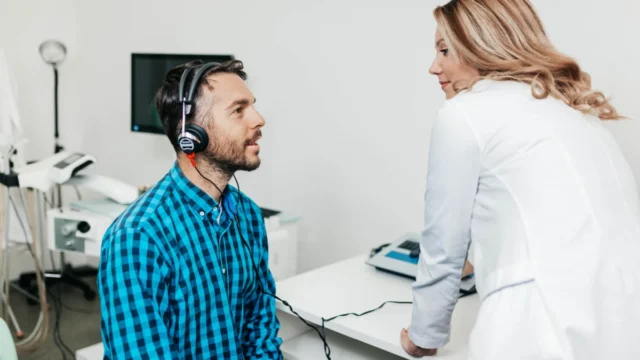
- Pure-Tone Audiometry: Measures hearing thresholds across different frequencies. Asymmetric or unilateral hearing loss on an audiogram can be an initial indicator.
- Speech Audiometry: Assesses the ability to understand spoken words at various loudness levels. A significant discrepancy between pure-tone thresholds and speech recognition scores (i.e., much poorer speech understanding than expected) is a strong clue for retrocochlear pathology.
- Tympanometry and Acoustic Reflexes: These tests evaluate the function of the middle ear and the stapedius muscle. Absent or abnormal acoustic reflexes, especially when hearing thresholds are not severely impaired, can suggest a problem with the auditory nerve or brainstem.
-
Auditory Brainstem Response (ABR) Testing: This electrophysiological test measures the electrical activity generated by the auditory nerve and brainstem in response to sound stimuli. It provides objective information about the integrity of the auditory pathway from the cochlea to the brainstem. Abnormal ABR waveforms, including prolonged latencies or absent responses, are highly suggestive of retrocochlear pathology.
-
Otoacoustic Emissions (OAEs): These tests measure the response of the outer hair cells in the cochlea. While OAEs are typically normal in retrocochlear hearing loss (indicating healthy cochlear function), their presence helps to rule out cochlear pathology as the primary cause of the hearing problem.
-
Neuroimaging:
- Magnetic Resonance Imaging (MRI): This is the gold standard for visualizing the auditory nerve and surrounding structures. An MRI with contrast enhancement is particularly effective in detecting vestibular schwannomas and other lesions that may be compressing the auditory nerve or affecting brainstem pathways. It is often recommended when unilateral hearing loss, significant asymmetry, or abnormal ABR results are observed.
-
Vestibular Testing: If dizziness or balance issues are present, vestibular function tests may be conducted to assess the health of the vestibular system and its connections with the auditory nerve.
Interpreting Audiograms in the Context of Retrocochlear Loss
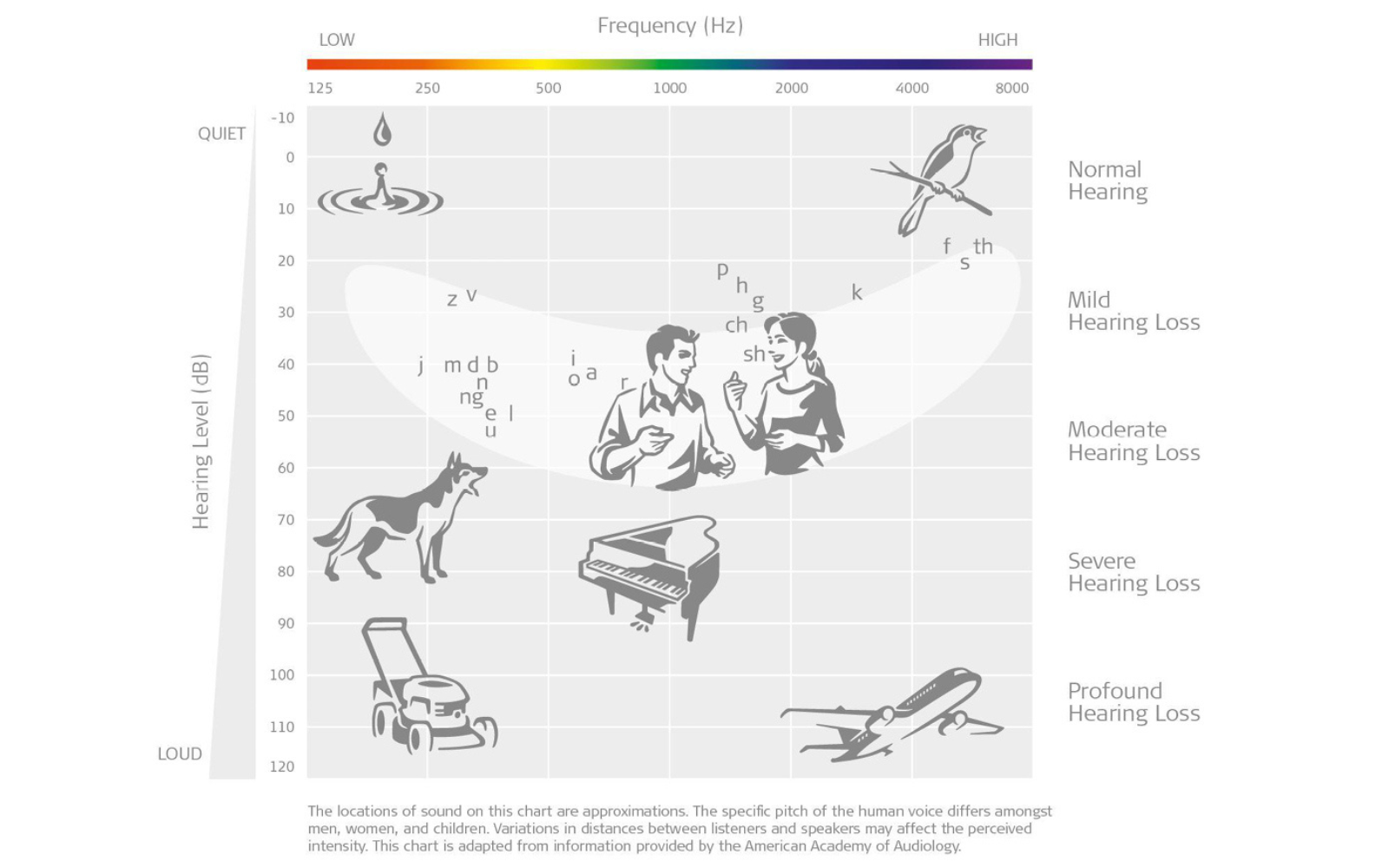
While no single audiogram pattern definitively confirms retrocochlear hearing loss, certain findings can raise suspicion. Asymmetric hearing loss, where the degree of hearing loss differs significantly between the ears, is a common observation. Furthermore, a marked decline in speech understanding compared to the pure-tone thresholds can be a critical indicator. For instance, a person might have relatively good hearing for pure tones but struggle immensely to comprehend spoken words, suggesting a problem with the neural processing or transmission of complex auditory information. However, it is crucial to reiterate that audiogram findings must always be interpreted in conjunction with other diagnostic tests and a thorough clinical evaluation.
Treatment Strategies for Retrocochlear Hearing Loss
The treatment approach for retrocochlear hearing loss is highly individualized and entirely dependent on the underlying cause.
-
For Tumors (e.g., Vestibular Schwannoma): Management options typically include observation (for small, asymptomatic tumors), surgical removal, or radiation therapy. The choice depends on the tumor’s size, growth rate, location, and the patient’s overall health and symptom severity. Surgical intervention, while aimed at removing the tumor, can sometimes impact hearing or facial nerve function.
-
For Neurological Conditions (e.g., MS): Treatment focuses on managing the primary neurological disease. Medications to reduce inflammation and slow disease progression may be prescribed. Hearing and balance rehabilitation are also essential components of care.
-
Hearing Rehabilitation:
- Hearing Aids: In some cases of mild to moderate retrocochlear hearing loss, well-fitted hearing aids might offer some benefit, particularly for amplifying sounds. However, their effectiveness is often limited by the poor speech clarity inherent in this condition.
- Assistive Listening Devices (ALDs): Devices like FM systems or loop systems can improve the signal-to-noise ratio, making it easier to understand speech in challenging listening environments.
- Implantable Hearing Solutions: For individuals with significant hearing loss and poor outcomes with conventional hearing aids, implantable hearing technologies may be considered.
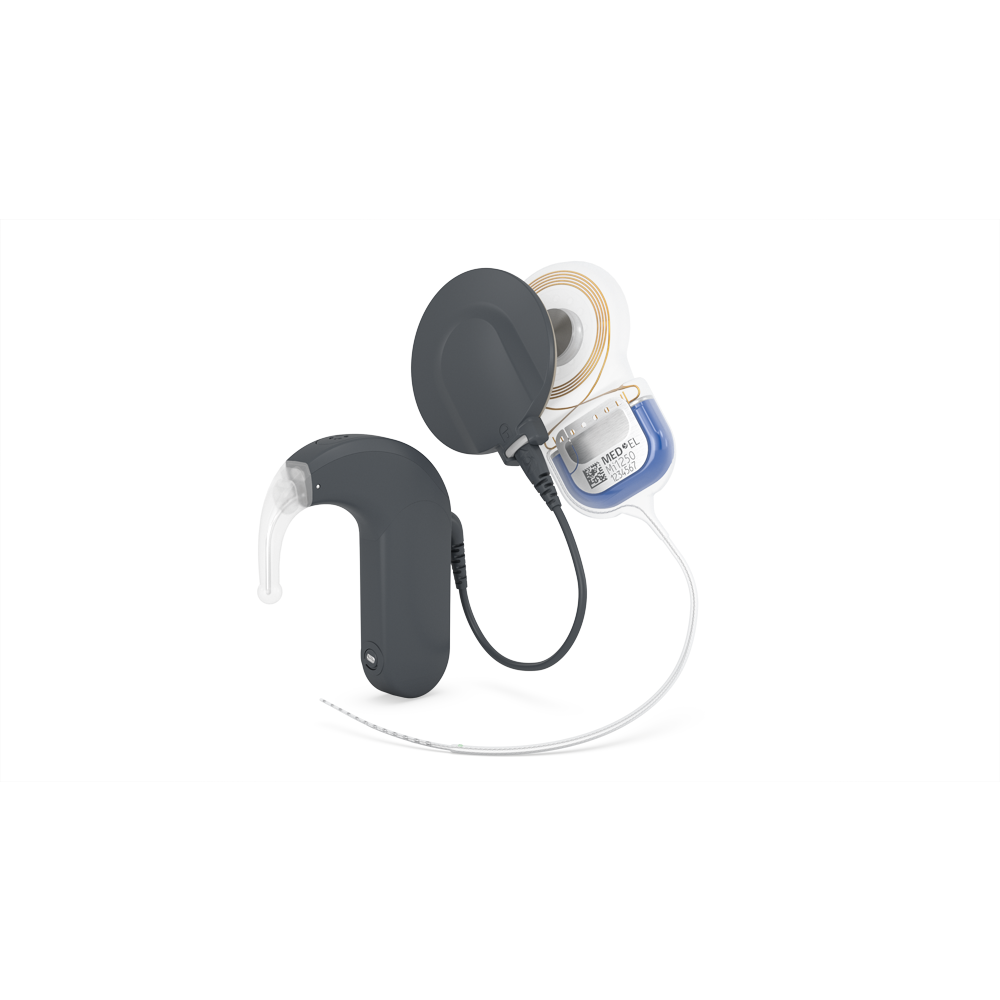
- Cochlear Implants: While primarily designed for severe to profound cochlear hearing loss, cochlear implants can sometimes be an option for carefully selected individuals with retrocochlear pathology, particularly if there is residual auditory nerve function. These devices bypass the damaged cochlea and directly stimulate the auditory nerve with electrical signals.
- Auditory Brainstem Implants (ABIs): For individuals where the auditory nerve is severely damaged or absent (e.g., following tumor removal that necessitates nerve sacrifice), an ABI can provide a direct connection to the auditory nuclei in the brainstem, bypassing the auditory nerve altogether. MED-EL offers advanced cochlear implant and ABI solutions that are part of a comprehensive approach to restoring hearing.
-
Medical and Surgical Interventions: Depending on the specific cause, other medical or surgical interventions may be necessary to address underlying conditions or manage symptoms like tinnitus or dizziness.
When to Seek Professional Medical Advice
Prompt medical evaluation is crucial if any of the following symptoms are experienced:
- Sudden or rapid onset of hearing loss in one or both ears.
- Significant asymmetry in hearing ability between the ears.
- Persistent or worsening difficulty understanding speech, especially in noisy situations.
- Unexplained tinnitus, dizziness, or balance problems.
- Any new neurological symptoms, such as facial numbness or weakness.
Early detection and accurate diagnosis are paramount for initiating appropriate management and preserving remaining auditory function and quality of life. A collaborative approach involving audiologists, otolaryngologists (ENT specialists), neurotologists, and neurologists is often necessary for comprehensive care.

Conclusion and Future Directions
Retrocochlear hearing loss represents a significant challenge within audiology and neurology, impacting the critical neural pathways responsible for our ability to perceive and understand sound. While challenges remain in fully restoring hearing in all cases, advancements in diagnostic imaging, electrophysiological testing, and implantable hearing technologies are continuously improving the outlook for affected individuals. The ongoing research and development by organizations like MED-EL underscore a commitment to innovative solutions that aim to enhance auditory function and improve the lives of those living with complex hearing impairments. Understanding the nuances of retrocochlear pathology empowers individuals to seek timely medical attention and engage in informed discussions about their treatment options.