A Period of Transition and Strategic Stability
The appointment of Kiego follows a critical two-year period of leadership stabilization under Interim CEO Dr. Bobbie Beth Scoggins. Following a period of organizational volatility, the Board of Directors tasked Dr. Scoggins with restoring operational integrity, managing internal governance, and preparing the foundation for long-term sustainability. Her tenure is widely regarded by stakeholders as a "bridge" period, during which the NAD successfully navigated administrative challenges and reaffirmed its commitment to its core mission: protecting the civil, human, and linguistic rights of deaf and hard-of-hearing people in the United States.
The Board’s decision to appoint Kiego follows a months-long search led by a dedicated committee. This process included extensive outreach to community members, organizational affiliates, and prospective leadership candidates. The committee prioritized finding a leader capable of balancing the traditional advocacy functions of the NAD with modern requirements for digital transformation, fundraising innovation, and grassroots engagement.
The New Leadership Mandate
In his inaugural remarks, Nicholas Kiego outlined a multi-pronged strategic agenda that reflects both the immediate and long-term needs of the federation. His platform focuses on five critical pillars: rebuilding institutional trust, ensuring long-term financial stability, scaling membership growth, diversifying revenue streams, and revitalizing the public awareness of the NAD’s historical legacy.
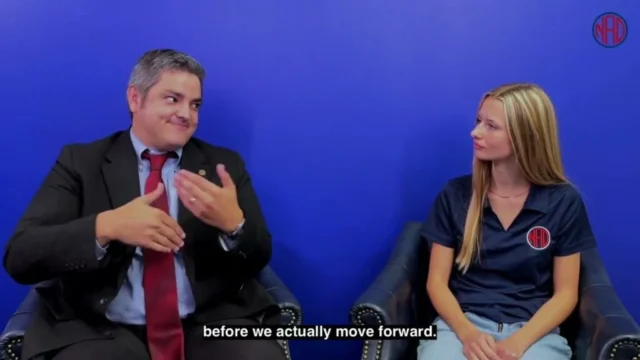
"The work I have to do is clear," Kiego stated during the announcement video. "I am committed to rebuilding trust, making the NAD financially stable, growing our membership, and reminding the community of the significance of the NAD’s legacy."
Kiego’s professional mandate is viewed by industry observers as a move toward a more "corporate-governance" model of non-profit management. As the NAD operates as a federation of state and local associations, the CEO must navigate a complex ecosystem of stakeholders. His background suggests a readiness to address the structural complexities of an organization that relies heavily on both federal advocacy and private donor support.
Historical Context and Institutional Legacy
Founded in 1880, the NAD has served as the primary voice for the American deaf community for nearly a century and a half. Throughout its history, the organization has spearheaded legislative efforts, including the advocacy that led to the Americans with Disabilities Act (ADA) of 1990 and subsequent expansions of telecommunications access, such as the mandate for Video Relay Services (VRS).
The appointment of a new CEO occurs against a backdrop of evolving technological and social landscapes. In recent years, the organization has faced increased pressure to address accessibility in digital spaces, the intersectionality of the deaf experience, and the financial fluctuations inherent in non-profit advocacy. By appointing a permanent CEO, the Board aims to move from a "reactive" posture—often necessitated by internal transitions—to a "proactive" strategic planning cycle.
The 58th Biennial Conference: A Catalyst for Growth
The San Francisco conference, scheduled for June 30 to July 5, 2026, will serve as the official public introduction of Kiego to the broader constituency. The event is more than a standard industry gathering; it is designed as a strategic goal-setting forum. The conference will provide a platform for delegates from across the nation to engage in formal policymaking, which will ultimately guide the organization’s trajectory for the next two to four years.
The choice of San Francisco is symbolic of the organization’s focus on innovation and inclusion, particularly given the region’s proximity to major technology hubs where accessibility advocacy has become increasingly vital. The Board has indicated that attendees will play a pivotal role in the "strategic goal setting" that will define the early stages of Kiego’s tenure.
Financial and Operational Implications
For many, the most pressing question remains the fiscal health of the NAD. Non-profit organizations specializing in advocacy often contend with high overhead costs and fluctuating philanthropic interest. Under Dr. Scoggins, the NAD focused on "heavy lifting"—a phrase used by the Board to describe the consolidation of debt, the streamlining of operational departments, and the improvement of donor relations.
Data from the non-profit sector suggests that organizations of the NAD’s scale typically require a two-to-three-year cycle to recover from significant leadership turnover. With the groundwork now established, Kiego is expected to leverage current assets—including the organization’s significant brand recognition and its vast network of state affiliates—to tap into new revenue streams. Observers point to the potential for the NAD to expand its corporate partnerships and grant-seeking activities, particularly in sectors related to AI-driven accessibility tools and inclusive education.
Perspectives from the Board and Membership
President Stephanie Hakulin’s public endorsement of Kiego highlights the Board’s unified support. The Board’s role in this transition has been to ensure that the search committee’s findings were aligned with the feedback collected from community town halls and member surveys conducted throughout late 2025 and early 2026.
"The Board has full confidence in Nicholas’s strategic vision and commitment to our mission," Hakulin said. The sentiment is shared by many within the affiliate network, who have expressed a desire for a leadership style that is both transparent and highly visible. Kiego’s request for community members to "stop me to have a chat" during the upcoming conference is a deliberate attempt to foster a more accessible, open-door style of executive leadership.
Future Outlook and Challenges
The challenges ahead for the new CEO are substantial. The NAD must balance the expectations of a diverse membership base that spans generations, from legacy activists who emphasize traditional civil rights to younger members focused on digital equity and intersectional social justice. Furthermore, the organization must continue its advocacy at the federal level, particularly concerning the enforcement of ADA standards in an increasingly digital world.
As Kiego prepares to take the helm on August 1, the broader advocacy community will be watching closely. The success of this transition will likely be measured by the organization’s ability to successfully modernize its operational infrastructure while maintaining the grassroots support that has kept it the preeminent voice for the American deaf community for over 140 years.
With the 58th Biennial Conference approaching, the NAD is positioning itself for a period of renewal. The transition from the interim leadership of Dr. Scoggins to the permanent appointment of Kiego is expected to finalize the organization’s recovery and shift its focus toward a future defined by growth, technological integration, and a renewed emphasis on its founding civil rights mission. For the members and affiliates who form the heart of the association, this summer represents a rare opportunity to participate in the shaping of a new institutional era.