Anatomy of the Incident and Chronology
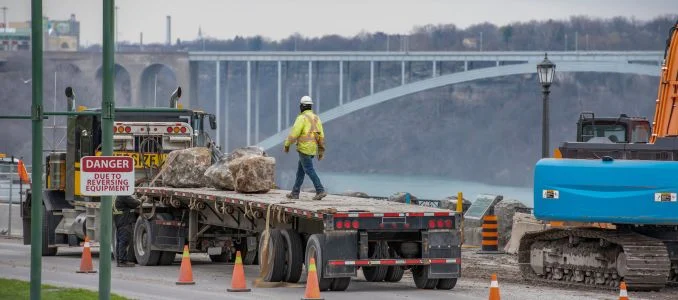
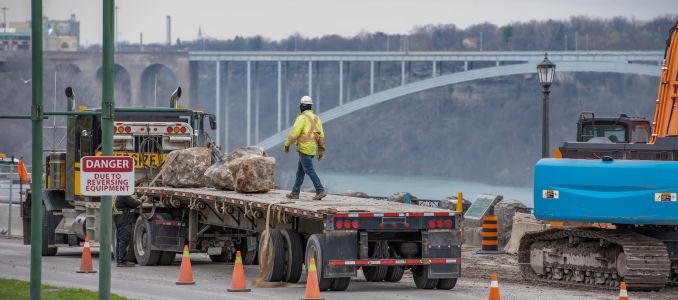
While specific details of the incident remain part of an ongoing safety review, the investigative narrative indicates that the accident occurred during a routine loading operation at a construction site. The chronology of such events typically follows a predictable, albeit tragic, pattern: the arrival of heavy machinery, the preparation of the trailer deck, the transit of equipment onto the flatbed, and the subsequent securing of the load.
In this instance, safety officials determined that the equilibrium of the machinery was compromised during the transition from the ramp to the trailer deck. Investigators noted that the surface of the loading area was slightly uneven, which, when combined with a failure to utilize proper ground-level wheel chocking, created a tipping point. As the machinery shifted, the force exerted on the trailer deck exceeded the structural capacity of the tie-down points, resulting in a sudden, violent shift that trapped the operator. Emergency responders were called to the scene, but the nature of the mechanical shift and the weight of the equipment rendered the incident fatal.

Statistical Context and Industry Data
The prevalence of loading-related injuries in the United States remains a significant concern for the Occupational Safety and Health Administration (OSHA). According to recent Bureau of Labor Statistics (BLS) data, transportation-related incidents continue to be a leading cause of workplace fatalities. Within the construction industry specifically, the act of loading and unloading heavy machinery—including excavators, skid steers, and landscaping boulders—accounts for a disproportionate number of crushed-worker injuries.
Industry data suggests that approximately 15% of all non-fatal injuries in the freight sector occur during the loading phase. When fatalities are analyzed, the data indicates that human error, often exacerbated by "hurry-up" culture and inadequate site planning, is the primary driver. Experts emphasize that the momentum generated by a machine weighing several tons can overcome even the most robust restraint systems if the initial positioning is off by even a few degrees.

Critical Prevention Measures
The investigation report outlines a series of mandatory prevention measures designed to protect both equipment operators and ground personnel. These recommendations are intended to serve as a baseline for site safety managers looking to update their standard operating procedures (SOPs).
- Ground-Level Wheel Chocking: Before any loading begins, wheels must be chocked on both sides to prevent creeping. The report emphasizes that chocking is not a suggestion but a requirement, regardless of the trailer’s brake status.
- Surface Integrity: Loading must only occur on level, stable surfaces. If a site is sloped or soft, temporary steel plating or specialized mats must be employed to distribute the weight of the equipment and ensure a stable deck.
- Hardware Compliance: Only certified, high-tensile tie-down hardware should be used. The investigation highlighted cases where chains and ratchets were improperly rated for the weight of the cargo, leading to snapping under load.
- Secondary Assistance: The "lone operator" model is discouraged during high-stakes loading. A secondary "spotter" or assistant must be present to monitor the alignment and ensure that no personnel are in the "crush zone" (the area between the machinery and the trailer edge) during the maneuver.
Professional and Official Responses
The findings have been met with concern from trade associations and labor unions. In the wake of the report, safety managers at major construction firms have been urged to conduct "toolbox talks" specifically addressing trailer safety.

"The tragedy serves as a grim reminder that heavy equipment logistics is a precise science, not a casual task," noted a safety consultant familiar with the investigation. "When we look at the physics of a rollover, we aren’t just looking at equipment failure; we are looking at a failure of the safety culture that allows a machine to be moved without the proper verification of center-of-gravity or site stability."
Industry representatives have suggested that the adoption of automated load-monitoring technology could reduce human error. These systems, which utilize sensors to detect if a load is off-center or if a tie-down is losing tension, represent the next frontier in site safety. However, officials caution that technology is no substitute for the fundamentals of site assessment and worker training.

Broader Implications for the Freight and Construction Sectors
The implications of this investigation extend far beyond the site where the accident occurred. Insurance providers have begun to tighten their requirements for commercial contractors, mandating proof of training and adherence to strict loading protocols as a condition of coverage. Furthermore, there is a growing movement toward the formal certification of operators specifically trained in the nuances of flatbed loading, a task that has historically been taught through informal, on-the-job training.
For safety managers, the mandate is clear: evaluate existing site protocols, conduct formal equipment inspections, and foster an environment where operators feel empowered to stop a loading operation if conditions are deemed unsafe. The cost of a delay in loading is negligible when compared to the human and legal costs associated with a fatal accident.

As the industry moves forward, the focus will likely shift toward more stringent oversight and the integration of standardized loading checklists. These checklists, which must be completed and signed off by a site supervisor before the trailer is put into motion, are designed to create a culture of accountability. By formalizing the process, firms can ensure that the "human element" of the operation—the decision-making process—is backed by rigorous safety standards.
Conclusion and Future Outlook
The fatal loading incident serves as a sobering catalyst for change in how the industry approaches flatbed safety. As construction and freight demands grow, so too does the need for standardized, safety-first protocols that leave no room for ambiguity. The guidance issued by investigators is not merely a set of rules; it is a framework for survival in an industry where the margin for error is razor-thin.

Moving forward, the successful implementation of these safety measures will depend on the commitment of frontline workers and management alike. As the industry incorporates these lessons, the goal remains the elimination of loading-related fatalities, ensuring that every worker returns home at the end of their shift. Future updates to these protocols will likely involve a more comprehensive look at heavy-load stabilization technology, but until then, the focus remains on the foundational principles of chocking, leveling, and professional oversight.
The work of safety investigators, including professionals such as Jesse Jacobs of OHSOnline, remains vital in translating these tragedies into actionable knowledge. Through continued reporting and the dissemination of safety findings, the construction and logistics sectors can move toward a safer future, one where equipment loading is characterized by precision and caution rather than risk and uncertainty. The industry must now take these lessons to heart, transforming the tragic loss of life into a catalyst for the necessary evolution of site safety standards nationwide.