The Genesis of a Movement: From Clinical Therapy to Social Connection
For years, the standard approach to speech-language pathology in many parts of the world—including Colombia—has been heavily anchored in a traditional, clinical model. This model often prioritizes speech as the primary metric of successful communication, frequently marginalizing those who rely on alternative modalities.
Ángela Marcela Ordóñez began questioning this paradigm after observing the limitations of individual therapy. She noted that when therapy occurs in isolation, twice a week, and is guided by a speaking partner who does not share the same communication needs, the result is often a disconnect between the classroom and the real world. The core questions that prompted the creation of VOZ SOS CAAPAZ included whether traditional therapy is truly respectful of non-speaking individuals and whether these isolated sessions provide enough exposure to the multimodal environments necessary for genuine growth.
Chronology of Development
The project’s inception was informed by three distinct pillars that shifted the organizer’s perspective from a medicalized view of disability to a rights-based, social model:
- Collaboration with CAAmigos Angelman (2024–Present): Through her work with Claudia Marimón and the Fast Latam collective, Ordóñez engaged with a virtual, evidence-based program that emphasizes "Comprehensive Literacy." This experience served as a catalyst for "unlearning" ableist practices and adopting a model that prioritizes the autonomy of the AAC user.
- The ISAAC Advocacy Call (2025): The publication of an article in the ISAAC journal—"Nothing About AAC Users Without AAC Users"—acted as a professional turning point. The work, authored by non-speaking user Gran Blasko, argued that research and technology development are incomplete without the active participation of the very people they serve. This solidified the need for in-person, user-led spaces.
- Relationship-Based Learning: By mid-2025, the framework for the gatherings was set. Moving away from therapist-led instruction, the model shifted toward "Relationship-Based Learning," where the hierarchy between the expert and the user is flattened, and the communication partner acts as a learner of the specific systems being utilized.
In-Person Implementation: Bridging the Gap
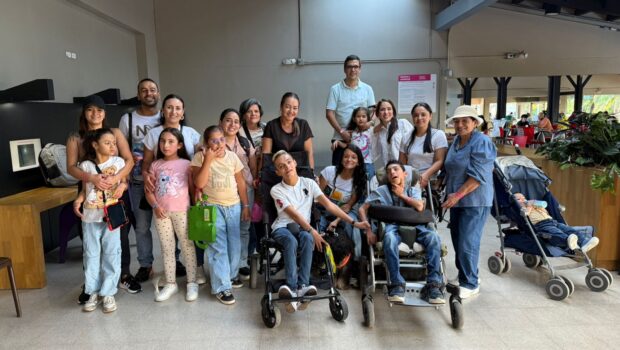
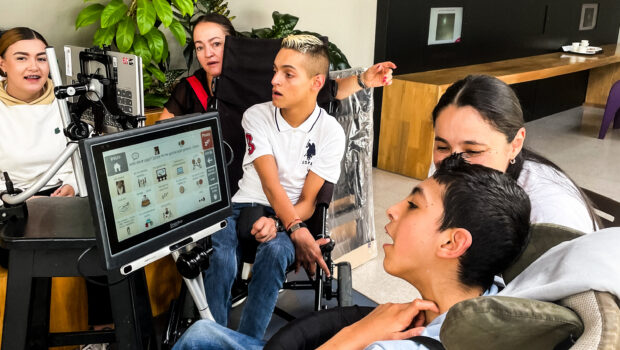
The inaugural event took place in October 2025 at the Comfama Rionegro park. This event was strategically timed to coincide with AAC Awareness Month. The gathering brought together six primary AAC users, their families, and local speech pathology professionals.
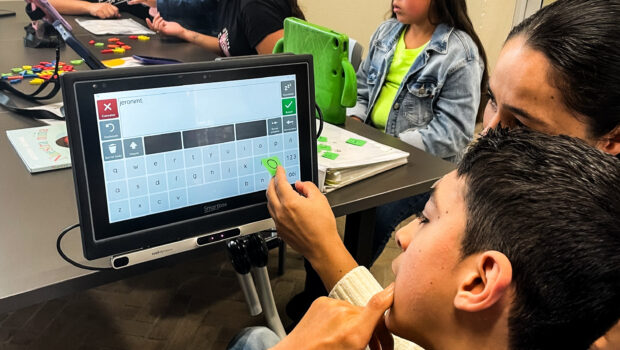
The diversity of technology present highlighted the broad spectrum of AAC needs: participants utilized a variety of platforms, including Td Snap, Communicator 5 with Eye Tracking, Proloquo2go, and Grid 3. The presence of non-users—park visitors and employees—provided an opportunity for public advocacy, demonstrating that these devices are not mere medical aids, but essential tools for full human participation in society.
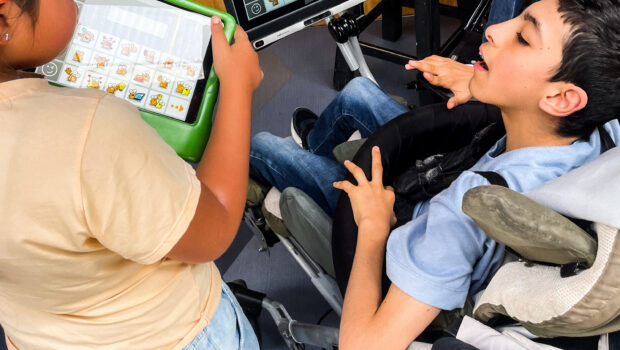
A second milestone occurred in February 2026, when the project transitioned from social connection to formal education. The first "Shared Reading" session was hosted at a public library in Rionegro. Following the Comprehensive Literacy model defined by educator Erin Sheldon, the session focused on developing print knowledge through meaningful, shared interactions. Unlike a traditional classroom setting, the library session allowed users of different proficiency levels to engage with texts in a natural, public environment.
The Broader Impact: Data and Human Rights
The implications of VOZ SOS CAAPAZ extend beyond the individual participants. By normalizing the presence of AAC devices in public spaces like libraries and parks, the project addresses the societal stigma that often leads to the social isolation of people with complex communication needs.
Data from the gatherings suggests that the "peer effect"—the ability to observe other users utilizing similar technologies—significantly boosts motivation. Feedback from participants, such as Pablo Andrés Calderón Gómez, emphasizes the demand for these services: "I really liked the gathering with Angela because I met other friends. We need more people with this Right to Communication."
Professional and Societal Implications
The movement initiated by Ordóñez raises critical questions for the global speech-language pathology community:
- Presuming Competence: The core philosophy of VOZ SOS CAAPAZ is the presumption of competence. By assuming that all individuals have the capacity to learn and communicate, the project challenges the "ceilings" often placed on students by traditional systems.
- The Role of the Communication Partner: The initiative mandates that those who model AAC systems must also be active learners. This requires a shift in how professionals are trained, moving toward a continuous process of professional development that includes the voices of AAC users themselves.
- Access as a Human Right: Literacy is increasingly recognized as a fundamental right. When individuals with communication challenges are denied access to literacy experiences—often because they are perceived as "not ready"—it constitutes a systemic failure. The project’s commitment to Comprehensive Literacy ensures that every user, regardless of their current level of communication, has the right to be exposed to high-level reading and writing instruction.
Looking Ahead: Scaling the Model
The current format of monthly Saturday meetings is viewed as a foundational step. As the program grows, the objective is to create a sustainable network that connects users across Colombia and potentially throughout Latin America. The success of these meetings in Rionegro serves as a pilot for what could be a scalable model for inclusive community building.
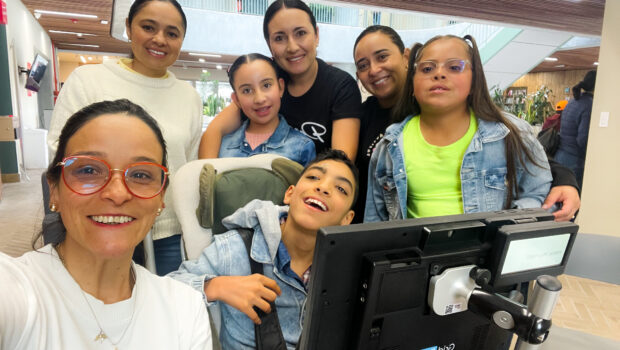
The project highlights that effective AAC practice is not found in a clinical vacuum but in the community. By validating diverse communication modalities and prioritizing the autonomy of the user, VOZ SOS CAAPAZ is not only teaching individuals how to communicate but is teaching the public how to listen. The project invites families and professionals to move beyond traditional limitations, urging them to embrace a future where communication is accessible, inclusive, and fundamentally a shared human experience. As the project evolves, it remains a testament to the fact that when provided with the right tools and a supportive, neuro-affirmative environment, every individual possesses a voice capable of changing their community.