Clinical Profile and Communication Challenges
Angelman syndrome, which occurs in approximately one in every 12,000 to 20,000 live births, is characterized by significant developmental delays, intellectual disability, severe speech impairment, and ataxia. Despite the neurological nature of the syndrome, which often results in little to no functional verbal speech, individuals with AS are frequently noted for their social, joyful, and highly expressive dispositions.
Clinical research indicates that the gap between receptive and expressive language in AS is profound. While many individuals can understand a significant amount of the language directed toward them, their ability to produce speech is severely limited by motor planning deficits. This discrepancy creates a high-stakes environment where the lack of an external communication system can lead to frustration, social isolation, and behavioral challenges.
The integration of Augmentative and Alternative Communication (AAC) has proven to be a transformative intervention. By utilizing speech-generating devices, eye-tracking technology, or manual symbol boards, individuals with AS can bridge the gap between their internal thoughts and their external environment. However, the efficacy of these tools relies heavily on the presence of "communication partners"—caregivers, educators, and clinicians who are trained to model language and interpret non-verbal cues.
The Role of AAC as a Fundamental Right
The shift in medical and therapeutic philosophy regarding AS has moved from a focus on "fixing" speech to "facilitating" communication. Communication is increasingly recognized by human rights organizations as a basic human necessity, essential for autonomy and self-advocacy.
For families of children with Angelman syndrome, the adoption of AAC is not merely a clinical recommendation; it is a long-term strategy for inclusion. Data from recent longitudinal studies suggest that early intervention with AAC correlates with improved cognitive outcomes and greater integration into mainstream school settings. Nevertheless, the successful implementation of these systems requires a sustained support network. Families often report that the learning curve for AAC is steep, necessitating ongoing professional guidance to ensure that communication tools are integrated into the rhythm of daily life rather than relegated to formal therapy sessions.
Chronology of Awareness and Advocacy
The global movement to support individuals with Angelman syndrome has seen a steady progression over the last decade. The establishment of International Angelman Syndrome Day has provided a standardized platform for organizations, such as the Angelman Syndrome Foundation and various regional groups across Latin America, to synchronize their advocacy efforts.

- Early 2010s: Initial awareness campaigns focused primarily on medical diagnostics and the genetic basis of the UBE3A gene deletion.
- Mid-2010s: A shift occurred toward functional living, with a surge in the development of robust AAC platforms designed for individuals with motor and intellectual disabilities.
- 2020–2025: Increased focus on international collaboration, particularly in Spanish-speaking regions, where access to specialized therapies and equipment has historically been inconsistent.
- 2026: The current landscape is defined by the scaling of regional networks, culminating in large-scale professional and familial summits.
The 2nd Latin American Angelman Syndrome Congress
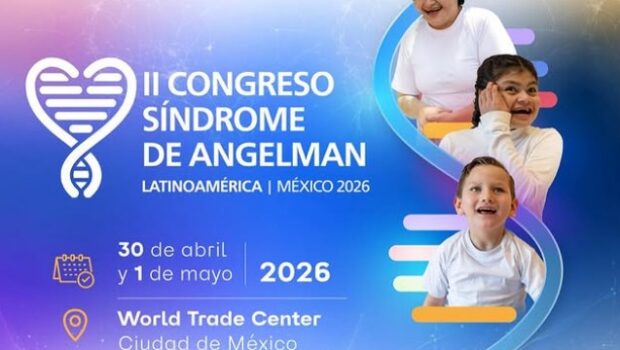
A significant milestone for the community in 2026 is the upcoming 2nd Latin American Angelman Syndrome Congress, scheduled to take place in Mexico City on April 30 and May 1. This event is designed to move beyond theoretical discussions, focusing instead on the practical application of support strategies and the fostering of transnational partnerships.
The congress is expected to draw a diverse demographic, including pediatric neurologists, speech-language pathologists, geneticists, and families. Organizers have prioritized the development of an agenda that addresses the specific socioeconomic challenges of providing long-term care in Latin American contexts. The creation of the official portal, congresoangelman.com, serves as the primary hub for the dissemination of research findings and the coordination of advocacy initiatives across borders.
Analysis: The Socio-Economic Impact of Inclusive Environments
The broader implications of improving communication access for individuals with AS extend far beyond the individual patient. Economically, individuals with rare diseases who are provided with effective communication tools are more likely to participate in their communities, reducing the long-term societal costs associated with institutionalization and lifelong dependency.
Furthermore, the "community-sustained" model of care—which emphasizes that no family should navigate the complexities of AS in isolation—has proven to be the most resilient. When families are empowered through professional training and peer support networks, the quality of life for the individual with AS improves exponentially. This model recognizes that AAC is only as effective as the environment in which it is used. If the school, the home, and the public space are not "communicatively accessible," the technology remains underutilized.
Official Perspectives and Future Directions
Leading professionals in the field, including researchers and therapists like Claudia Marimón, have consistently advocated for the democratization of information regarding AAC. By providing resources and translations in Spanish, these initiatives ensure that the latest developments in neurodevelopmental support are not siloed within English-speaking medical institutions.
The message for this February is clear: awareness must translate into action. As the community prepares for the congress in Mexico City, the emphasis remains on the creation of robust, sustainable communication systems. The goal is to move toward a future where "communication as a right" is a practical reality rather than an aspirational goal.
As the medical community continues to explore potential gene therapies and pharmaceutical interventions, the immediate, daily, and life-altering impact of AAC remains the primary engine for progress. Every pictograph used, every eye-gaze selection made, and every effort to model language by a communication partner contributes to a larger tapestry of human connection. The 2026 calendar for the Angelman community is marked by this convergence of scientific inquiry, professional advocacy, and the unwavering dedication of families, all striving to ensure that every voice—regardless of how it is produced—is heard and respected.
For those interested in participating in this global movement, the path forward involves engaging with established support networks, attending educational summits, and continuing to demand the resources necessary for inclusive, accessible communication environments. The progress made to date is significant, yet the work of expanding access and refining intervention strategies continues to be the primary focus for the year ahead.