The NAD’s policy announcement arrives at a moment of unprecedented scientific acceleration. With the successful application of CRISPR-Cas9 and other gene-editing platforms in clinical trials for various hereditary conditions, the prospect of "curing" deafness has moved from the realm of theoretical science fiction to tangible medical inquiry. By codifying its opposition to the use of gene therapy for the purpose of eliminating Deaf identity, the NAD is drawing a firm line between the treatment of life-threatening pathology and the systemic erasure of a linguistic minority.
A Historical Context of Advocacy
To understand the weight of the NAD’s current mandate, one must examine the organization’s origins. The NAD was founded in 1880 in Cincinnati, Ohio, during a period of intense cultural crisis. The 1880 International Congress on the Education of the Deaf in Milan, Italy—commonly known as the Milan Conference—represented a global shift toward oralism, a pedagogical approach that sought to suppress the use of sign language in schools.
The Milan Conference resulted in a series of resolutions that effectively banned sign language from classrooms, leading to the dismissal of Deaf teachers and the systematic suppression of Deaf culture. This event is viewed by historians and the Deaf community as a pivotal moment of trauma that catalyzed the birth of modern organized Deaf advocacy. For nearly 150 years, the NAD has operated under the premise that the community’s shared language—American Sign Language (ASL)—and its unique cultural norms are not symptoms of a disorder to be corrected, but rather a robust, distinct mode of human existence.
The Science of Genetic Intervention: Current Landscape
The current scientific climate is characterized by rapid advancements in gene therapy. According to the National Institutes of Health (NIH), gene therapy research has expanded to include hundreds of active clinical trials targeting inherited sensory impairments, including various forms of non-syndromic hearing loss.
The technical implications of these therapies involve the delivery of functional genes into the inner ear to address specific mutations. While proponents argue that these interventions offer patients the "gift of sound," the NAD and bioethicists within the disability rights movement argue that the medical model of disability often fails to account for the social, linguistic, and cultural dimensions of being Deaf.
Data suggests that the market for genetic therapies targeting sensory loss is expected to grow significantly over the next decade. Industry analysts project that the therapeutic market for hearing restoration could reach multi-billion-dollar valuations by 2035, drawing heavy investment from pharmaceutical giants. This commercial pressure heightens the urgency of the NAD’s call for ethical oversight, as the financial incentives to "normalize" biological variance may outweigh the community’s right to self-determination.
Principles of Ethical Engagement
In its latest policy framework, the NAD has called for a fundamental shift in how researchers, regulatory bodies, and healthcare providers engage with the Deaf community. The principles outlined are designed to protect the integrity of the community while acknowledging the role of medicine in treating genuine health crises.
- Informed Autonomy: The NAD emphasizes that individuals and parents of deaf children must be provided with comprehensive, culturally competent information that goes beyond the clinical perspective. This includes education on the viability and richness of the Deaf experience, as well as the risks and limitations of gene therapy.
- Community-Centered Research: The organization asserts that any research regarding gene therapies for hearing must include input from Deaf researchers, clinicians, and community leaders. The era of "researching on" the Deaf community without their active participation is characterized by the NAD as a form of exclusion that compromises the ethics of the scientific process.
- Opposition to Erasure: The NAD distinguishes between life-saving medical care and cosmetic or social-normative interventions. The association firmly opposes any efforts that frame deafness as a condition requiring eradication, arguing that such a framework devalues the lives of millions of existing Deaf people.
Chronology of the Debate
- 1880: The Milan Conference occurs, triggering a global movement toward oralism and sparking the formation of the NAD in the United States to defend sign language.
- 2012: The discovery of CRISPR-Cas9 technology revolutionizes gene editing, making it cheaper and more precise, thus accelerating the potential for altering traits like deafness.
- 2020–2025: Several high-profile pharmaceutical trials for gene therapy targeting inner-ear hair cell regeneration receive FDA fast-track designation.
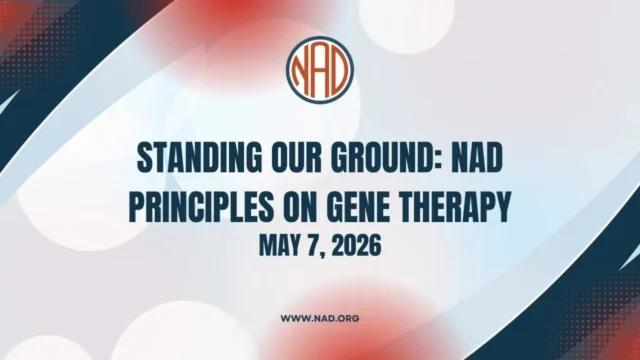
- May 2026: The NAD releases "Standing Our Ground: NAD Principles on Gene Therapy," formally establishing the organization’s ethical stance against the use of gene editing to eliminate Deaf identity.
Broader Impact and Implications
The stance taken by the NAD carries profound implications for the fields of bioethics and disability studies. Critics of the current medical approach argue that the pursuit of "cures" for deafness mirrors the history of eugenics, where specific traits were deemed undesirable and targeted for removal from the gene pool. By framing deafness as a form of human diversity rather than a disability to be "fixed," the NAD is challenging the foundational assumptions of modern audiology and genetic medicine.
From a policy perspective, the NAD’s call for federal oversight suggests that the U.S. government must reconsider how it allocates research funding. If the goal of the NIH and other federal bodies is to improve quality of life, the NAD argues that these resources should be directed toward accessibility, inclusion, and the development of technologies that assist rather than erase.
Official responses from the scientific community have been mixed. While some genetic researchers have expressed a commitment to "patient choice," they often struggle to reconcile their medical objectives with the cultural identity claims of the Deaf community. Bioethicists, however, have noted that the NAD’s position is consistent with broader global trends, such as the United Nations Convention on the Rights of Persons with Disabilities (CRPD), which emphasizes the right of disabled individuals to maintain their identity and participate in society without being subjected to forced or coercive medical interventions.
Conclusion and Future Outlook
The NAD has announced the creation of a dedicated task force to monitor the development of gene therapies and to engage in sustained dialogue with the scientific and medical communities. This task force will serve as a watchdog, ensuring that the voices of Deaf individuals are not silenced by the rapid march of biotechnology.
As the scientific community moves forward, the NAD’s message is clear: the history of 1880 is not merely an archival record; it is a living warning. The value of human life is not found in the standardization of biological traits, but in the celebration of human variation. By refusing to be treated as a pathology, the Deaf community is asserting its right to exist as a vibrant, essential, and permanent part of the human tapestry. The future of genetic science, the NAD contends, must be one that enhances the human experience without dismantling the very identities that make us diverse.