
The findings, published in the journal Annals of Neurology, challenge the traditional "one-size-fits-all" approach to nutritional deficiency. By focusing on the biologically active form of the vitamin rather than total serum levels, the research team has opened a provocative dialogue regarding whether millions of older adults are being told their nutritional status is "fine" while their brains are already beginning a trajectory of preventable decline.
The UCSF Study: Methodology and Core Findings
The research, conducted through the Brain Aging Network for Cognitive Health (BrANCH) study at UCSF, focused on a cohort of 231 healthy older participants. The average age of the group was 71, and crucially, none of the participants showed clinical signs of dementia or mild cognitive impairment (MCI) at the time of enrollment. This allowed researchers to observe the impact of B12 levels on the brain before the onset of overt disease.
While the average blood B12 level among the participants was 414.8 pmol/L—well above the U.S. clinical minimum cutoff of 148 pmol/L—the researchers looked deeper. They prioritized the measurement of "active" B12, or holotranscobalamin, which represents the portion of the vitamin that can actually be utilized by cells.
After adjusting for variables such as age, sex, education level, and cardiovascular risk factors, the team identified a clear correlation: participants with lower active B12 levels exhibited significantly slower processing speeds on standardized cognitive tests. This relationship became more pronounced with advancing age. Furthermore, the study utilized advanced neuroimaging to assess the physical state of the brain. MRI scans revealed that those with lower active B12 had a higher volume of white matter lesions—areas of injury in the brain’s "wiring" that are known precursors to dementia, stroke, and general cognitive slowing.
The Biological Role of B12 and the Aging Barrier
To understand why these findings are so significant, one must look at the unique way the body processes Vitamin B12. Unlike many other vitamins, B12 absorption is a complex, multi-step process. It requires sufficient stomach acid to release the vitamin from food proteins and a specific protein called "intrinsic factor," produced in the stomach lining, to facilitate absorption in the small intestine.
As humans age, the production of stomach acid and intrinsic factor often declines—a condition known as atrophic gastritis. This makes older adults particularly vulnerable to B12 insufficiency, even if their dietary intake remains constant. Furthermore, the widespread use of certain medications, such as proton pump inhibitors (PPIs) for acid reflux and metformin for type 2 diabetes, can further inhibit B12 absorption.
Dr. Ari J. Green, the study’s senior author and a professor in the UCSF Departments of Neurology and Ophthalmology, noted that the current definitions of deficiency were largely built around the prevention of megaloblastic anemia—a condition where the body produces abnormally large red blood cells. However, the brain may require higher concentrations of the vitamin than the blood-producing system does. "Previous studies that defined healthy amounts of B12 may have missed subtle functional manifestations," Green stated, suggesting that the "normal" range is failing to account for early neurological preservation.
A Chronology of Evolving Evidence
The UCSF study sits at the center of a rapidly evolving timeline of nutritional neuroscience. For decades, B12 deficiency was viewed as a binary state: you either had enough to avoid anemia, or you didn’t.
In the early 2000s, researchers began to notice that high levels of homocysteine—an amino acid that accumulates when B12 or folate levels are low—were associated with increased brain atrophy. This led to a series of clinical trials in the 2010s, such as the VITACOG study, which suggested that B-vitamin supplementation could slow the rate of brain shrinkage in seniors with high homocysteine.
By 2024 and early 2025, the research landscape reached a point of nuance. A 2025 comprehensive review reaffirmed that B12 remains one of the few "modifiable risk factors" for cognitive decline, particularly for high-risk groups like vegetarians and the elderly. However, other recent studies have added layers of complexity. A 2025 systematic review and meta-analysis of randomized trials found that while B-vitamin supplementation (B6, B9, and B12) did provide a benefit to global cognitive function, the effect size was relatively small. This suggests that while B12 is essential, it is not a "magic bullet" for those who are already nutritionally replete.
Perhaps most telling was a 2025 study using Mendelian randomization—a method that uses genetic variants to simulate a clinical trial. That study found no clear evidence that genetically higher total serum B12 levels protected the general population from psychiatric or cognitive disorders. However, the UCSF team points out a critical flaw in that comparison: the Mendelian study measured total B12, whereas the UCSF findings emphasize that active B12 (holotranscobalamin) and functional biomarkers are what truly matter for the brain.
The White Matter Connection
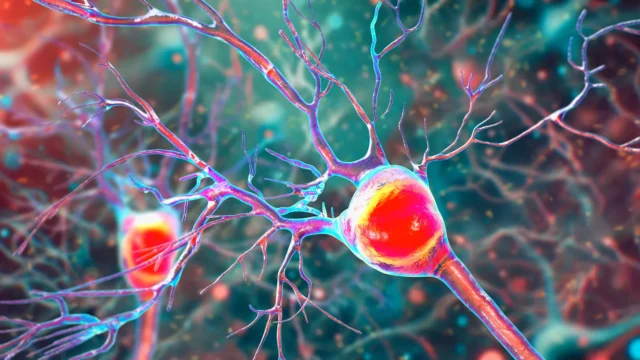
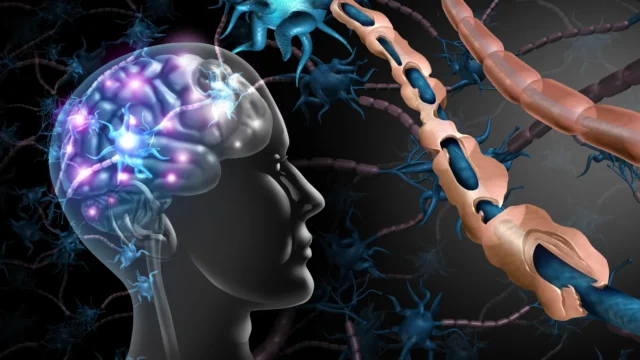
One of the most striking aspects of the UCSF research is the link to white matter lesions. White matter serves as the communication infrastructure of the brain, consisting of myelinated axons that transmit signals between different regions of gray matter.
Vitamin B12 is a vital co-factor in the production of myelin. When B12 levels are sub-optimal, the integrity of this "insulation" can fail, leading to the lesions observed on MRI scans. These lesions are not merely incidental; they represent a breakdown in the brain’s efficiency. This explains why the study found slower visual processing and delayed responses to stimuli. When the wiring is damaged, the signal takes longer to reach its destination.
Clinical Implications and Official Responses
The implications of this study for clinical practice are profound. Co-first author Alexandra Beaudry-Richard, a researcher at UCSF and the University of Ottawa, argues that the findings should prompt a re-evaluation of how doctors interpret lab results. "Clinicians should consider supplementation in older patients with neurological symptoms even if their levels are within normal limits," she suggested.
This sentiment is echoed by many in the geriatric community who have long suspected that the "low-normal" range (roughly 150 to 300 pmol/L) is a "gray zone" where patients suffer from fatigue, memory lapses, and balance issues that are frequently dismissed as "normal aging."
The study suggests that moving forward, the medical community should perhaps rely on a battery of functional biomarkers rather than a single serum test. These could include:
- Holotranscobalamin (Active B12): To measure the B12 actually available to cells.
- Methylmalonic Acid (MMA): A substance that rises when B12 levels are insufficient for cellular metabolism.
- Homocysteine: An amino acid that, when elevated, indicates a breakdown in the B-vitamin-dependent methylation cycle.
Broader Impact and Future Directions
The UCSF study does not suggest that the entire population should begin high-dose supplementation immediately. Excessive intake of certain vitamins can have its own risks, and the 2025 meta-analyses indicate that the benefits of supplementation are most pronounced in those who are truly insufficient.
Instead, the broader impact of this research lies in the realm of preventative medicine and public health policy. If B12 insufficiency is a "preventable cause of cognitive decline," then more aggressive screening of the "active" vitamin levels in the 65+ population could potentially reduce the long-term burden of dementia on healthcare systems.
As the global population ages, the distinction between "surviving" and "optimal" nutrition becomes a matter of economic and social urgency. The UCSF findings serve as a critical reminder that what is considered "normal" by a laboratory standard may not be "optimal" for a human brain trying to maintain its sharpness into its eighth or ninth decade.
Ultimately, the study calls for a shift in perspective: viewing Vitamin B12 not just as a tool to prevent anemia, but as a fundamental neuroprotective agent. As research continues to investigate the underlying biology of B12 and its role in brain signaling efficiency, the message for older adults and their physicians is clear: a lab report is only one part of the story. Physical symptoms, processing speed, and the nuance of active biomarkers must be integrated into a more sophisticated understanding of brain health.