The Evolution of a New Communication Paradigm
The inception of VOZ SOS CAAPAZ in October 2025 was not an isolated event but rather the culmination of years of professional introspection by Ordóñez. For decades, the field of speech-language pathology has been dominated by a medicalized, speech-centric approach that often pathologized non-speaking individuals. Ordóñez’s project challenges the efficacy of traditional therapy models that limit AAC exposure to a few hours per week under the guidance of partners who are not themselves AAC users.
The project’s theoretical framework rests on three primary pillars that have gained traction within the global AAC community: the adoption of neuroaffirmative practices, the prioritization of the "nothing about us without us" philosophy in research, and the implementation of Relationship-Based Learning. By questioning the ethics of clinical settings that prioritize vocal speech over functional communication, Ordóñez aligns her work with a growing international consensus that advocates for the rights of all individuals to have access to robust, multi-modal communication systems regardless of their neurological or physical profiles.
Chronology of Implementation
The logistical and conceptual development of VOZ SOS CAAPAZ followed a structured trajectory:
- 2024: Ordóñez joined the "CAAmigos Angelman" initiative, an evidence-based, virtual program that provided a collaborative space for connecting with AAC users and their families across Latin America. This experience acted as the catalyst for restructuring her own clinical practice.
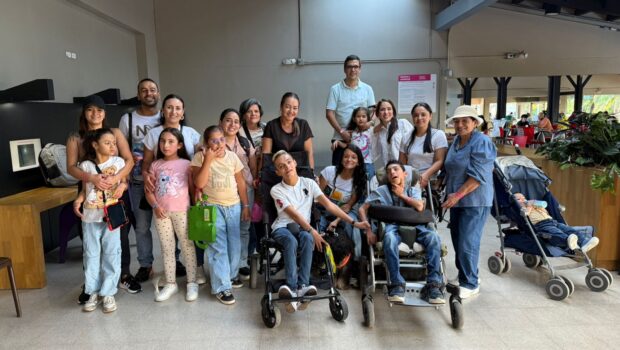
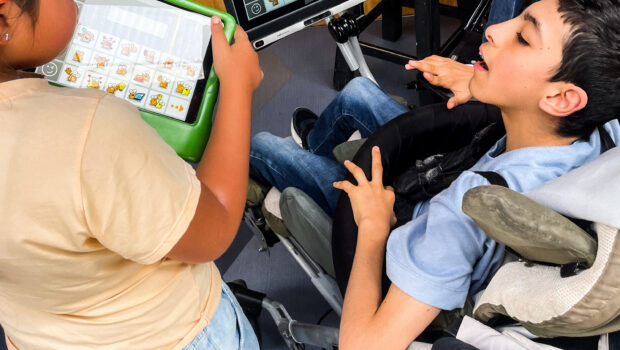
- October 2025: The first in-person gathering took place at the Comfama Rionegro Park. This event marked a milestone, bringing together six AAC users utilizing a variety of technologies—including Td Snap, Proloquo2go, and Grid 3 with eye-tracking access—alongside their families.
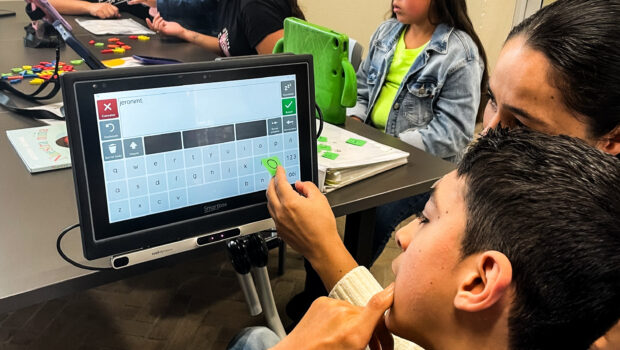
- February 2026: The program expanded its reach with the first in-person shared reading session at a public library in Rionegro, focusing on Comprehensive Literacy. This shifted the focus from purely functional communication to the development of print knowledge and cognitive autonomy.
Data-Driven Community Engagement
The demographics of these meetings highlight the diversity of communication needs within the Antioquia region. During the inaugural October 2025 event, the participants included six primary AAC users and ten family members. The inclusion of diverse access methods—specifically the integration of eye-tracking technology—demonstrates the project’s commitment to accessibility for those with severe motor impairments.
The February 2026 library session further refined the approach by targeting "emergent" literacy. This is critical, as data from the International Society for Augmentative and Alternative Communication (ISAAC) suggests that individuals who do not use speech as their primary communication method are frequently denied access to literacy instruction, leading to a "literacy gap" that compounds social exclusion. By hosting these sessions in public spaces like libraries, the initiative effectively de-stigmatizes AAC and educates the broader public on the existence and necessity of these tools.
Theoretical Underpinnings and Professional Analysis
The intellectual rigor behind VOZ SOS CAAPAZ is heavily influenced by the work of researchers like Erin Sheldon, who advocates for "Comprehensive Literacy." This model moves away from repetitive, drill-based tasks toward meaningful, text-based interactions that mirror how neurotypical children acquire language.
A pivotal influence on this project is the 2025 article in the ISAAC journal, Nothing About AAC Users Without AAC Users. This publication forced a re-evaluation of how therapists interact with their clients. The core implication is that therapists must transition from "instructors" to "communication partners." This shift is not merely semantic; it requires the therapist to learn the AAC system alongside the user, thereby creating a horizontal rather than vertical relationship. In the context of Rionegro, this means that the role of the speech-language pathologist is to facilitate, not dictate, the interaction.
Participant Perspectives and Social Impact
The success of the project is perhaps best reflected in the feedback from its participants. Pablo Andrés Calderón Gómez, an AAC user who utilizes Tobii eye-tracking technology, noted following the October gathering: "I met other friends. We need more people with this Right to Communication." Such testimonies underscore the profound sense of isolation that often accompanies life as an AAC user and the subsequent psychological benefits of peer-to-peer social interaction.
For families, the project serves as a crucial resource to overcome the "glass ceiling" often placed on children by medical professionals. Many caregivers report that local therapeutic practices in Colombia have historically limited the scope of what is considered "achievable" for non-speaking children. VOZ SOS CAAPAZ functions as a corrective measure, providing families with a space to see their children engage in complex communication and literacy tasks, thereby raising expectations for what is possible in educational and social settings.
Broader Implications for Speech-Language Pathology
The emergence of VOZ SOS CAAPAZ signals a wider, international trend toward community-based support for individuals with communication disabilities. As the global population of AAC users grows, the reliance on traditional, office-bound therapy is increasingly being viewed as insufficient. The implications for the field of speech-language pathology are threefold:
- Shift in Clinical Training: Future therapists must be trained in neuroaffirmative practices that prioritize the agency of the user over the clinical goals of the practitioner.
- Public Advocacy: AAC is a human rights issue. By moving these interactions into public spaces like parks and libraries, the initiative forces society to confront and normalize the use of assistive technology.
- Sustainable Models of Care: The model established by Ordóñez proves that sustainable, low-cost community interventions can be more effective than high-cost, individual clinical interventions in fostering long-term social inclusion.
Future Projections
Looking ahead, Ordóñez aims to stabilize the monthly meeting schedule to ensure consistent access for participants. The long-term goal is to expand these gatherings to other municipalities within Antioquia and eventually to influence regional policy regarding communication rights.
The project remains a work in progress, characterized by an iterative process of trial, feedback, and modification. By prioritizing the autonomy of the AAC user and the ongoing education of the communication partner, VOZ SOS CAAPAZ is establishing a replicable framework for inclusive communication in the Spanish-speaking world. The initiative is a reminder that the "voice" of a non-speaking individual is not absent—it is simply waiting for the appropriate tools and community environment to be heard.
As the project continues to evolve, the focus will remain on the intersection of technology and human connection. Whether through the use of high-tech eye-tracking devices or simple, low-tech literacy supports, the ultimate aim of the initiative is to ensure that every individual, regardless of their ability to produce vocal speech, has the means to participate fully in the social, educational, and civic life of their community. This initiative serves as a model for how specialized knowledge, when combined with community-led action, can dismantle systemic barriers to communication.