
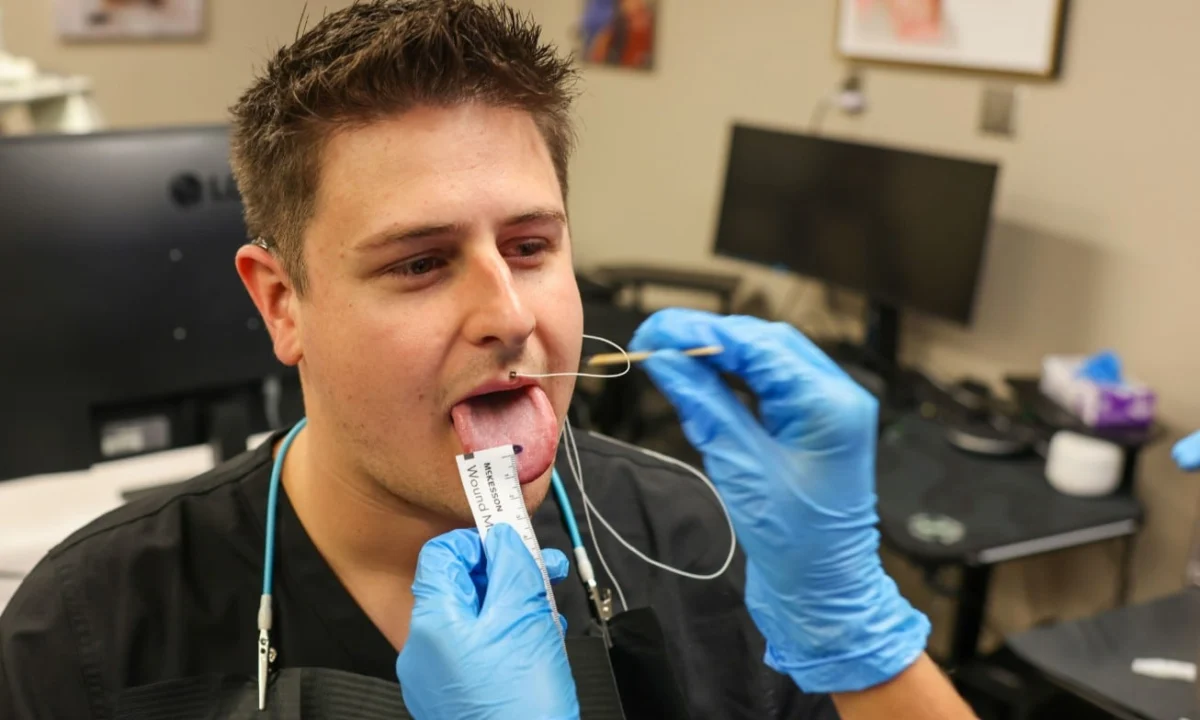
The study, spearheaded by Matthew Masapollo, Ph.D., an assistant professor at the OU College of Allied Health, challenges the notion of speech as a purely pre-programmed motor skill. Instead, it posits that the brain continuously integrates real-time sensory information, particularly auditory feedback, to dynamically regulate the intricate movements required for articulate speech. Dr. Masapollo emphasized the inherent complexity of this everyday act, stating, "Speech feels automatic, but it’s one of the most complex motor skills that we routinely perform. A typical adult produces up to 16,000 words each day – that’s tens of thousands of precisely timed movements requiring precise coordination throughout the vocal tract. What we’ve shown in this study is that auditory information helps regulate the control of the movements."
Unraveling the Mechanisms of Speech Motor Control
For decades, neuroscientists and speech researchers have debated the precise interplay between feedforward and feedback mechanisms in speech production. Feedforward control involves planning and executing movements based on a stored motor program, while feedback control relies on sensory information received during or after the movement to make real-time adjustments. While it was understood that both played a role, the specific contribution of auditory feedback to the fine motor control of individual articulators, particularly the highly agile tongue, remained less clearly defined by direct evidence. Previous research often relied on indirect measures, such as acoustic analysis of speech sounds or perceptual judgments by listeners, which could infer changes in speech but not directly observe the underlying articulatory movements.
The University of Oklahoma study sought to bridge this gap by employing advanced articulatory measurement techniques. The research design was meticulously crafted to isolate the effect of auditory feedback on speech motor control, focusing on the highly dynamic and complex movements of the tongue.
Precision Tracking: The Electromagnetic Articulography Advantage
To directly observe and quantify the subtle movements within the vocal tract, the researchers utilized electromagnetic articulography (EMA). This sophisticated technology involves placing small, non-invasive sensors on key articulators, such as the tongue and jaw. These sensors emit electromagnetic signals that are tracked by receiver coils, allowing for highly precise, real-time measurement of their three-dimensional positions and movements during speech production. Unlike older methods like X-ray microbeam, EMA is non-radiological and offers superior temporal and spatial resolution, providing an unprecedented window into the mechanics of speech.
In the study, participants were tasked with producing simple speech sounds, specifically the syllables "ta" and "da." These alveolar consonants were chosen because their production critically relies on the precise elevation and contact of the tongue tip against the alveolar ridge (the roof of the mouth behind the upper front teeth). Participants performed these speech tasks under two conditions: first, with normal auditory feedback, and then with their auditory feedback masked by white noise. This masking technique effectively prevented participants from hearing their own voices as they spoke, thereby isolating the role of auditory input.
The results yielded a striking and specific finding: when auditory feedback was suppressed, the tongue-elevating movements — those essential for pressing the tongue against the roof of the mouth to produce sounds like "ta" and "da" — became significantly less precise and more variable. Remarkably, jaw motion remained unaffected. This specificity is crucial, as it indicates that auditory feedback is not merely a general regulator of vocal tract movements but plays a targeted role in the fine-tuning of articulators with higher degrees of freedom and greater inherent variability, such as the tongue.
Dr. Masapollo elaborated on this nuanced discovery, noting, "The effect was strongest during tongue-elevating movements, rather than overall tongue motion. This suggests the brain doesn’t fully pre-plan speech movements; it also relies on real-time sensory information to regulate tongue movements for speech." This insight underscores the dynamic, adaptive nature of speech motor control, where ongoing sensory input serves as a critical guide, allowing for continuous adjustments and refinements to ensure articulatory accuracy.
The Tongue’s Unique Role in Speech and Sensory Reliance
The tongue is arguably the most versatile and complex articulator in the human vocal tract. Unlike the jaw, which primarily performs rotational movements up and down, the tongue boasts an intricate musculature that allows for a wide range of independent movements: elevation, depression, protrusion, retraction, grooving, and shaping. This extraordinary flexibility, while enabling the vast phonetic repertoire of human language, also necessitates a higher degree of control and, consequently, a greater reliance on sensory input for precision.
The study’s findings suggest that because the tongue has so many degrees of freedom, the brain cannot simply program every single muscle contraction in advance. Instead, it relies on a continuous stream of sensory information – including auditory feedback, proprioception (sense of position and movement), and tactile feedback (touch) – to guide and correct its movements in real-time. This real-time sensory guidance is particularly critical for movements that require fine spatial and temporal accuracy, such as the tongue-to-palate contact points essential for many consonants. Without the ability to hear the acoustic output of these precise movements, the system’s ability to self-correct and maintain consistency is compromised.

Profound Clinical Implications for Hearing Loss and Oropharyngeal Conditions
The insights gleaned from this research hold significant promise for advancing clinical practice, particularly in the fields of audiology, speech-language pathology, and oncology. The findings are directly relevant to two distinct but equally challenging patient populations: individuals with hearing loss and patients undergoing treatment for tongue cancer.
For individuals with hearing loss, especially those who rely on amplification devices like hearing aids or cochlear implants, the study provides a deeper understanding of the challenges they face in maintaining clear and precise speech. Children born with profound hearing loss, for instance, often struggle with speech development precisely because they lack consistent and accurate auditory feedback from their own vocalizations. While cochlear implants have revolutionized access to sound, the quality of auditory information transmitted through these devices can differ from natural hearing. This research suggests that even subtle differences in auditory feedback could impact the precision of tongue movements. This understanding could inform the development of more sophisticated cochlear implant programming strategies, rehabilitation exercises, and even biofeedback tools that enhance the brain’s ability to utilize available auditory cues for improved articulatory control. Speech-language pathologists can now consider targeted interventions that specifically address tongue precision, perhaps using visual feedback alongside auditory training.
Equally compelling are the implications for patients undergoing treatment for tongue cancer. The OU Health Stephenson Cancer Center is currently involved in an ongoing study, also led by Dr. Masapollo, that is directly informed by these foundational findings. Treatments for tongue cancer, such as surgery (glossectomy, which involves partial or complete removal of the tongue), chemotherapy, and radiation therapy, can profoundly affect both the structural integrity and sensory function of the tongue. Radiation, for example, often leads to fibrosis, a stiffening and scarring of the tissue, which severely restricts the tongue’s mobility. Surgical interventions can damage the sensory nerves of the tongue, diminishing proprioceptive and tactile feedback, further compounding the challenges. The combined impact of these treatments can create significant difficulties for both speech production (dysarthria) and swallowing (dysphagia).
Dr. Masapollo highlighted the dual challenge, explaining, "The sensory nerves of the tongue are often damaged during surgery, and radiation creates a lot of fibrous tissue in the tongue. People who have part of their tongue removed may also have trouble swallowing. When we swallow, the tongue rises to press against the roof of the mouth, forming a tight seal – similar to the tongue movements used to produce the sounds ‘ta’ or ‘da’. This seal helps guide and control the movement of food and liquid during swallowing, just as precise tongue positioning is critical for producing speech." This connection between speech articulation and swallowing mechanics underscores the holistic nature of the tongue’s function and the pervasive impact of its impairment.
The ongoing study at Stephenson Cancer Center aims to track patients before and after their cancer treatments over a three-year period. This longitudinal approach is critical for understanding the long-term effects of different interventions on tongue control and overall motor function. The ultimate goal is to translate these insights into improved rehabilitation strategies for speech-language pathologists and other related clinicians. This could involve developing more tailored exercises, incorporating sensory retraining techniques, or utilizing advanced biofeedback methods to help patients regain or compensate for lost articulatory precision. The multidisciplinary team collaborating on this crucial follow-up research includes Peter Keates, DMA, CCC-SLP, Rusha Patel, M.D., and Christina Henson, M.D., reflecting the comprehensive approach required for such complex patient care.
Advancing the Frontier of Speech Measurement
Beyond its clinical ramifications, the OU study also serves as a powerful testament to the value of advanced measurement tools in speech science. Historically, speech research relied heavily on subjective perceptual ratings of speech quality or objective acoustic analyses of the sound waves produced. While these methods provide valuable information, they offer only an indirect window into the actual movements of the articulators hidden within the vocal tract.
Electromagnetic articulography (EMA) has emerged as a game-changer by allowing researchers to directly observe and quantify these movements. As Dr. Masapollo emphasized, "Previous studies have relied almost exclusively on subjective perceptual ratings of speech. This is the first direct evidence that auditory input specifically affects the speech-related motion of the tongue. You wouldn’t be able to infer that from just listening to someone or even doing an acoustic analysis of speech. You have to directly observe the movements hidden within the inner reaches of the vocal tract, which we are now able to do." This capability to capture direct articulatory kinematics is vital for disentangling the complex motor control processes underlying speech and for developing targeted interventions based on precise articulatory targets. The adoption of such technologies is propelling speech science into an era of unprecedented understanding of the biomechanics and neural control of human communication.
A Glimpse into the Future of Speech Rehabilitation
The research from the University of Oklahoma represents a significant leap forward in understanding the intricate relationship between hearing and speech production. By providing direct evidence of auditory feedback’s role in fine-tuning tongue movements, it opens new avenues for both basic neuroscience research and clinical applications. Experts in speech-language pathology and rehabilitative medicine anticipate that these findings will lead to more evidence-based, personalized interventions. For individuals striving to communicate effectively despite hearing challenges or the debilitating effects of cancer treatments, this research offers renewed hope for improved outcomes and enhanced quality of life. The commitment of Dr. Masapollo and his team to follow patients longitudinally further solidifies the translation of laboratory findings into tangible benefits for those in need, cementing the University of Oklahoma’s role at the forefront of speech and hearing research.
The publication detailing these pivotal findings, titled “Precision of Tongue Control for Task-Relevant Articulatory Goals Diminishes Without Real-Time Auditory Feedback,” is available for review at https://doi.org/10.1044/2025_JSLHR-25-00514.
About the University of Oklahoma
Founded in 1890, the University of Oklahoma is a public research university with campuses in Norman, Oklahoma City, and Tulsa. As the state’s flagship university, OU serves the educational, cultural, economic, and health care needs of the state, region, and nation. In Oklahoma City, the OU Health Campus stands as one of the nation’s few academic health centers with seven health profession colleges located on the same campus. The OU Health Campus educates approximately 4,000 students across more than 70 undergraduate and graduate degree programs spanning Oklahoma City and Tulsa, and it is recognized as the leading research institution in Oklahoma, driving innovation in health sciences and patient care. For more information about the OU Health Campus, please visit www.ouhsc.edu.