
Early Aspirations and Scientific Foundations
Born in Vienna in 1953, Ingeborg Hochmair was immersed in an environment that fostered a deep appreciation for scientific inquiry. Her father, a physicist, and her mother, a mechanical engineering professor, instilled in her a passion for the intricacies of the natural world and technological innovation. By the tender age of 13, Ingeborg had already articulated a clear and profound ambition: to enhance human quality of life through the application of advanced medical devices. This early conviction would serve as the guiding star throughout her academic and professional endeavors.
Her pursuit of this calling led her to study electrical engineering at the Vienna University of Technology. It was during this formative period that her trajectory became irrevocably linked to addressing hearing loss. In 1975, a pivotal moment arrived when her future husband, Erwin Hochmair, invited her to collaborate on a nascent project focused on developing a cochlear implant. This collaboration marked the genesis of a revolutionary endeavor that would redefine possibilities for individuals with profound hearing impairments.
The Dawn of the Microelectronic Cochlear Implant
The year 1977 marked a significant milestone in the history of audiology and medical engineering. The world’s first microelectronic multichannel cochlear implant, a testament to the collaborative vision of Ingeborg and Erwin Hochmair, was successfully implanted. This achievement was not merely a technical triumph; it represented a profound leap forward in the potential for restoring auditory function. The development of this implant was a complex undertaking, requiring a deep understanding of electrical engineering principles, intricate signal processing, and the delicate anatomy of the human ear.
In recognition of her groundbreaking contributions to this field, Ingeborg Hochmair achieved another significant distinction: she became the first woman in Austria to earn a PhD in electrical engineering. This academic accolade underscored her exceptional intellect, perseverance, and pioneering spirit in a field largely dominated by men.
From Speech Understanding to Real-World Communication

The journey from a functional implant to one that enabled meaningful communication was arduous and iterative. Early recipients played an indispensable role in this evolutionary process. Connie, one of the initial cochlear implant recipients, dedicated numerous hours to the Hochmairs’ laboratory. Her participation in rigorous testing was instrumental in refining the first speech coding strategies. These strategies are crucial for translating external sound into electrical signals that the auditory nerve can interpret.
By 1980, the fruits of this intensive collaboration became evident. Connie achieved the ability to understand speech through her cochlear implant, a feat that many in the scientific community had deemed improbable, if not impossible, at the outset of the project. This success served as a powerful validation of the Hochmairs’ innovative approach and their unwavering belief in the potential of their technology.
The skepticism Ingeborg Hochmair encountered is a recurring theme in scientific innovation. She herself has reflected on the challenges, stating, "Persistence pays off. ‘The auditory nerve has 20,000 fibers—and you want to build a cochlear implant (CI) with eight channels? It will never work!’ This was the verdict of an esteemed physiologist… We approached this task a lot more optimistically." This anecdote highlights the courage required to pursue a vision in the face of established scientific dogma.
The Founding of MED-EL and the COMBI 40 System
Driven by an unyielding commitment to enhancing quality of life through technological solutions, the Hochmairs relocated to Innsbruck in the late 1980s. It was here that they established MED-EL, a company that would become synonymous with advanced hearing solutions. By 1990, the company had hired its initial team of employees, signaling the transition from a research project to a burgeoning enterprise.
The year 1994 witnessed the launch of MED-EL’s COMBI 40 system, an eight-channel high-rate cochlear implant. The impact of this technological advancement was significant. Rigorous study results demonstrated that within a mere six months of implantation, a majority of recipients achieved a level of speech understanding sufficient for engaging in telephone conversations with unfamiliar interlocutors. This was a transformative development, enabling individuals to reconnect with the world through seamless auditory communication, a capability that had been lost to them for years.
Continuous Innovation: The Evolution of Cochlear Implants
Dr. Hochmair’s mission to improve lives did not cease with the COMBI 40. Over the subsequent three decades, MED-EL has remained at the forefront of cochlear implant innovation, continuously refining and enhancing the technology. Today’s cochlear implants are a far cry from their early predecessors, offering capabilities that were once the realm of science fiction.
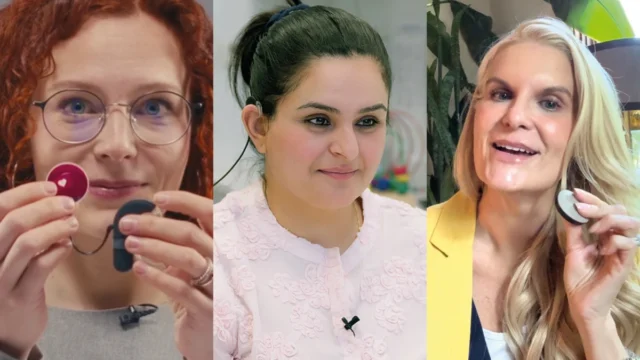
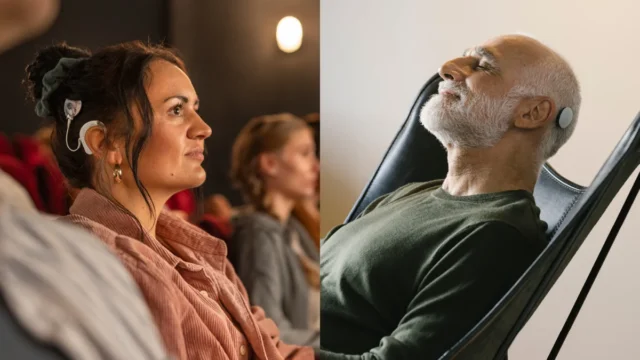
Modern cochlear implants are capable of streaming audio directly to the implant, allowing users to listen to podcasts, music, and engage in phone calls with unparalleled clarity. These devices seamlessly connect with various applications, further integrating auditory experiences into daily life. The audio processors, the external component of the implant system, have undergone remarkable miniaturization. Many contemporary processors weigh less than a standard AAA battery and are discreetly worn behind the ear.

The advancements in sound quality and coding strategies have been equally profound. These improvements enable recipients to navigate complex auditory environments, such as noisy restaurants or social gatherings, with greater ease. The ability to enjoy music, once a distant dream for many with hearing loss, is now a tangible reality for a growing number of cochlear implant users. This evolution represents a paradigm shift, transforming cochlear implants from devices that merely restore a basic level of hearing to sophisticated tools that facilitate rich and nuanced auditory engagement.
Reflecting on the remarkable progress, Dr. Hochmair stated, "What cochlear implants can do today seems like a miracle to many people. But this is actually the result of hard, painstaking, and collaborative work by teams of experts over the course of many years." This statement emphasizes the collective effort and sustained dedication that underpin such monumental technological advancements.
A Global Impact: Hundreds of Thousands Reconnected
Dr. Hochmair’s unwavering determination to fulfill her childhood ambition has had a profound and far-reaching impact. Due to her pioneering work and the continuous innovation at MED-EL, hundreds of thousands of individuals across more than 170 countries now benefit from cochlear implant technology. This global reach underscores the universal need for effective hearing solutions and the success of MED-EL in making these solutions accessible to diverse populations.
Recognition and the 2026 Queen Elizabeth Prize for Engineering
In a momentous affirmation of their lifelong contributions, Dr. Ingeborg Hochmair and Professor Erwin Hochmair were jointly honored with the prestigious Queen Elizabeth Prize for Engineering on February 3, 2026. This esteemed award, often referred to as the "Nobel Prize for Engineering," recognizes individuals who have made outstanding contributions to the field. The 2026 prize specifically celebrated the Hochmairs, along with seven other esteemed scientists, for their groundbreaking work in the design and development of modern neural interfaces that restore vital human functions.
The Queen Elizabeth Prize for Engineering, established in 2013, aims to celebrate engineering excellence and inspire future generations of engineers. It is awarded every two years to individuals or teams whose work has had a transformative impact on society. The inclusion of the Hochmairs among its laureates solidifies their position as true pioneers whose innovations have profoundly improved the lives of millions.
In response to this significant recognition, Dr. Ingeborg Hochmair articulated the company’s enduring commitment: "This recognition strengthens our resolve to keep pushing boundaries. Our mission has always been to overcome hearing loss as a barrier to communication and quality of life. At MED-EL, we will continue to invest in research, accessibility, and technologies that help people participate fully in life, wherever they are."
Addressing the Unmet Need: The Future of Hearing Solutions

Despite the remarkable progress, a significant challenge remains: a substantial number of individuals who could benefit from cochlear implants still do not have access to them. For every child who receives a cochlear implant, an estimated three more could benefit but do not. This disparity highlights the ongoing need for increased awareness, improved accessibility, and continued innovation to bridge the gap between technological capability and widespread availability.
MED-EL is actively exploring and developing next-generation hearing solutions to address this unmet need. Emerging innovations include remote fitting capabilities, which allow for adjustments to the audio processor without the need for in-person visits, thereby enhancing convenience and accessibility, particularly for those in remote areas. Robot-assisted surgery is also being explored to improve the precision and safety of implantation procedures. Furthermore, the pursuit of totally implantable cochlear implants represents a significant step towards even greater discretion and user comfort.
As Dr. Hochmair aptly stated, "We always innovate and keep innovating to make it easier and better for everyone involved." This forward-looking philosophy ensures that MED-EL remains dedicated to pushing the boundaries of what is possible in hearing restoration.
Nearly 50 years have passed since Ingeborg Hochmair’s first cochlear implant was implanted. The journey from that initial breakthrough to the sophisticated, life-enhancing devices of today is a testament to her vision, perseverance, and the collaborative spirit of scientific advancement. The coming years promise further transformative developments, driven by the relentless pursuit of a world where hearing loss is no longer a barrier to full participation in life.
Broader Impact and Implications
The work of Dr. Ingeborg Hochmair and MED-EL has had a profound and multifaceted impact:
- Restoration of Quality of Life: The primary impact is the profound improvement in the quality of life for individuals with hearing loss. This includes enhanced communication, social engagement, educational opportunities, and professional advancement.
- Technological Advancements: The development of the cochlear implant has spurred innovation in related fields, including biomaterials, microelectronics, signal processing, and neural interface technology.
- Economic and Social Benefits: By enabling individuals to participate more fully in society and the workforce, cochlear implants contribute to economic productivity and social inclusion.
- Inspiring Future Generations: The story of Dr. Hochmair serves as a powerful inspiration for aspiring scientists and engineers, demonstrating the profound impact that dedication and innovation can have on global health and well-being.
- Advocacy for Accessibility: The continued focus on accessibility and innovation by MED-EL raises awareness about the prevalence of hearing loss and the need for equitable access to life-changing technologies.
The legacy of Dr. Ingeborg Hochmair is one of unwavering dedication to human betterment, scientific excellence, and the transformative power of innovation. Her journey, from a childhood dream to a global leader in hearing technology, exemplifies the potential for individuals to shape a better future for humanity.