
The Gradual Onset of Hearing Impairment
The insidious nature of hearing loss often means individuals don’t realize the extent of their auditory challenges until they significantly impact daily life. This gradual decline, frequently occurring over months or years, allows the brain to compensate by working harder to interpret diminished auditory signals. This adaptive process can mask the underlying problem, leading individuals to attribute difficulties to environmental noise, stress, or simple distraction. However, this compensatory effort can lead to increased fatigue and cognitive load. The World Health Organization (WHO) estimates that over 1.5 billion people worldwide live with some degree of hearing loss, a figure projected to rise significantly in the coming decades due to aging populations and increasing exposure to loud noise. Early detection and intervention are therefore crucial for maintaining quality of life and preventing further deterioration.
Recognizing the Early Whispers: Overlooked Symptoms
Early symptoms of hearing loss can be remarkably easy to dismiss. Because the change is gradual, your brain gets accustomed to working harder to fill in missing sounds. This is why early signs are frequently brushed off as stress or distraction. If several of these sound familiar, it’s worth paying attention. Early detection makes a real difference, even if the symptoms feel mild.
- Difficulty understanding speech in noisy environments: This is often the first noticeable symptom. While a person might hear conversations in a quiet room, the presence of background noise—like in a restaurant, at a party, or even with the television on—makes it significantly harder to follow along. This occurs because hearing loss often affects the ability to distinguish between speech sounds and background noise, particularly higher frequencies crucial for consonant clarity.
- Needing others to repeat themselves frequently: Constantly asking "What did you say?" or "Can you repeat that?" can be a sign that the clarity of speech is diminishing. This isn’t about volume alone; it’s about the brain struggling to process the nuances of spoken language.
- Turning up the volume on the TV or radio: A noticeable increase in the preferred listening volume is a common indicator. What once sounded comfortable may now seem too quiet, requiring a higher setting to achieve adequate comprehension.
- Misinterpreting words or sounds: Hearing sounds but not understanding them, or mistaking one word for another, suggests a loss of auditory precision. This can be particularly frustrating when seemingly simple words become garbled.
- Experiencing ringing or buzzing in the ears (tinnitus): While tinnitus can have various causes, it is frequently associated with hearing loss, particularly noise-induced or age-related types. This phantom sound can range from a faint hum to a loud roar, adding another layer of auditory distraction.
- Feeling fatigued after conversations: The increased effort required to listen and comprehend in challenging situations can lead to mental exhaustion. This "listening fatigue" is a significant, though often unrecognized, symptom.
- Avoiding social situations: As communication becomes more challenging, individuals may begin to withdraw from social gatherings, preferring quieter, one-on-one interactions or avoiding them altogether to prevent embarrassment or frustration.
Hearing Loss Symptoms in Adults: Navigating Communication Challenges
Adults often notice hearing loss through communication challenges first. Over time, these challenges can affect mood, confidence, and social life. If you suspect you might be experiencing hearing loss as an adult, you’re not alone, and it’s worth getting your hearing checked.
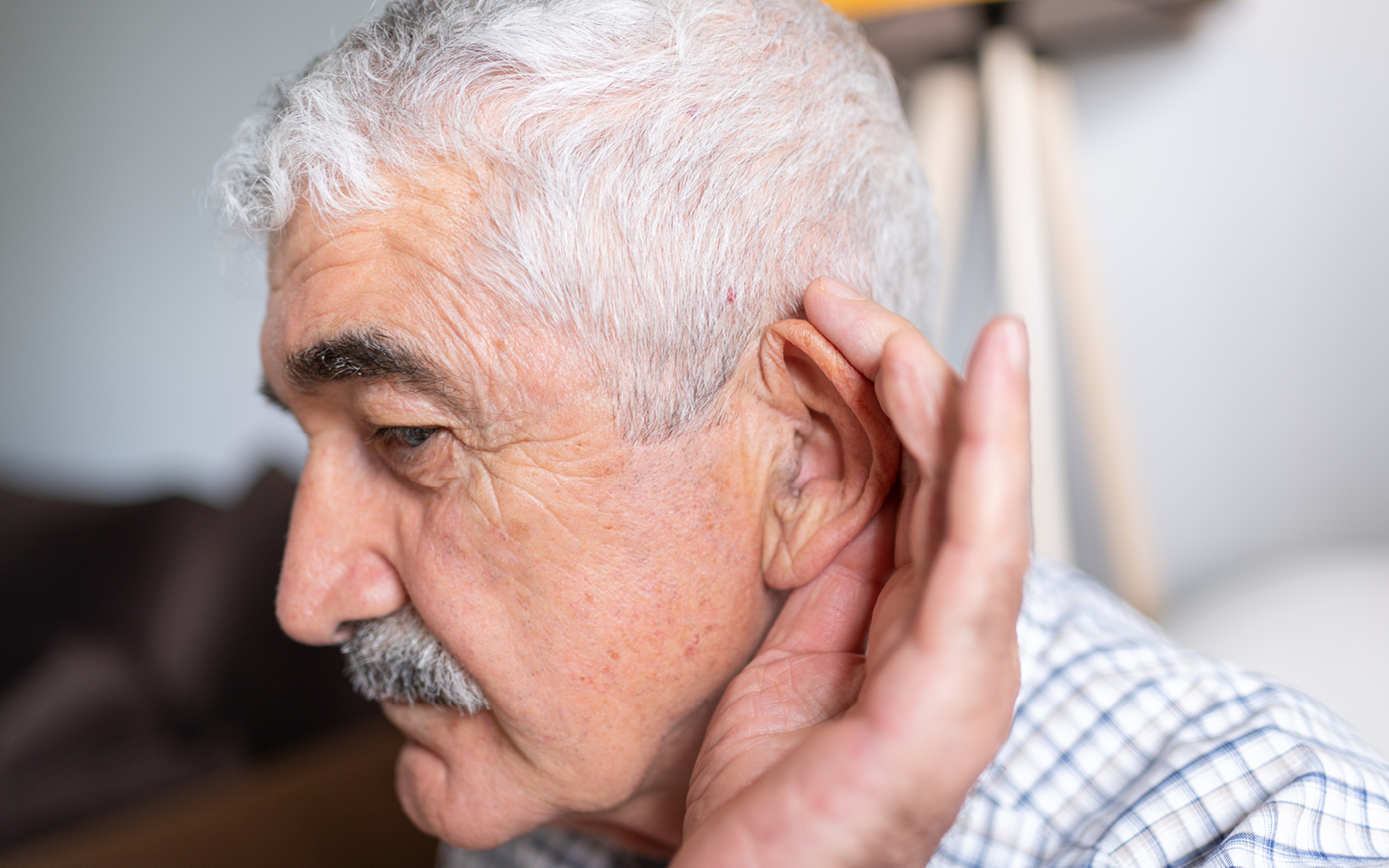
Communication-Related Symptoms
These are classic signs and symptoms of hearing loss in adults, particularly when they occur regularly and across different settings.
- Struggling to follow conversations in group settings: Participating in discussions with multiple people becomes increasingly difficult, as the brain tries to process overlapping voices and background noise.
- Difficulty hearing high-frequency sounds: This can include sounds like the "s," "sh," and "f" sounds, which are critical for distinguishing between similar-sounding words. This often leads to words sounding muffled or indistinct.
- Asking people to speak louder or enunciate more clearly: This is a direct response to the perceived need for increased sound intensity or better articulation to achieve understanding.
- Feeling like people are mumbling: When speech clarity is compromised, individuals may perceive others as speaking unclearly, even when they are not.
- Experiencing feedback or distortion from hearing devices (if applicable): While not a primary symptom of hearing loss itself, this can indicate an issue with the fitting or functionality of assistive listening devices.
Social & Emotional Effects
Hearing loss doesn’t just affect what you hear, but also how you perceive the world. If these emotional changes occur alongside communication struggles, they might be symptoms of hearing loss and deserve attention.
- Increased feelings of isolation or loneliness: The difficulty in engaging in conversations can lead to a sense of disconnect from others, even when physically present.
- Reduced confidence in social and professional settings: Inability to fully participate in discussions or understand instructions can erode self-assurance.
- Irritability or increased frustration: The constant effort to hear and understand, coupled with miscommunications, can lead to a shorter temper.
- Memory problems: While not a direct cause, the cognitive load associated with compensating for hearing loss can sometimes be mistaken for or exacerbate memory issues.
- Depression or anxiety: Prolonged social isolation and the emotional toll of communication difficulties can contribute to mental health challenges.
Hearing Loss Symptoms in Children: Developmental Indicators
Children often show hearing loss symptoms through behavior or developmental delays rather than direct complaints. Because hearing is deeply tied to speech, learning, and social development, spotting symptoms early is especially important. Untreated hearing loss in children can have profound and lasting effects on their educational attainment, social skills, and overall development. Early identification and intervention are critical to mitigate these risks.
Hearing Loss Symptoms in Infants (0-12 Months)
- Not startling to loud noises: A healthy infant typically reacts to sudden, loud sounds. A lack of response may indicate a hearing impairment.
- Not turning their head towards sounds: By three months, infants should begin to locate the source of sounds. By six months, this ability should be more refined.
- Delayed or absent babbling: Babbling is a crucial precursor to speech. If an infant is not babbling or their babbling is significantly delayed, it could be linked to hearing difficulties.
- Not responding to their name being called (after 6-9 months): As children develop, they learn to recognize their name. Failure to respond may suggest they aren’t hearing it clearly.
Signs in Early Childhood
- Difficulty speaking or unclear speech: Speech development is heavily reliant on auditory input. If a child isn’t hearing sounds clearly, their own speech production will likely be affected.
- Not following directions: This can be due to not fully hearing or understanding instructions, leading to apparent inattentiveness.
- Frequently asking for words to be repeated: Similar to adults, children may indicate their difficulty in understanding by asking for repetition.
- Appearing to be inattentive or easily distracted: This can be a behavioral manifestation of not fully processing auditory information.
- Watching others’ faces intently when they speak: This is a compensatory behavior, attempting to lip-read or gain visual cues to aid comprehension.
Signs in School-Aged Children
- Difficulty understanding the teacher in a classroom setting: Background noise and the distance from the speaker can make classroom learning challenging for children with hearing loss.
- Performing poorly in school, especially in language-related subjects: Auditory processing is fundamental to learning, and hearing impairment can significantly impact academic performance.
- Complaining of earaches or discomfort: While not always a symptom of hearing loss, persistent ear issues can lead to temporary or permanent hearing difficulties.
- Frequent misunderstanding of spoken language: This can lead to frustration and a reluctance to participate in classroom activities.
One sign alone doesn’t confirm hearing loss, but a pattern is worth discussing with a pediatrician or audiologist.
Symptoms of Hearing Loss in Older Adults: Age-Related Changes
Age-related hearing changes are very common. Loved ones may notice changes first, which is why talking openly about hearing can help. Approximately one-third of adults aged 65 and older experience hearing loss, and this figure rises to nearly half of those aged 75 and older.

- Difficulty hearing in groups or noisy places: This is a hallmark of presbycusis, the medical term for age-related hearing loss, which typically affects the ability to hear higher frequencies first.
- Trouble distinguishing consonants: The subtle differences between consonant sounds are often lost, making speech sound muffled.
- Needing to ask people to speak up or repeat themselves: This is a direct consequence of diminished auditory acuity.
- Muffled or unclear speech: Even when sounds are audible, their clarity can be compromised, making them difficult to decipher.
- Increased sensitivity to loud noises (hyperacusis): Paradoxically, while hearing less, some individuals may find loud sounds more jarring or uncomfortable.
- Feeling dizzy or experiencing balance issues: While not directly caused by hearing loss, conditions affecting the inner ear can impact both hearing and balance.
These symptoms are not something you have to "just live with." Support can make daily interactions feel enjoyable again.
Symptoms of Specific Types of Hearing Loss
Hearing loss doesn’t present the same for everyone. As different causes affect different parts of the hearing system, the symptoms can feel a bit different too. Knowing the type can help you understand what symptoms of hearing loss might be in your case.
Conductive Hearing Loss Symptoms
Conductive hearing loss happens when sound cannot pass efficiently through the outer or middle ear, often due to earwax, fluid, infection, or middle ear problems. Conductive hearing loss mainly affects loudness. If sound is made louder, the brain can usually understand it clearly.
- Muffled hearing: Sounds are generally quieter and less distinct.
- Difficulty hearing faint sounds: Even sounds that should be audible may be missed.
- The problem may fluctuate: If caused by fluid or infection, hearing can improve as the condition resolves.
- Sounds are often clearer when amplified: Because the issue is with sound transmission, increasing the volume can often restore clarity.
Sensorineural Hearing Loss Symptoms
Sensorineural hearing loss comes from changes in the inner ear (cochlea) or auditory nerve. It’s the most common permanent type and includes age-related and noise-related hearing loss. Sensorineural hearing loss affects clarity and processing. Louder sounds can still feel fuzzy unless they are correctly adjusted.
- Difficulty understanding speech, especially in noisy environments: This is a primary characteristic, as the inner ear and auditory nerve are crucial for processing complex auditory signals.
- Tinnitus (ringing in the ears): A common accompanying symptom.
- Sounds may seem distorted or unclear: Even at normal volumes, the quality of the sound can be compromised.
- Hearing loss that is often permanent: Unlike conductive loss, damage to the inner ear or nerve is typically irreversible.
Noise-Induced Hearing Loss Symptoms
Noise-induced hearing loss is sensorineural hearing loss caused by loud sound exposure like concerts, clubs, power tools, or noisy workplaces. People often hear deeper sounds fine but miss crisp, high-pitched details that make speech understandable.

- Difficulty hearing high-frequency sounds: This often affects the clarity of speech.
- Tinnitus: A very common symptom after exposure to loud noise.
- A feeling of fullness in the ears: This can occur immediately after exposure to loud sounds.
- The damage is often cumulative: Repeated exposure to loud noise can lead to progressive hearing loss.
Asymmetrical (One-Sided) Hearing Loss Symptoms
Asymmetrical hearing loss means one ear hears significantly better than the other. Even mild one-sided hearing loss can make conversation in noise harder and reduce environmental awareness.
- Difficulty localizing sound: It becomes harder to determine the direction from which a sound is coming.
- Speech sounds clearer from one side: Conversations may be easier to follow when the speaker is on the better-hearing side.
- Increased listening effort: The brain has to work harder to compensate for the difference in hearing between the ears.
Bilateral Hearing Loss Symptoms
Bilateral hearing loss affects both ears. Because of that, daily listening feels consistently harder, but balanced hearing care can help tremendously.
- Consistent difficulty hearing and understanding in most situations: The impact is generalized across both ears.
- Both ears may experience similar or different degrees of loss: The presentation can vary.
Permanent Hearing Loss Symptoms
Permanent hearing loss does not resolve on its own and is often linked to inner ear or nerve changes.
- Persistent and unchanging hearing difficulties: Unlike temporary hearing loss, this type does not improve spontaneously.
- Often associated with sensorineural hearing loss: Damage to the cochlea or auditory nerve is typically permanent.
Neural Hearing Loss Symptoms
Neural hearing loss involves the auditory nerve or brain pathways that process sound.
- Significant difficulty understanding speech, even with amplification: The issue lies in the transmission or processing of auditory signals, not just their loudness.
- May have normal or near-normal hearing on audiograms but struggle with speech understanding: This can be a complex diagnostic challenge.
When Symptoms Indicate a Medical Emergency
Most hearing loss is gradual, but some symptoms should be treated as urgent. Sudden hearing loss is considered a medical emergency because quick treatment can improve recovery outcomes.

- Sudden, profound hearing loss in one or both ears: This can occur rapidly, often accompanied by a feeling of fullness or pressure in the ear, and sometimes tinnitus or dizziness. It is a medical emergency that requires immediate attention from a healthcare professional.
- Sudden onset of dizziness or vertigo accompanied by hearing loss: This combination can indicate a problem with the inner ear or auditory nerve, such as Meniere’s disease or a vestibular schwannoma (acoustic neuroma).
- Sudden hearing loss with severe ear pain or discharge: This could signal a serious infection or injury that needs prompt medical evaluation.
- Sudden hearing loss with neurological symptoms: If sudden hearing loss is accompanied by facial weakness, numbness, or difficulty with coordination, it may be a sign of a more serious neurological event, such as a stroke, and requires immediate emergency medical care.
If you experience any of these symptoms, don’t wait to see if they pass; seek help right away.
Diagnosing Hearing Loss: The Path to Clarity
If you think you might have hearing loss, testing is quick, painless, and can give you clear answers right away.
Hearing Screening Tests
Screenings are quick checks used in schools, workplaces, or at routine health visits. They can flag whether you need a deeper evaluation. These tests are designed to identify individuals who may have hearing loss and require further assessment by an audiologist.
Free Online Hearing Test
To find out whether you have hearing loss, try our free online hearing test. It can provide you with a quick assessment of how well you can hear and understand in everyday life. While not a substitute for a professional diagnosis, an online test can serve as a useful initial indicator.
Full Audiological Evaluation
A full audiological evaluation with a specialist may include:

- Otoscopy: A visual examination of the ear canal and eardrum to check for blockages or abnormalities.
- Pure-tone audiometry: This test determines the softest sounds you can hear at different frequencies. It measures your hearing threshold for each ear.
- Speech audiometry: This assesses your ability to hear and understand speech at various volume levels and in different listening conditions.
- Tympanometry: This test measures the function of the middle ear and eardrum by assessing their movement in response to changes in air pressure.
- Otoacoustic emissions (OAEs): This test measures the responses of the inner ear’s sensory hair cells to sound. It’s often used for newborns and young children.
- Auditory Brainstem Response (ABR): This test measures the electrical activity in the auditory nerve and brainstem in response to sound. It’s used to assess hearing in infants or individuals who cannot participate in behavioral tests.
Even mild hearing loss symptoms can increase listening effort and mental load. Early diagnosis can help prevent unnecessary strain and supports your long-term communication and well-being, increasing your quality of life.
When to Consult a Hearing Specialist
If you’re still wondering if you might be experiencing hearing loss and need to get your hearing checked, here’s a clear rule of thumb: If hearing feels harder than it used to and it’s affecting your quality of life, it’s time to get your hearing checked.
Make an appointment with a specialist if you notice:
- Consistent difficulty hearing conversations, especially in noisy places.
- Needing to ask for repetition frequently.
- Turning up the volume on electronic devices to an uncomfortable level for others.
- Experiencing ringing or buzzing in your ears (tinnitus).
- A noticeable change in your hearing that concerns you or impacts your daily activities.
- Family members or friends have commented on your hearing.
- Sudden changes in hearing, which require immediate medical attention.
What Happens at the Appointment
You’ll talk about your symptoms, health history, and listening challenges, then complete a hearing test. Most appointments take under an hour, and you’ll leave with a clear understanding of what’s going on and what support options fit your needs.
The Importance of Early Intervention and Treatment Options
The earlier you address hearing loss, the easier it is to stay confident in conversations, protect relationships, and avoid the isolation that sometimes comes with untreated hearing difficulties.

If your hearing test confirms hearing loss, don’t worry: There are several ways to improve how you hear and make conversations feel easy again. The right option depends on the type and degree of hearing loss, your lifestyle, and what your medical specialist recommends.
1. Medical or Surgical Treatment
Some hearing loss is caused by treatable issues like earwax buildup, fluid, or infection. In those cases, an ENT doctor may be able to restore hearing with simple medical care. Conditions like otitis media (middle ear infection) or impacted cerumen (earwax) can often be resolved with medication or manual removal, leading to a significant improvement or full recovery of hearing.
2. Hearing Aids
For many people with mild-to-moderate hearing loss, hearing aids could be an effective solution. They amplify sound and improve speech understanding, especially when fitted and adjusted to your hearing needs. Modern hearing aids are sophisticated devices that can be programmed to address specific hearing frequencies and can be paired with smartphones for streaming audio and making calls.
3. Implantable Hearing Solutions
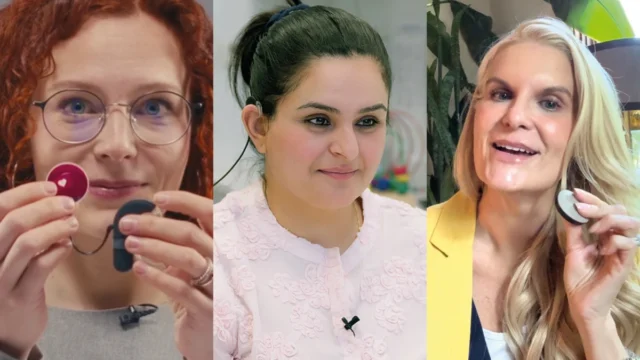
If hearing aids don’t provide the clarity you need, an implantable solution may be an option. MED-EL offers a full range of hearing implant systems designed for different types of hearing loss:
-
Cochlear implants can help people with severe-to-profound hearing loss to acquire hearing, or people with high-frequency hearing loss hear speech more clearly by directly stimulating the hearing nerve. Unlike hearing aids that amplify sound, cochlear implants bypass damaged parts of the inner ear to directly stimulate the auditory nerve.

-
Bone conduction implants, like BONEBRIDGE, are often used for conductive or mixed hearing loss. They send sound through bone conduction to the inner ear, bypassing the pathological external and middle ear. For some people, a non-surgical bone conduction hearing aid option like ADHEAR may also help. These systems are particularly beneficial when the outer or middle ear structures are compromised, preventing sound from reaching the inner ear effectively.
-
Middle ear implants, like VIBRANT SOUNDBRIDGE, can help people with mild-to-severe sensorineural hearing loss, conductive hearing loss, or mixed hearing loss by using the remaining ear structures to deliver sound and achieve a natural hearing experience. These implants are designed to resonate with the natural structures of the middle ear, providing a more nuanced sound transmission.
Your hearing specialist will talk you through what fits your hearing profile best. Whatever the outcome, the goal is the same: make listening feel easier and more natural in everyday life.
Conclusion: Proactive Hearing Health
Hearing loss is common, often gradual, and easy to miss at first. But those small shifts in hearing, like struggling in noisy environments, needing repetition, turning up volume, or feeling extra tired after conversations, can be important hearing loss symptoms. The right support can make everyday conversations feel easier again. And if you ever experience sudden hearing loss, dizziness with tinnitus, or strong ear pain, seek medical help right away. Getting your hearing checked is a simple step that can bring clarity and peace of mind, as well as improve your quality of life in the long run. A proactive approach to hearing health is an investment in overall well-being, enabling continued engagement with the world and loved ones.