
The Mechanics of Hearing: Tracing the Auditory Pathway
To effectively comprehend the origins of hearing loss, it is fundamental to understand the sophisticated process of how we hear. Sound, in the form of acoustic waves, travels through the atmosphere and enters the ear canal, acting as a conduit to the eardrum. The outer ear, comprising the visible auricle and the ear canal, plays a pivotal role in capturing these sound waves and channeling them inward.
Upon reaching the eardrum, the sound vibrations are transmitted to the middle ear. Here, a chain of three minuscule bones—the malleus, incus, and stapes—amplifies these vibrations before transmitting them to the inner ear. Within the inner ear lies the cochlea, a spiral-shaped structure housing thousands of delicate sensory hair cells. These hair cells are exquisitely sensitive to the movements induced by sound vibrations. Their motion generates electrical signals, which are then relayed along the auditory nerve to the brain. It is in the brain that these signals are interpreted, allowing us to perceive and understand sound.
Disruptions can occur at any juncture along this intricate auditory pathway. Blockages, such as excessive earwax, or infections affecting the outer or middle ear can impede the passage of sound. Similarly, damage to the inner ear’s hair cells or the auditory nerve can significantly impair the transmission of auditory information to the brain, leading to various types of hearing loss.
Categorizing Hearing Loss: Types and Their Underlying Causes
Hearing health professionals meticulously classify hearing impairments into distinct categories based on the specific anatomical location of the dysfunction within the auditory system. Accurately identifying the type of hearing loss is instrumental in pinpointing its root cause and subsequently determining the most appropriate and effective treatment strategy. It is important to note that any form of hearing loss can be either temporary, amenable to medical intervention, or permanent, requiring long-term management solutions.
Sensorineural Hearing Loss: Damage to the Inner Ear and Auditory Nerve
Sensorineural hearing loss (SNHL) arises from damage to the delicate structures of the inner ear, specifically the hair cells, or to the auditory nerve itself. This category represents the most prevalent form of hearing loss experienced by individuals.
Key Causes of Sensorineural Hearing Loss:
-
Age-Related Hearing Loss (Presbycusis): As individuals age, natural physiological changes occur within the inner ear. The gradual deterioration of hair cells and the associated neural pathways often lead to a progressive, bilateral high-frequency sensorineural hearing loss. This condition, typically affecting both ears, is usually irreversible. However, modern advancements in hearing technology, including sophisticated hearing aids and cochlear implants, can significantly enhance communication abilities and improve the overall quality of life for those affected. Data from the National Institute on Deafness and Other Communication Disorders (NIDCD) indicates that approximately one-third of adults aged 65 to 74 have hearing loss, and roughly half of adults aged 75 and older have hearing loss, with presbycusis being a major contributing factor.
-
Noise-Induced Hearing Loss (NIHL): Exposure to loud noises, whether through a single, intense sound event or prolonged, repeated exposure to high decibel levels, can inflict damage upon the auditory system, resulting in NIHL. This can affect individuals of all age groups, from children to older adults. The nature of the noise exposure dictates the type of hearing loss. Sudden, extremely loud sounds, such as those from explosions or acoustic trauma, can damage not only the inner ear hair cells but also the eardrum or the ossicular chain in the middle ear, potentially leading to conductive hearing loss (CHL) or mixed hearing loss (MHL). Conversely, chronic or repeated exposure to loud noise primarily affects the inner ear, invariably causing sensorineural hearing loss. Common culprits include loud music concerts, the operation of power tools, industrial noise in the workplace, and high-decibel recreational activities. Without adequate hearing protection, noise-related auditory damage can become permanent. Statistics from the Centers for Disease Control and Prevention (CDC) reveal that about 22 million workers are exposed to hazardous noise levels annually in the United States.
-
Ototoxic Medications: Certain prescription drugs and medical treatments, particularly chemotherapy drugs, some antibiotics, and high doses of aspirin, can have a toxic effect on the inner ear structures, leading to sensorineural hearing loss.
-
Genetic Predisposition: In some instances, hearing loss can have a genetic component, with individuals inheriting a predisposition to developing certain types of SNHL.
-
Certain Medical Conditions: Diseases that affect the inner ear or the auditory nerve, such as Meniere’s disease, acoustic neuroma (a benign tumor on the auditory nerve), or viral infections like meningitis, can also result in sensorineural hearing loss.
Conductive Hearing Loss: Obstructions in the Outer and Middle Ear
Conductive hearing loss occurs when sound waves are unable to travel efficiently through the outer or middle ear to reach the inner ear. This typically involves a physical obstruction or a problem with the sound transmission mechanism.
Key Causes of Conductive Hearing Loss:
-
Earwax Impaction: An accumulation of earwax in the ear canal can physically block sound waves from reaching the eardrum, leading to temporary hearing loss. This is a common and often easily treatable cause.
-
Ear Infections and Middle Ear Fluid: Infections in the middle ear (otitis media), especially common in children, can cause fluid to build up behind the eardrum. This fluid impedes the vibration of the eardrum and the tiny bones, hindering sound transmission. Chronic or recurrent infections can lead to more persistent conductive hearing loss.
-
Perforated Eardrum: A rupture or hole in the eardrum, often caused by trauma, infection, or sudden pressure changes, can significantly affect the ability to conduct sound.
-
Otosclerosis: This is a condition where abnormal bone growth in the middle ear, specifically around the stapes bone, prevents it from vibrating properly and transmitting sound to the inner ear.
-
Structural Abnormalities: In rare cases, congenital malformations of the outer or middle ear structures can result in conductive hearing loss.
Many conductive hearing loss issues are temporary and can be resolved with medical treatment, such as removing earwax, treating infections, or surgical intervention. However, if left unaddressed, some can lead to more permanent hearing impairment.
Mixed Hearing Loss: A Combination of Issues
Mixed hearing loss is characterized by the presence of both sensorineural and conductive components. This means that there is damage to the inner ear (SNHL) in addition to a problem in the outer or middle ear that impedes sound conduction (CHL).
Causes of Mixed Hearing Loss:
Mixed hearing loss can arise from various combinations of the causes listed above. For example, an individual with age-related hearing loss (SNHL) might also develop an ear infection or experience earwax impaction (CHL). Similarly, someone with noise-induced hearing loss might also suffer a perforated eardrum.
Due to the multifaceted nature of mixed hearing loss, treatment plans are often more complex and require careful tailoring to address each contributing factor individually.
Recognizing the Signs: Everyday Indicators of Hearing Loss
The onset of hearing loss can be subtle, making it challenging to recognize initially. However, several common signs can indicate a decline in auditory function:
- Difficulty understanding conversations, especially in noisy environments: This is one of the most frequently reported symptoms. The ability to distinguish speech from background noise diminishes.
- Frequently asking others to repeat themselves: A consistent need for clarification suggests that sounds are not being perceived clearly.
- Muffling of speech and other sounds: Sounds may seem less distinct or have a muffled quality.
- Tinnitus (ringing or buzzing in the ears): This phantom auditory sensation can often accompany hearing loss.
- Turning up the volume on the television or radio excessively: A need for higher volume levels indicates that normal listening levels are insufficient.
- Withdrawal from social situations: Due to the difficulty in communication, individuals may start avoiding social gatherings, leading to isolation.
- Fatigue and stress from listening: Constantly straining to hear can be mentally exhausting.
The Diagnostic Process: How Hearing is Assessed
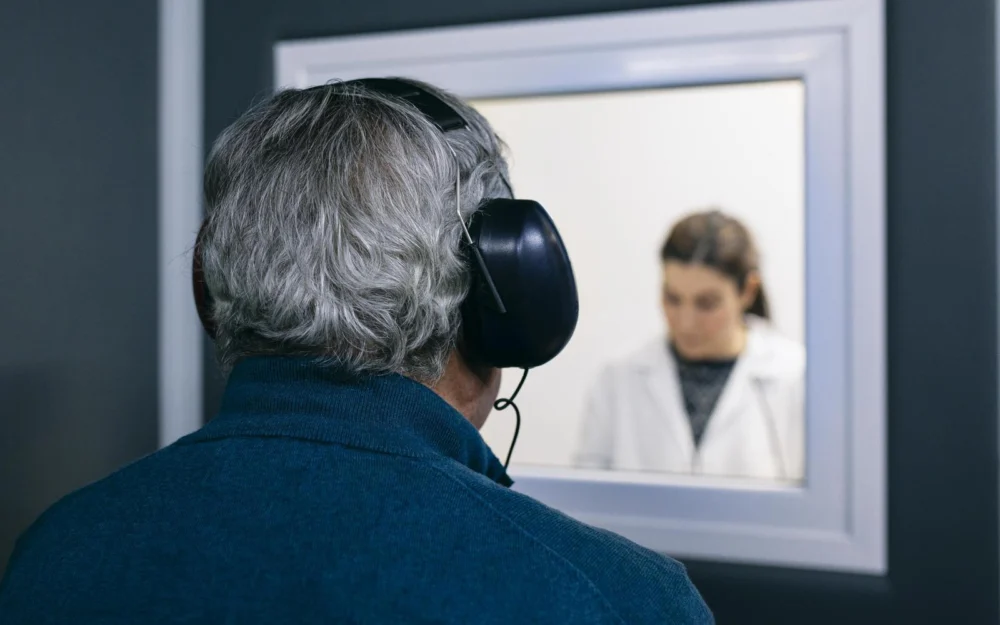
When hearing loss is suspected, the crucial first step is to undergo a professional hearing test. These assessments are straightforward, non-invasive, and provide invaluable objective data about an individual’s hearing capabilities. Hearing tests are designed to precisely identify the type of hearing loss, its severity, and potential underlying causes. This information is vital for guiding further diagnostic steps and formulating an effective treatment plan.
-
Online Hearing Tests: While not a substitute for a professional evaluation, preliminary online hearing tests can offer an initial indication of potential hearing issues and encourage individuals to seek further assessment.
-
Audiological Evaluation: A comprehensive audiological evaluation, typically conducted by an audiologist, involves a series of tests to assess hearing across different frequencies and intensities.
- Audiogram: This is a key tool used by audiologists. It is a graph that visually represents an individual’s hearing thresholds, mapping the softest sounds they can hear at various frequencies. The audiogram helps to determine the type and degree of hearing loss.
- Tympanometry: This test measures the function of the middle ear and eardrum, helping to identify issues like fluid buildup or eardrum perforations.
- Otoacoustic Emissions (OAEs): This test measures the response of the inner ear’s hair cells to sound, providing information about their health and function.
- Auditory Brainstem Response (ABR): This test measures the electrical activity in the auditory nerve and brainstem in response to sound, useful for assessing hearing in infants or individuals who cannot participate in behavioral tests.
Based on the results of these tests, an audiologist can provide a diagnosis, explain the implications, and discuss potential treatment options. Further medical evaluation by an Ear, Nose, and Throat (ENT) specialist may be recommended if underlying medical conditions are suspected.
Treatment Options: Restoring Auditory Function
The treatment approach for hearing loss is highly individualized and depends significantly on the type, severity, and underlying cause of the impairment. Even in cases of permanent hearing loss, effective management strategies can dramatically improve communication and enhance quality of life.
Medical and Surgical Interventions
For conductive hearing loss stemming from treatable conditions like earwax impaction, ear infections, or fluid in the middle ear, medical treatments such as antibiotics, ear drops, or surgical procedures like myringotomy (to drain fluid) or eardrum repair can restore hearing. In cases of otosclerosis, surgical procedures like stapedectomy can replace the ossified stapes bone, improving sound transmission.
Hearing Aids
Hearing aids are sophisticated electronic devices designed to amplify sound, making it easier for individuals with hearing loss to perceive speech and environmental sounds. They are a primary treatment for sensorineural hearing loss and are also beneficial for conductive and mixed hearing loss.
- How They Work: Hearing aids capture sound through a microphone, amplify it electronically, and deliver the amplified sound to the ear canal via a receiver. Modern hearing aids are highly customizable and can be programmed to address specific hearing loss patterns, preferences, and listening environments.
- Types of Hearing Aids: They come in various styles, from discreet in-the-ear models to behind-the-ear devices, catering to different levels of hearing loss and user preferences.
- Effectiveness: For many with mild to severe sensorineural hearing loss, hearing aids significantly improve conversational abilities, reduce listening fatigue, and enhance social engagement. Data from the Hearing Loss Association of America (HLAA) suggests that only about 20% of people who could benefit from hearing aids actually use them, highlighting a significant gap in access and adoption.
Cochlear Implants
Cochlear implants are a more advanced audiological solution, typically considered for individuals with severe to profound sensorineural hearing loss who do not benefit sufficiently from conventional hearing aids.
- Mechanism of Action: Unlike hearing aids, which amplify sound, cochlear implants bypass the damaged parts of the inner ear and directly stimulate the auditory nerve with electrical signals. This bypass allows sound information to be transmitted to the brain.
- Components: A cochlear implant system consists of an external portion (worn behind the ear) that includes a microphone, speech processor, and transmitter, and an internal portion surgically implanted under the skin.
- Eligibility: Cochlear implants can be an option for both adults and children whose hearing loss is too severe for hearing aids to provide adequate benefit. The decision to pursue a cochlear implant is made after thorough evaluation and often involves a multidisciplinary team of professionals. The U.S. Food and Drug Administration (FDA) has approved cochlear implants for individuals as young as four months old.
Other Advanced Hearing Solutions
- Middle Ear Implants: These devices are surgically implanted and can be an option for certain types of conductive, mixed, or sensorineural hearing losses, particularly when conventional hearing aids are not suitable or effective. They work by directly vibrating the middle ear structures or by stimulating the inner ear.
- Bone Conduction Devices: For individuals with single-sided deafness or certain types of conductive hearing loss, bone conduction devices transmit sound vibrations through the bones of the skull directly to the inner ear.
Next Steps for Auditory Well-being
If you are experiencing concerns about changes in your hearing, taking proactive steps is essential. The journey toward better hearing health begins with informed action:
- Take an Online Hearing Test: As a preliminary step, consider utilizing an online hearing test to gain an initial understanding of your hearing status.
- Schedule a Professional Hearing Test: The most critical step is to book an appointment with a qualified audiologist for a comprehensive audiological evaluation. This will provide a definitive diagnosis and personalized recommendations.
- Educate Yourself: Learn about the different types of hearing loss and their causes. Understanding your specific condition empowers you to make informed decisions about treatment.
- Explore Treatment Options: Discuss available solutions with your audiologist, including hearing aids, cochlear implants, or other assistive listening devices, based on your diagnosis and lifestyle needs.
- Seek Support: Connect with support groups or organizations dedicated to hearing loss. Sharing experiences and gaining insights from others can be invaluable.
The Importance of Early Intervention:
Recognizing and addressing hearing loss early offers significant advantages. Prompt diagnosis can lead to timely treatment, potentially halting or slowing the progression of certain types of hearing loss. It also allows for the protection of any remaining hearing function. Furthermore, early intervention facilitates better adaptation to hearing aids or cochlear implants, which often yield more successful outcomes when introduced sooner. By taking action promptly, individuals can safeguard their hearing, enhance their communication abilities, and significantly improve their overall quality of life, fostering stronger connections with loved ones and a more engaged participation in daily activities.
© MED-EL Medical Electronics. All rights reserved. The content on this website is for general informational purposes only and should not be taken as medical advice. Contact your doctor or hearing specialist to learn what type of hearing solution suits your specific needs. Not all products, features, or indications are approved in all countries.