
Early Aspirations and the Genesis of a Lifelong Mission
Born in Vienna, Austria, in 1953, Ingeborg Hochmair’s intellectual curiosity was nurtured within a family steeped in scientific inquiry. Her father, a physicist, and her mother, a mechanical engineering professor, provided an environment where scientific exploration was not just encouraged but celebrated. Even at the tender age of 13, young Ingeborg harbored a clear and ambitious dream: to utilize medical devices to significantly improve people’s quality of life. This early conviction would serve as the bedrock of her future endeavors.
Her academic path led her to the Vienna University of Technology, where she pursued a degree in electrical engineering. It was during this formative period that her specific passion for audiology began to crystallize. In 1975, a pivotal moment arrived when her future husband, Erwin Hochmair, a fellow electrical engineer with a shared interest in medical applications, invited her to collaborate on a groundbreaking project: the development of a cochlear implant. This collaboration would prove to be the spark that ignited a technological revolution in hearing restoration.
Pioneering the Cochlear Implant: A Scientific and Personal Odyssey
The concept of a cochlear implant, a device designed to bypass damaged parts of the ear and directly stimulate the auditory nerve, was met with significant skepticism within the scientific community. Many believed that the intricate network of the auditory system, with its approximately 20,000 nerve fibers, was too complex to be effectively stimulated by the limited number of channels that early technological capabilities could support. However, the Hochmairs approached this daunting challenge with a profound sense of optimism and an unyielding belief in the potential of their work.

Their dedication culminated in a historic achievement in 1977: the successful implantation of the world’s first microelectronic multichannel cochlear implant. This groundbreaking success not only validated their innovative approach but also marked a significant leap forward in the field of hearing rehabilitation. The scientific community’s initial doubts began to recede in the face of tangible results.
Ingeborg Hochmair’s exceptional contributions to this pioneering effort were formally recognized when she became the first woman in Austria to earn a Ph.D. in electrical engineering. This academic milestone underscored her intellectual prowess and her leadership in a male-dominated field.
From Speech Comprehension to Everyday Communication: The Evolution of Cochlear Implant Technology
The development of a functional cochlear implant was not solely a technological feat; it was also a testament to the power of collaboration and iterative refinement. Early recipients played a crucial role in this process, offering invaluable feedback that guided the enhancement of the technology. Connie, one of the initial recipients, became an integral part of the Hochmairs’ research lab. Her dedication to participating in extensive testing sessions was instrumental in developing the first effective speech coding strategies.
By 1980, a monumental milestone was achieved: Connie was able to understand speech with her cochlear implant. This was a profound moment, demonstrating that the technology could indeed bridge the gap of profound hearing loss and enable meaningful communication. This success, against the backdrop of earlier skepticism, highlighted the critical importance of persistence. As Dr. Hochmair herself reflected, "Persistence pays off. ‘The auditory nerve has 20,000 fibers—and you want to build a cochlear implant (CI) with eight channels? It will never work!’ This was the verdict of an esteemed physiologist… We approached this task a lot more optimistically."
The Hochmairs’ vision extended beyond mere speech comprehension. Their ambition was to empower individuals with hearing loss to fully reintegrate into society and engage in all aspects of life. This drive led them to establish MED-EL in Innsbruck in the late 1980s, with their first employees joining in 1990. The company was founded on the principle of continuous innovation and a deep commitment to improving the lives of those affected by hearing impairment.
A significant advancement came in 1994 with the launch of the COMBI 40 system, an eight-channel, high-rate cochlear implant. Clinical studies following its release yielded remarkable results: within six months of implantation, the majority of recipients demonstrated speech understanding capabilities sufficient for engaging in telephone conversations with unfamiliar speakers. This marked a dramatic shift, transforming what was once a theoretical possibility into a practical reality for thousands.

The Era of MED-EL: Advancing the Boundaries of Hearing Technology
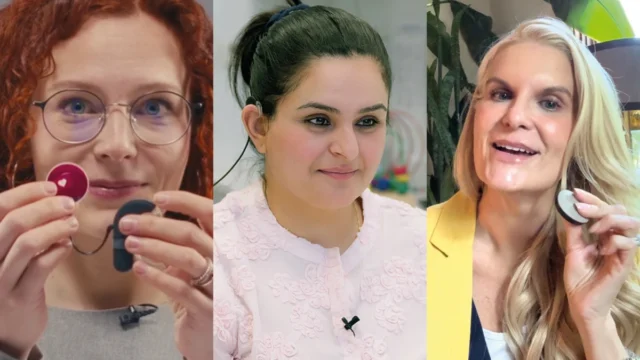
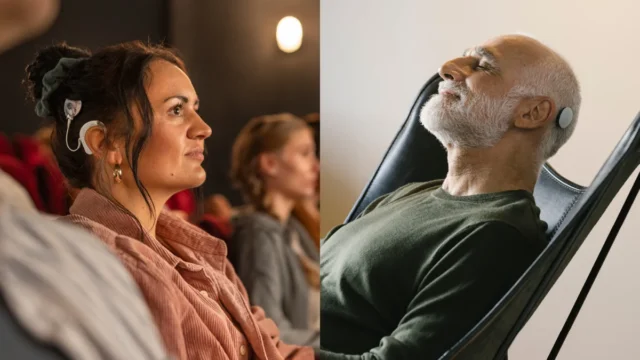
Under Dr. Hochmair’s leadership, MED-EL has consistently pushed the boundaries of cochlear implant technology. The evolution from the early multichannel devices to the sophisticated systems of today is nothing short of extraordinary. Modern cochlear implants are now capable of seamlessly streaming audio directly to smartphones, enabling users to enjoy podcasts, music, and phone calls with unparalleled clarity. The external audio processors have become remarkably compact and discreet, weighing less than a AAA battery and often hidden discreetly behind the ear.
The advancements in sound quality and coding strategies have been equally profound. Contemporary cochlear implant users can navigate complex auditory environments, such as bustling restaurants and crowded social gatherings, with greater ease. The ability to perceive nuances in sound has also opened up the enjoyment of music to a degree previously thought unattainable for individuals with severe to profound hearing loss.
Dr. Hochmair has consistently emphasized the collaborative nature of these advancements: "What cochlear implants can do today seems like a miracle to many people. But this is actually the result of hard, painstaking, and collaborative work by teams of experts over the course of many years." This humble acknowledgment underscores the dedication of the many scientists, engineers, and medical professionals who have contributed to the ongoing success of MED-EL.
Global Reach and Impact: Restoring Connection and Participation
The dedication and relentless innovation spearheaded by Dr. Ingeborg Hochmair and her team at MED-EL have had a profound global impact. Hundreds of thousands of individuals across more than 170 countries have benefited from MED-EL cochlear implants, regaining the ability to hear and connect with the world around them. This widespread adoption is a testament to the efficacy and reliability of the technology, as well as MED-EL’s commitment to making hearing solutions accessible worldwide.
The Pinnacle of Recognition: The 2026 Queen Elizabeth Prize for Engineering

In a fitting tribute to their pioneering work and its transformative impact on global health, Dr. Ingeborg Hochmair and Professor Erwin Hochmair were jointly awarded the prestigious 2026 Queen Elizabeth Prize for Engineering on February 3, 2026. This esteemed international award, often referred to as the Nobel Prize for engineering, recognizes individuals whose innovative engineering solutions have made a significant contribution to the benefit of humanity.
The 2026 prize specifically honored the Hochmairs alongside seven other distinguished scientists for their collective contributions to the design and development of modern neural interfaces that restore human function. This recognition not only celebrates their past achievements but also underscores the enduring importance of their work in the broader field of biomedical engineering.
Upon receiving this prestigious award, Dr. Hochmair articulated the significance of the honor and reaffirmed MED-EL’s ongoing mission: "This recognition strengthens our resolve to keep pushing boundaries. Our mission has always been to overcome hearing loss as a barrier to communication and quality of life. At MED-EL, we will continue to invest in research, accessibility, and technologies that help people participate fully in life, wherever they are." This statement highlights the forward-looking perspective of MED-EL and their unwavering commitment to addressing unmet needs in hearing healthcare.
Addressing the Global Hearing Gap: Challenges and Future Innovations
Despite the remarkable progress achieved, a significant challenge remains: a substantial number of individuals who could benefit from cochlear implants still do not have access to them. Statistics reveal a concerning gap, with estimates suggesting that for every child who receives a cochlear implant, three others could benefit but do not. This disparity underscores the ongoing need for increased awareness, improved accessibility, and continued innovation to bridge this critical gap.
MED-EL is actively engaged in developing future innovations that promise to further enhance accessibility and efficacy. Emerging technologies such as remote fitting, which allows for remote adjustment of audio processor settings, and robot-assisted surgery, which can improve surgical precision, are poised to revolutionize the cochlear implant landscape. Furthermore, the pursuit of totally implantable cochlear implants represents a significant leap towards even greater convenience and seamless integration into daily life.
As we reflect on the nearly 50 years since the first cochlear implant was implanted, the trajectory of innovation is astounding. Dr. Hochmair’s childhood dream, nurtured by a profound understanding of engineering principles and an unwavering commitment to human well-being, has blossomed into a global movement that is actively restoring hearing and enriching lives. The future holds immense promise, with continued advancements expected to make hearing solutions more accessible and effective for an even wider population. The legacy of Dr. Ingeborg Hochmair is one of scientific brilliance, tenacious dedication, and a deep-seated humanity that continues to inspire and empower.