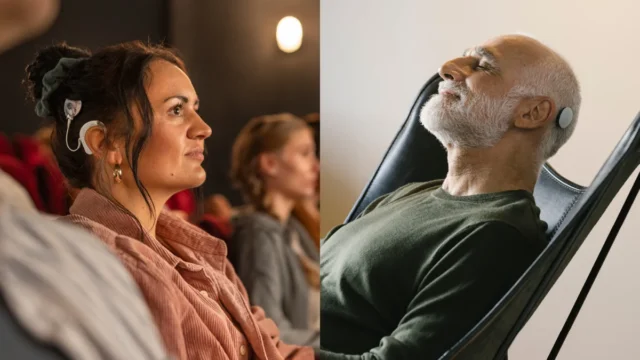

The Spectrum of Unilateral Hearing Loss
Unilateral hearing loss signifies a deficit in auditory perception in one ear. The severity can vary significantly, from a subtle muffling of sounds to a complete inability to hear. This can manifest as sounds being perceived as fainter, less clear, or more difficult to discern on the affected side. The progression of this hearing loss is also variable, with some individuals experiencing transient or fluctuating conditions, while others face a progressive or permanent decline in their auditory capabilities. When one ear possesses minimal to no functional hearing, the term "single-sided deafness" (SSD) becomes more specific. This asymmetry in hearing ability can profoundly impact daily interactions and safety, necessitating a thorough understanding of its underlying mechanisms and potential interventions.
Unraveling the Causes of Unilateral Hearing Loss
The origins of hearing loss in a single ear are diverse, spanning from easily treatable blockages to more complex damage within the auditory system. Understanding these causes is crucial for accurate diagnosis and effective management.
Conditions Affecting Sound Transmission (Often Reversible)
These issues typically involve obstructions or structural abnormalities that impede the normal passage of sound waves from the outer ear to the inner ear.
- Earwax Blockage: An accumulation of cerumen can create a physical barrier, significantly reducing sound conduction. This is a common and often easily remedied cause.
- Middle Ear Infections (Otitis Media): Inflammation and fluid buildup in the middle ear can dampen sound vibrations. Chronic or severe infections can lead to temporary or, in some cases, permanent hearing damage.
- Eustachian Tube Dysfunction: Issues with the tube connecting the middle ear to the nasopharynx can lead to pressure imbalances and fluid accumulation, impacting hearing.
- Otosclerosis: A condition characterized by abnormal bone growth in the middle ear, particularly around the stapes, which can restrict its movement and hinder sound transmission.
- Perforated Eardrum: A tear or hole in the tympanic membrane can result from infection, trauma, or sudden pressure changes, affecting the ear’s ability to capture and transmit sound.
These conditions, affecting the outer and middle ear, often present with conductive hearing loss. The good news is that many of these causes are amenable to medical or surgical intervention, with the potential for significant hearing restoration.
Conditions Affecting Sound Transduction or Neural Transmission
When the hearing loss stems from damage to the inner ear (cochlea) or the auditory nerve, it is classified as sensorineural hearing loss. This type of damage is often irreversible.
- Age-Related Hearing Loss (Presbycusis): While typically bilateral, presbycusis can sometimes manifest more pronouncedly in one ear initially.
- Noise-Induced Hearing Loss: Prolonged exposure to loud noises or a single, extremely loud event can damage the delicate hair cells in the cochlea, leading to sensorineural deficits. This can be unilateral if the exposure was predominantly from one direction.
- Viral or Bacterial Infections: Certain infections, such as meningitis, mumps, measles, or cytomegalovirus (CMV), can affect the inner ear or auditory nerve, causing sudden or progressive sensorineural hearing loss.
- Ototoxic Medications: Some drugs, including certain antibiotics (e.g., aminoglycosides), chemotherapy agents, and high doses of aspirin, can be toxic to the inner ear, potentially leading to hearing loss.
- Meniere’s Disease: This inner ear disorder is characterized by fluctuating hearing loss, tinnitus, vertigo, and a feeling of fullness in the ear. It often begins unilaterally.
- Acoustic Neuroma (Vestibular Schwannoma): A benign tumor that grows on the auditory nerve. It typically causes gradual unilateral hearing loss, tinnitus, and balance problems.
- Head Trauma: Significant head injuries can damage the structures of the inner ear or the auditory nerve pathways.
- Genetic Predisposition: Certain inherited conditions can predispose individuals to hearing loss, which may present unilaterally.
Less Common but Significant Causes
- Autoimmune Inner Ear Disease: The body’s immune system mistakenly attacks the inner ear, leading to progressive, often bilateral, but sometimes unilateral, hearing loss.
- Vascular Issues: Reduced blood flow to the inner ear, due to conditions like stroke or transient ischemic attacks (TIAs), can cause sudden hearing loss.
- Neurological Disorders: Conditions affecting the brain’s auditory processing centers can sometimes manifest as unilateral auditory deficits.
In a notable percentage of cases, even after thorough diagnostic evaluation, the precise cause of unilateral hearing loss may remain elusive, underscoring the complexity of the auditory system.
Urgent Warning Signs of Sudden Unilateral Hearing Loss
Sudden unilateral hearing loss is a medical emergency that requires immediate medical evaluation. It typically develops rapidly, over hours to a few days, and is often described by patients as waking up with a blocked or muffled sensation in one ear. This presentation, particularly if it’s a sensorineural loss, can be indicative of a serious underlying condition that, if treated promptly, may offer a better chance of recovery.

Immediate Actions for Sudden Unilateral Hearing Loss:
- Seek Emergency Medical Attention: Contact an otolaryngologist (ENT doctor) or visit an emergency room without delay.
- Do Not Delay: Time is of the essence. The sooner diagnosis and treatment commence, the more favorable the prognosis.
- Avoid Self-Treatment: Do not attempt to clear the ear canal with objects or use over-the-counter ear drops without medical advice, as this could worsen the condition.
Early intervention, often involving corticosteroids to reduce inflammation, can significantly improve the likelihood of regaining some or all of the lost hearing.
The Enigma of Unilateral Tinnitus Without Apparent Hearing Loss
Tinnitus, the perception of sound in the absence of an external source, can occur unilaterally even when standard audiological tests indicate normal hearing in both ears. This phenomenon, often referred to as unilateral tinnitus without hearing loss, can be disconcerting and warrants medical investigation.
Possible explanations for this situation include:
- Subtle Hearing Loss: Standard audiograms may not detect very mild high-frequency hearing loss that can still trigger tinnitus. Advanced tests might reveal subtle deficits.
- Auditory Nerve Irritation: The auditory nerve may be experiencing irritation or inflammation that doesn’t significantly impair overall hearing but generates phantom sounds.
- Vascular Abnormalities: In rare cases, abnormal blood vessels near the ear can cause pulsatile tinnitus, which may be perceived only in one ear.
- Cervical Issues: Problems in the neck or jaw (temporomandibular joint disorders) can sometimes manifest as unilateral tinnitus.
- Neurological Conditions: Underlying neurological issues affecting the auditory pathways can lead to unilateral tinnitus.
When to Seek Medical Attention for Unilateral Tinnitus:
- Sudden Onset: Any abrupt appearance of tinnitus, especially in one ear.
- Pulsatile Tinnitus: Tinnitus that beats in time with your pulse.
- Associated Symptoms: If tinnitus is accompanied by hearing loss, dizziness, ear pain, or facial weakness.
- Persistent or Worsening: If the tinnitus is constant, significantly bothersome, or increasing in intensity.
Unilateral tinnitus, regardless of accompanying hearing loss, deserves thorough medical assessment to rule out potentially serious underlying conditions.
Navigating Treatment Options for Unilateral Hearing Loss
The selection of the most appropriate treatment strategy for unilateral hearing loss is highly individualized, taking into account the degree of hearing loss in the affected ear, the patient’s specific communication needs, and their lifestyle.
Medical and Surgical Interventions
For hearing loss caused by conductive issues (blockages or middle ear problems), medical or surgical treatments aimed at resolving the underlying condition are the primary approach. This can include earwax removal, antibiotics for infections, or surgical procedures to repair a perforated eardrum or address otosclerosis.
Hearing Aids for Usable Hearing
In cases of mild to moderate unilateral hearing loss where some residual hearing exists in the affected ear, a traditional unilateral hearing aid can be beneficial. These devices amplify sound, making it clearer and easier to understand, particularly in quieter environments.

CROS and BiCROS Systems
When the hearing loss in one ear is severe to profound, rendering it largely unusable, but the other ear has functional hearing, Contralateral Routing of Signal (CROS) systems become a valuable option.
- CROS (Contralateral Routing of Signal): This system consists of a transmitter worn on the ear with hearing loss, which picks up sound and transmits it wirelessly to a receiver worn on the better-hearing ear. This allows sounds from the deaf side to be heard by the good ear, improving overall awareness.
- BiCROS (Bilateral CROS): If the better-hearing ear also has some degree of hearing loss, a BiCROS system is used. It incorporates amplification for the better ear in addition to transmitting sound from the deaf ear.
While CROS/BiCROS systems significantly enhance sound awareness, they do not restore the ability to localize sound, a crucial component of spatial hearing.
Bone Conduction Devices
Bone conduction devices offer an alternative approach for unilateral hearing loss, particularly for individuals with conductive or mixed hearing loss, or single-sided deafness. These devices transmit sound vibrations directly through the skull to the functioning cochlea.
- Passive Systems (e.g., ADHEAR): These devices use a soft adhesive base to attach to the skin behind the ear, transmitting vibrations to the bone. They are non-surgical and provide a comfortable option for mild to moderate hearing loss.
- Active Systems (e.g., BONEBRIDGE): These systems involve a small implant placed under the skin, which is magnetically coupled to an external audio processor. They offer a more powerful and efficient transmission of sound vibrations.
Bone conduction devices can improve sound awareness and speech intelligibility. However, similar to CROS systems, they do not typically restore precise sound localization.
Cochlear Implants for Single-Sided Deafness (SSD)
For individuals experiencing severe to profound unilateral hearing loss, cochlear implants (CIs) have emerged as a transformative treatment option. Unlike hearing aids, which amplify sound, cochlear implants bypass damaged parts of the ear and directly stimulate the auditory nerve, enabling the brain to interpret sound.
- Mechanism: A cochlear implant consists of an external microphone and speech processor that captures sound, a transmitter that sends signals through the skin to an internal implanted receiver, and an electrode array that is surgically placed into the cochlea to stimulate the auditory nerve.
- Benefits for SSD: For individuals with single-sided deafness, a cochlear implant in the deaf ear can lead to significant improvements in speech understanding, especially in noisy environments. Crucially, it can help restore binaural hearing, which is essential for sound localization – the ability to determine the direction from which a sound is coming. This enhancement in spatial hearing can dramatically improve safety, social engagement, and overall quality of life.
- Candidacy: Candidacy for a cochlear implant for SSD is determined through a comprehensive evaluation by a specialized cochlear implant team, which includes audiologists and surgeons. This assessment considers the degree of hearing loss, speech understanding abilities, and the patient’s overall health and motivation.
The success of cochlear implantation in restoring binaural hearing for SSD has been well-documented in numerous studies. For instance, research published in the Journal of the American Academy of Audiology has shown that CI users with SSD experience significant improvements in sound localization and speech perception in noise compared to their unaided performance. These advancements have revolutionized the management of SSD, offering hope for individuals who previously had limited treatment options.
Next Steps for Suspected Unilateral Hearing Loss
If you are experiencing symptoms suggestive of unilateral hearing loss, a structured approach to diagnosis and management is essential.
Your Action Plan:
- Consult a Healthcare Professional: Schedule an appointment with your primary care physician or an audiologist.
- Undergo a Comprehensive Hearing Evaluation: This will include pure-tone audiometry, speech audiometry, and potentially tympanometry and acoustic reflex testing to assess the function of the middle ear.
- Consider Advanced Testing: Depending on initial findings, further investigations such as otoacoustic emissions (OAEs), auditory brainstem response (ABR) testing, or imaging studies (MRI) may be recommended to pinpoint the cause of the hearing loss.
- Discuss Treatment Options: Based on the diagnosis, a personalized treatment plan will be developed, which may involve medical intervention, hearing aids, bone conduction devices, or cochlear implantation.
- Explore Online Resources: Utilize reputable online hearing tests as an initial screening tool to gauge your hearing ability, but always follow up with professional medical advice for accurate diagnosis and treatment.
The Broader Impact and Implications
Unilateral hearing loss, while often less discussed than bilateral deficits, carries significant implications for individuals and society. The inability to effectively process auditory information from both ears can lead to social isolation, reduced professional opportunities, and increased risk of accidents due to impaired spatial awareness. The development of advanced hearing technologies, particularly cochlear implants for single-sided deafness, represents a significant stride in mitigating these challenges. These innovations not only restore auditory function but also empower individuals to reintegrate more fully into their social and professional lives, thereby enhancing their overall well-being and contributing to a more inclusive society. The ongoing research and development in audiology promise further advancements, offering continued hope for improved hearing outcomes for all.