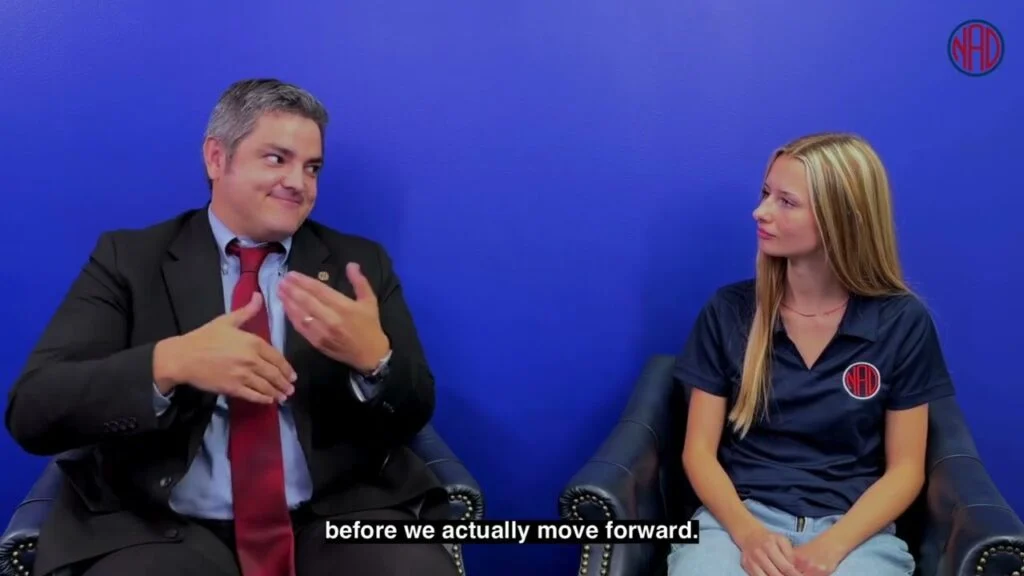
A New Era of Transparency at NAD Headquarters
The conversation between Goff and Kiego provided a rare, unvarnished look at the internal operations of one of the nation’s most prominent civil rights organizations. Kiego, who assumed the role of CEO just one month prior to the interview, used the platform to address common misconceptions regarding the scale of the organization.
Contrary to the public perception of the NAD as a vast, well-resourced institution, Kiego highlighted the reality of a lean operation. The organization currently functions with a core staff of only six employees, including the CEO himself. Kiego expressed profound admiration for his team, noting that they have sustained the organization’s advocacy, legal, and policy efforts through challenging years despite limited funding, visibility, and personnel. By choosing to highlight these constraints, Kiego is setting a new precedent for organizational honesty, suggesting that acknowledging the current baseline is a prerequisite for any meaningful growth.
The First 30 Days: Priorities and Initial Wins
Kiego’s first month has been characterized by a rigorous internal audit. His initial actions were dictated by a philosophy that leadership must be rooted in fiscal stability and human resource optimization.
Upon taking the helm, Kiego’s first three days were dedicated exclusively to a deep-dive analysis of the organization’s financial health, working closely with the Chief Financial Officer (CFO) and accounting team. This focus on fiscal hygiene serves as the foundation for his broader strategy; he maintains that without a stabilized financial base, the implementation of large-scale advocacy programs remains precarious.
Beyond fiscal management, Kiego identified three critical "fast wins" that he believes will provide the necessary infrastructure for future success:
- Technological Infrastructure: The hiring of a new webmaster and IT systems administrator to address long-standing issues with the organization’s website, including broken links and suboptimal user experience.
- Resource Expansion: The procurement of an experienced volunteer grant writer dedicated exclusively to the Youth Program, a move designed to diversify the organization’s funding streams.
- Operational Clarity: Achieving a comprehensive, data-driven understanding of the organization’s business operations, which has significantly bolstered his confidence in the current financial outlook.
Engaging the Next Generation: The Role of Jr. NAD
A significant portion of the dialogue focused on the critical importance of youth engagement. Marisa Goff, representing the Jr. NAD, articulated the frustrations felt by many younger members of the community who often perceive the NAD as distant or disconnected from their lived experiences.
Goff emphasized that for the organization to thrive, it must move beyond top-down communication. She suggested that the NAD’s current outreach often fails to penetrate the networks where Deaf youth are most active. Her recommendations included greater collaboration between state and local chapters and the national office, as well as a more deliberate effort to invite youth representatives to participate in high-level events.
Kiego responded with a commitment to view the Youth Program not as an auxiliary function, but as the essential pipeline for the organization’s future. He acknowledged that the loyalty and passion of the current membership base often trace back to early involvement in youth programs. The discussion pivoted to the role of digital media, where Kiego proposed a strategic shift: utilizing social media platforms as a "preview" to attract youth to the substantive, in-person experiences—such as conferences and advocacy summits—that define the core value proposition of the NAD.
Addressing the Resource Gap: A Call for Volunteerism
The most striking revelation of the interview was the direct appeal for community support. Given the current constraints on hiring and the lack of budget for additional paid staff, Kiego is pivoting toward a volunteer-driven model to expand the organization’s reach.
Kiego explicitly outlined the need for specialized expertise to augment the existing team. He is actively seeking:
- Legal Support: Retired attorneys to assist with client intake and preliminary legal screenings.
- Policy Experts: Individuals with specialized knowledge in telecommunications, education, and civil rights law to support the policy team.
- Administrative Assistance: Volunteers to manage high-volume tasks, such as responding to member inquiries regarding membership status—a task currently being performed by the CEO himself.
This request for "people power" underscores the urgency of the organization’s situation. Kiego stressed that while he welcomes constructive criticism and feedback, the organization requires a shift from passive observation to active collaboration.
Analytical Outlook: Implications for the Future
The dialogue between the CEO and the Jr. NAD Ambassador is indicative of a broader shift in nonprofit leadership. By inviting an open discussion about limited resources, aging infrastructure, and the necessity of volunteer labor, Kiego is attempting to build a new social contract with the Deaf community.
The strategy relies heavily on the "grace and patience" he requested from stakeholders. He acknowledged that the path forward may require the organization to "take a few steps backwards" to ensure a stable foundation before significant progress can be made. For the community, this represents a choice: to continue expecting the NAD to function as a large, static institution, or to participate in its transformation into a more agile, volunteer-supported, and transparent entity.
The implications for the NAD are significant. If Kiego’s strategy succeeds, the organization will emerge with a more robust digital presence, a more sustainable financial model, and a reinvigorated youth pipeline. However, the success of this vision is contingent upon the community’s willingness to provide the human capital that the organization currently lacks.
As of late 2026, the NAD continues to operate with a lean, dedicated team, now bolstered by the CEO’s focus on clear, measurable priorities. The conversation between Kiego and Goff serves as a baseline for measuring future progress. It is a clear declaration that the "golden and shiny" veneer of a legacy organization is being traded for a more pragmatic, honest approach—one that prioritizes long-term sustainability over short-term public relations. The success of this transition will depend not only on the leadership at the top but on the engagement of the community at large, as the NAD seeks to translate its historical mission into a contemporary reality.