A New Chapter for the NAD
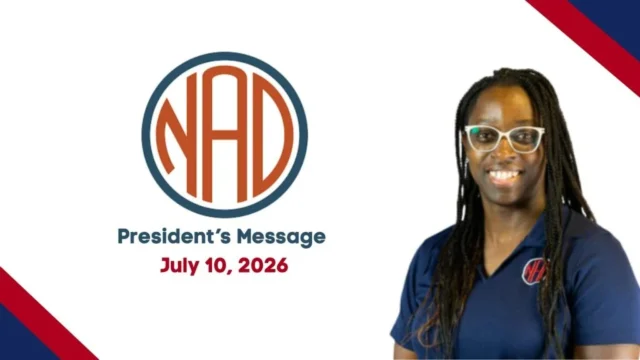
The announcement, shared via a video message from Board President Stephanie Hakulin, signals a definitive transition for the organization. Kiego, a seasoned professional, will inherit an organization that has undergone significant internal recalibration over the past two years. The NAD, which serves as a powerful coalition of state associations and individual members, has been operating under the guidance of Interim CEO Dr. Bobbie Beth Scoggins since 2024. Dr. Scoggins was brought in to stabilize the organization during a period of administrative turbulence, and her tenure is credited with restoring the operational foundation necessary for long-term sustainability.
President Hakulin emphasized that the board maintains full confidence in Kiego’s vision, noting that his appointment is not merely a change in personnel, but a deliberate move to solidify the NAD’s mission. The transition process is already underway, with Dr. Scoggins working closely with the Board and Kiego to ensure a seamless handover of responsibilities before the August deadline.
Context and Organizational History
Founded in 1880, the NAD has served as the primary advocacy voice for the deaf community in the United States for nearly 145 years. Throughout its history, the organization has navigated numerous structural evolutions, often serving as the primary lobbying entity for the Americans with Disabilities Act (ADA) and other landmark legislation. However, like many non-profit advocacy groups of its size, the NAD has faced mounting pressure to adapt to a digital-first era while maintaining its traditional grassroots connection to state affiliates.
The decision to appoint Kiego arrives at a time when the deaf community faces multifaceted challenges, ranging from the integration of artificial intelligence in captioning and communication technology to the ongoing struggle for equitable access to education and healthcare. The search committee was specifically instructed to find a candidate who could balance the traditional advocacy role of the NAD with modern fiscal stewardship.
The Search Process and Selection Criteria
The recruitment process for the CEO position was comprehensive, spanning several months and involving a broad spectrum of stakeholders. According to the Board of Directors, the Search Committee evaluated a diverse pool of candidates, all of whom presented visions for the future of the federation. Public input was a critical component of the selection process, as the Board sought to ensure that the new CEO possessed not only the executive experience required for high-level management but also a deep understanding of the lived experiences of deaf and hard-of-hearing citizens.
The criteria for selection were heavily weighted toward candidates who demonstrated a proven track record in financial management, membership growth, and coalition building. By incorporating community feedback into the final decision, the Board aimed to ensure that the new leadership would enjoy the trust and support of the federation’s diverse affiliate network.
Strategic Priorities for the Incoming CEO
During his initial remarks following the announcement, Nicholas Kiego outlined a clear and ambitious agenda for his tenure. His stated priorities suggest a focus on both internal health and external impact:
- Rebuilding Organizational Trust: Recognizing that past administrative shifts may have created uncertainty, Kiego identified the restoration of community trust as a primary objective.
- Financial Stability: He emphasized the need for diversified revenue streams to ensure the NAD can continue its advocacy work without relying solely on traditional funding models.
- Membership and Revenue Growth: Expanding the reach of the NAD is central to its future power as a lobbying force. Kiego plans to implement strategies to increase individual memberships and strengthen ties with state-level affiliates.
- Mission Alignment: He underscored the importance of re-centering the organization on its core legacy—protecting and advancing the civil rights of deaf people in the United States.
Kiego’s approach reflects a "back-to-basics" strategy that seeks to leverage the historical prestige of the NAD while modernizing its operations to meet the demands of the 2020s.
The 58th Biennial NAD Conference
The transition will be punctuated by the 58th Biennial NAD Conference, scheduled to take place in San Francisco from June 30 to July 5, 2026. The conference serves as the organization’s highest governing body gathering, where strategic goals are debated and set by delegates from across the nation.
This year’s conference is viewed as a pivotal moment for the organization. It provides the first major platform for the incoming CEO to engage directly with the constituency. The Board of Directors has explicitly framed the event as an opportunity for members to participate in the "strategic goal setting" that will define the organization’s path for the next two years. For the NAD, the conference is not just a biennial ritual but a mechanism for democratic participation that legitimizes the new administration’s agenda.
Implications for the Future of Advocacy
The appointment of a new CEO comes at a time when the deaf community is increasingly active in the public sphere, utilizing social media and digital advocacy to highlight systemic barriers. The NAD’s ability to remain relevant as a primary civil rights organization will depend on how effectively Kiego can translate these grassroots energies into federal policy outcomes.
Analysts following the non-profit sector suggest that the NAD’s move toward a stable, growth-oriented leadership signals a broader trend in the disability advocacy space. As federal funding becomes more competitive and political polarization impacts policy priorities, organizations that possess strong internal governance and clear, data-driven advocacy agendas are better positioned to influence legislation.
A Foundation for Stability
The transition period between now and August is characterized by a deliberate, collaborative effort between the current and incoming leadership. Dr. Bobbie Beth Scoggins, who has guided the organization through a period of volatility, is expected to remain a key advisor during the transition. The board has publicly acknowledged that the stability currently enjoyed by the organization is a direct result of her stewardship.
For the members and affiliates of the NAD, the leadership change offers a sense of continuity combined with the promise of a fresh perspective. The focus remains on "sustaining momentum," a phrase frequently used by the Board to describe the transition. By prioritizing a smooth handover, the organization aims to prevent any lapse in its legislative advocacy efforts in Washington, D.C., and across the states.
Looking Ahead
As the NAD prepares for the San Francisco conference, the sentiment from the Board of Directors is one of cautious optimism. The organization is moving away from a period of administrative recovery and toward a period of potential expansion. With the appointment of Nicholas Kiego, the NAD has signaled its intent to maintain its status as the leading authority on issues affecting the deaf community.
The challenge for Kiego will be to navigate the complex interests of a diverse membership base while managing the fiscal realities of a large, national non-profit. However, given the support of the Board and the clear mandate provided by the search process, the incoming CEO appears well-positioned to lead the NAD into its next chapter. The success of this transition will likely be measured by the organization’s ability to translate its strategic vision into tangible advocacy wins that improve the daily lives of deaf and hard-of-hearing Americans. For now, all eyes remain on San Francisco, where the future of the federation will begin to take shape this summer.