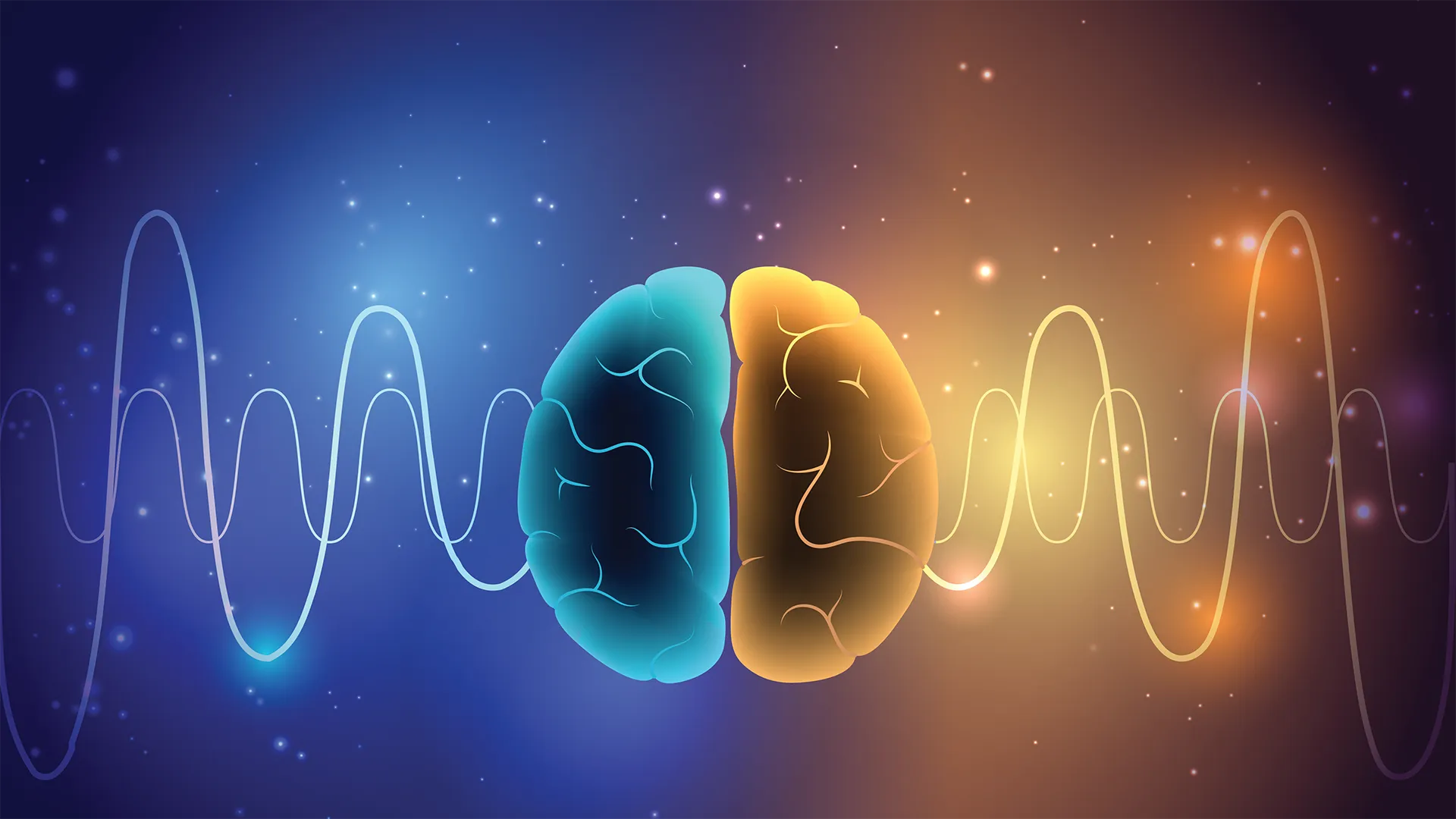
Led by Dr. Mattia Rosso and Associate Professor Leonardo Bonetti from the Center for Music in the Brain (MIB) at Aarhus University, in collaboration with the University of Oxford, the research introduces a transformative neuroimaging technique titled FREQ-NESS (Frequency-resolved Network Estimation via Source Separation). This novel methodology allows scientists to observe the brain’s large-scale dynamics with unprecedented clarity, moving beyond the limitations of traditional neuroimaging to reveal how frequency-specific networks propagate through space and time.
The Evolution of Neuroimaging: From Static Regions to Dynamic Networks
For decades, the standard model of neuroscience viewed the brain through two primary lenses: localized anatomy and fixed frequency bands. In this traditional framework, specific regions of the brain were assigned dedicated tasks—such as the primary auditory cortex for sound registration—and brainwaves were categorized into rigid silos: Delta, Theta, Alpha, Beta, and Gamma. While this model provided a foundational understanding of brain function, it often struggled to capture the fluid, interconnected nature of neural activity.
The development of FREQ-NESS represents a departure from these predefined constraints. Traditional methods often rely on "regions of interest" (ROIs), where researchers look at specific parts of the brain to see how they react to a stimulus. However, this can overlook the "big picture" of how the entire brain coordinates its response. FREQ-NESS utilizes advanced algorithms to disentangle overlapping brain networks based on their dominant frequency. Once a unique frequency is identified, the method traces its movement across the brain’s physical landscape.
Dr. Mattia Rosso emphasized that while it has long been known that brain activity is organized through different frequencies tuned to the environment, the richness of this expression was previously difficult to map. "We’re used to thinking of brainwaves like fixed stations," Dr. Rosso noted. "But what we see with FREQ-NESS is much richer. We’ve designed a method that finds how each frequency is expressed across the brain, revealing a system that is constantly in flux and highly adaptive."
Technical Breakdown: How FREQ-NESS Works
The technical innovation of FREQ-NESS lies in its "source separation" capability. In a typical neuroimaging session, such as those using Magnetoencephalography (MEG) or Electroencephalography (EEG), the sensors pick up a mixture of signals from various parts of the brain. These signals often overlap, making it difficult to determine which specific network is responsible for a particular frequency of activity.
FREQ-NESS solves this by using a data-driven approach that does not require researchers to pre-select frequency bands or brain regions. Instead, the algorithm analyzes the raw data to identify natural patterns of oscillation. By separating these sources, the method can isolate a specific network—for instance, a 10Hz Alpha rhythm—and map exactly where it originates and how it travels through the brain’s white and gray matter.
This high spectral and spatial precision allows for a "whole-brain" view of internal organization. The study’s results indicate that when a person hears a rhythm, the brain doesn’t just "fire" in the auditory centers; it reconfigures its global network state to synchronize with the external input. This suggests that the brain’s architecture is not a fixed blueprint but a "living" map that redraws itself every millisecond.
A Chronology of Discovery: The Path to Real-Time Mapping
The journey toward the FREQ-NESS methodology has been built on years of interdisciplinary research between the Danish and British institutions. The Center for Music in the Brain at Aarhus University has long been a global leader in studying how the human mind processes rhythm and melody.
- Phase 1: Initial Hypothesis (2018-2020): Researchers began questioning whether the standard Fourier transform and wavelet analysis were sufficient for capturing the non-stationary nature of brain networks during complex tasks like music listening.
- Phase 2: Algorithm Development (2021-2022): The team worked on the mathematical framework for source separation, aiming to create a tool that could handle the high-dimensional data produced by modern MEG scanners.
- Phase 3: Validation and Testing (2023): The FREQ-NESS method was tested across multiple datasets and experimental conditions to ensure reliability. The researchers found that the method produced consistent results across different subjects, a crucial factor for any diagnostic tool.
- Phase 4: Publication and Peer Review (2024): The findings were finalized and published in Advanced Science, detailing the brain’s ability to reorganize in real time.
Supporting Data and Research Reliability
One of the most significant aspects of the study is the high reliability of the FREQ-NESS method across different experimental settings. In the neurosciences, "reproducibility" is a common challenge; what works in one lab or with one group of subjects often fails in another. However, the Aarhus and Oxford team demonstrated that FREQ-NESS maintains its accuracy across diverse datasets.
This reliability suggests that the brain’s reorganization patterns are not random but follow specific, identifiable rules. The data showed that the brain’s "rhythmic structure" is a primary driver of perception. For example, when a steady beat is introduced, the brain’s internal oscillations "entrain" or align with that beat. This entrainment isn’t just a local phenomenon; it involves a large-scale reconfiguration of how different brain regions communicate with one another.
Professor Leonardo Bonetti, a co-author of the study, highlighted the significance of this observation. "The brain doesn’t just react: it reconfigures," Bonetti stated. "And now we can see it. This could change how we study brain responses to music and beyond, including consciousness, mind-wandering, and broader interactions with the external world."
Broader Implications: From Music to Clinical Diagnostics
The implications of the FREQ-NESS method extend far beyond the study of music cognition. By providing a more precise map of how the brain organizes itself, this research opens new doors for several fields:
1. Clinical Diagnostics and Personalized Medicine
The ability to map an individual’s unique brain dynamics could revolutionize the diagnosis of neurological disorders. Conditions such as Alzheimer’s disease, Parkinson’s, and ADHD are often characterized by disruptions in neural connectivity and rhythmic processing. FREQ-NESS could allow clinicians to identify these disruptions at an earlier stage by comparing a patient’s real-time brain reorganization to a healthy baseline. Furthermore, because the method is reliable across individuals, it paves the way for "individualized brain mapping," where treatments are tailored to a patient’s specific neural architecture.
2. Brain-Computer Interfaces (BCI)
The field of BCI relies on translating brain activity into commands for external devices, such as prosthetic limbs or computer cursors. Current BCIs often struggle with "signal noise" and the complexity of overlapping brainwaves. The source separation technology in FREQ-NESS could provide a cleaner, more accurate signal for these interfaces, allowing for faster and more intuitive control.
3. Understanding Consciousness and Altered States
The study mentions the potential for FREQ-NESS to investigate altered states of consciousness, including mind-wandering, meditation, and even anesthesia. If researchers can see how the brain reconfigures itself when transitioning from a focused state to a "daydreaming" state, they may gain deeper insights into the nature of human awareness.
4. Education and Learning
Understanding how the brain reconfigures during auditory perception could lead to new pedagogical strategies. If we know the specific frequencies and network configurations that optimize information absorption, we can design auditory learning environments that "prime" the brain for maximum retention.
Official Responses and the Global Research Network
The release of the study has garnered attention from the international neuroscience community. While not directly involved in the study, experts in the field of neural oscillations have noted that the FREQ-NESS method addresses a long-standing "bottleneck" in data analysis—the ability to see both where and when activity occurs with high resolution simultaneously.
The research is currently part of a larger-scale program supported by an international network of neuroscientists. This collaboration aims to build a comprehensive database of brain network dynamics, using FREQ-NESS as a standardized tool. The involvement of the Centre for Eudaimonia and Human Flourishing at Oxford also suggests an interest in the "well-being" aspect of brain dynamics—exploring how a well-organized, harmonious brain contributes to overall human happiness and cognitive health.
Conclusion: A New Era of Brain Exploration
The work of Dr. Rosso, Professor Bonetti, and their colleagues marks the beginning of a new era in neuroimaging. By moving away from static models and embracing the brain’s inherent fluidity, the FREQ-NESS method provides a more honest and detailed portrait of the human mind.
As the research continues to expand, the focus will likely shift toward applying this technology to real-world clinical challenges. The discovery that the brain reorganizes in real time in response to something as simple as a musical tone suggests that we are only beginning to understand the profound plasticity of the human organ. With tools like FREQ-NESS, the "symphony" of the brain is finally being heard in its full complexity, allowing scientists to not only listen to the music of the mind but to see the very instruments as they move and change in perfect, rhythmic synchronization.