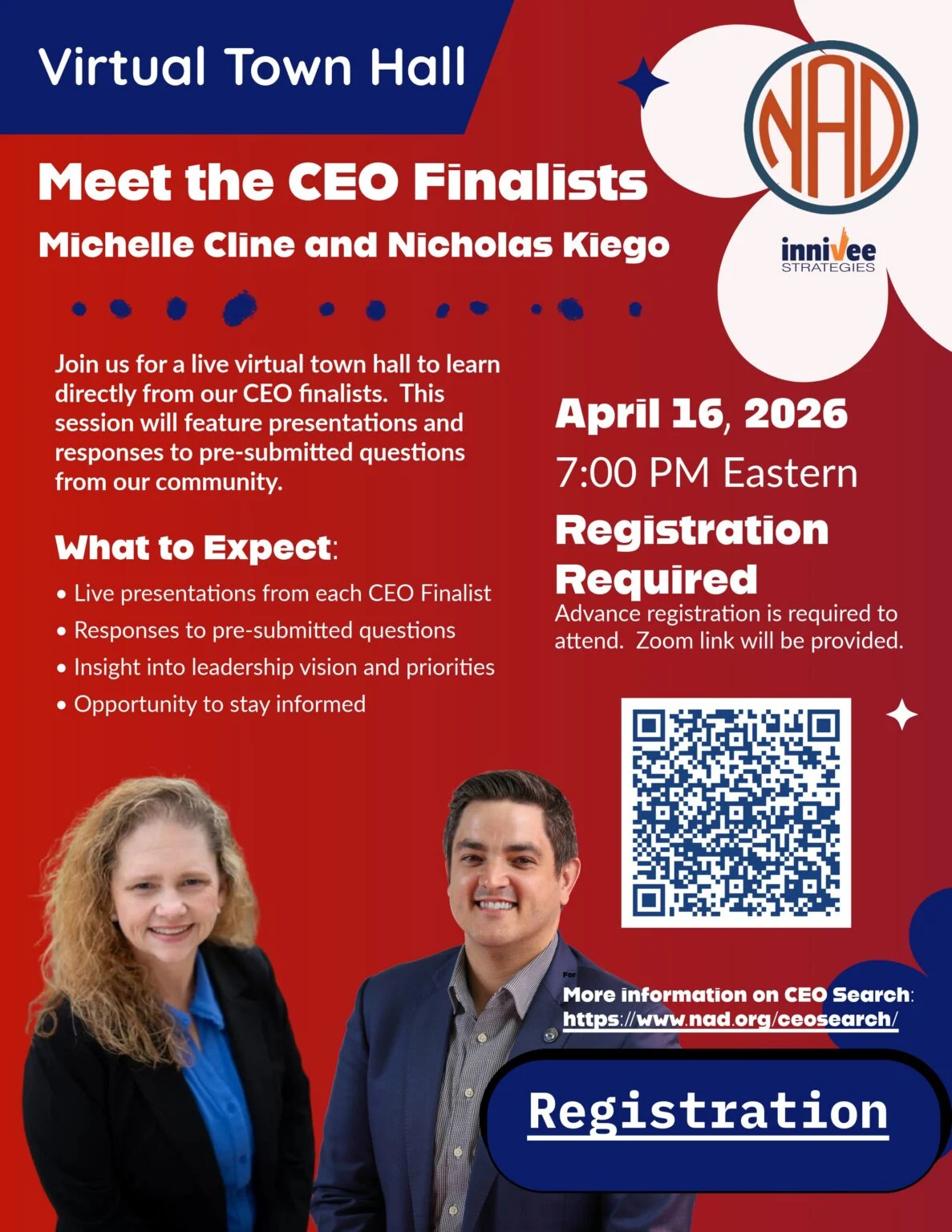
The selection of Michelle Cline and Nicholas Kegio as the two finalists follows an extensive, months-long recruitment process facilitated by the NAD Board of Directors. As the organization prepares for this transition, the Board has prioritized transparency and community engagement, hosting a virtual town hall on April 16, 2026, to allow stakeholders to evaluate the candidates’ leadership philosophies, strategic priorities, and visions for the future of the NAD.
Chronology of the Search Process
The search for a new CEO began in the fall of 2025, following the announcement that the incumbent leadership would be transitioning out of the role. The NAD Board established a CEO Search Committee, which was tasked with conducting a nationwide search to identify candidates who possess the requisite experience in organizational management, public policy, and advocacy within the deaf and hard-of-hearing community.
By January 2026, the search committee had completed the initial screening phase, having reviewed dozens of applications from professionals across the country. The process was designed to be rigorous, involving multiple rounds of interviews, background screenings, and leadership assessments. The committee focused on identifying candidates who could not only manage the administrative complexities of a large non-profit but also serve as a high-profile spokesperson for the rights of deaf citizens.
In March 2026, the pool of candidates was narrowed down to a short list of finalists. The announcement of Michelle Cline and Nicholas Kegio on April 10, 2026, signaled the transition from internal vetting to external, public-facing evaluation. The virtual town hall held on April 16 was the centerpiece of this community-driven review process, providing a platform for the finalists to address pre-submitted inquiries from members of the NAD and the broader public.
The Role of the NAD CEO
The Chief Executive Officer of the NAD serves as the chief strategist and representative of the organization. Founded in 1880, the NAD is the nation’s oldest civil rights organization safeguarding the deaf and hard-of-hearing community in the United States. The CEO’s responsibilities are multifaceted, encompassing:
- Public Policy and Advocacy: Representing the organization before Congress, federal agencies, and the judicial system to influence legislation and policies regarding accessibility, education, and employment.
- Organizational Leadership: Managing the day-to-day operations of the national headquarters, overseeing fiscal health, and directing staff in the implementation of programs.
- Community Relations: Maintaining strong ties with state associations, local deaf organizations, and global partners to ensure the NAD remains representative of the diverse deaf community.
- Fundraising and Development: Ensuring the sustainability of the organization through grant writing, donor engagement, and corporate partnerships.
Given the scope of these responsibilities, the board’s selection process has been under significant scrutiny, as the incoming CEO will be expected to navigate challenges such as the integration of artificial intelligence in communications, the protection of American Sign Language (ASL) rights in educational settings, and the ongoing push for inclusive infrastructure in the public and private sectors.
Comparative Profiles and Leadership Visions
While the full breadth of the candidates’ professional backgrounds is detailed in the official search portal at nad.org/ceosearch, the town hall highlighted distinct differences in their approaches to leadership.
Michelle Cline brings a wealth of experience in non-profit management and strategic outreach. Her platform has largely focused on strengthening the organizational infrastructure of the NAD, emphasizing the importance of digital transformation and expanding the organization’s reach to younger generations of deaf and hard-of-hearing individuals. Her supporters point to her track record of coalition-building and her ability to navigate complex stakeholder relationships.
Nicholas Kegio, conversely, has emphasized a return to the roots of grassroots activism and legal advocacy. His vision centers on increasing the visibility of the NAD as a militant defender of civil rights, with a specific focus on legislative reform and systemic change. Kegio’s background in legal advocacy and policy research makes him a candidate particularly well-suited for the organization’s ongoing litigation efforts and its role as a watchdog for federal compliance with the Americans with Disabilities Act (ADA).
Implications for the Future of the NAD
The appointment of a new CEO is expected to have far-reaching implications for the advocacy landscape. In 2026, the NAD is navigating a complex environment. Data from recent years indicates that while awareness of accessibility requirements has grown, enforcement remains inconsistent. The organization currently faces the challenge of addressing the digital divide, where access to high-quality video relay services and captioning technologies remains a point of contention in both domestic and international markets.
Furthermore, the organization must address the demographic shifts within the deaf community. As more deaf individuals seek inclusive education and career opportunities, the NAD’s role as an intermediary between the community and policy-makers becomes increasingly vital. The new CEO will need to demonstrate an ability to work with a diverse Board of Directors while maintaining the trust of a broad membership base that spans various cultural, socioeconomic, and regional backgrounds.
Community Engagement and Feedback Mechanisms
The April 16 town hall was not merely a presentation; it served as a critical data point for the Board of Directors. The format, which included responses to pre-submitted questions, allowed the Board to gauge how each candidate handles sensitive issues, such as internal organizational conflict, financial constraints, and public crises.
Feedback from the community is being treated as a component of the final deliberation process. By providing a platform for direct engagement, the NAD is attempting to ensure that the selection reflects the collective will of its members. The transparency of this process is intended to foster buy-in for the eventual appointment, as the organization seeks to project unity heading into the next fiscal year.
The Path Forward
Following the conclusion of the town hall and the subsequent review period, the NAD Board of Directors is expected to finalize its decision. The timeline for the announcement of the successful candidate has not been officially fixed, but stakeholders anticipate an appointment in the coming months, allowing for a smooth transition of power.
The selection of the next CEO is more than a simple hiring decision; it is a signal of the direction the NAD intends to take for the next decade. As the organization continues to adapt to an era of rapid technological advancement and changing political climates, the new CEO will be the primary architect of the NAD’s strategic future.
Observers of the organization suggest that the board is looking for a leader who can balance the weight of the NAD’s historic legacy with the agility required for modern advocacy. Both Cline and Kegio have articulated visions that respect this dual necessity, yet their differing tactical approaches suggest that the board’s decision will ultimately define the organization’s priority for the foreseeable future.
For members of the deaf community and the public interested in tracking the outcome of this search, the NAD continues to update its official portal. This site serves as the primary repository for updates regarding the CEO search, board resolutions, and the official transition announcement. As the organization stands on the precipice of this leadership change, the focus remains on ensuring that the mission of the NAD—to preserve, protect, and promote the civil, human, and linguistic rights of deaf and hard-of-hearing people—remains the central pillar of its operations.
In summary, the search process has been a comprehensive endeavor to ensure the continuity of the NAD’s essential work. Whether the board selects the strategy-focused approach of Michelle Cline or the activist-centered vision of Nicholas Kegio, the outcome will undoubtedly shape the landscape of disability rights advocacy in the United States for years to come. The community’s active participation in the town hall process underscores the high stakes of this transition and the importance of the NAD’s role in the lives of millions of Americans.