The Biomechanics of Force Transfer
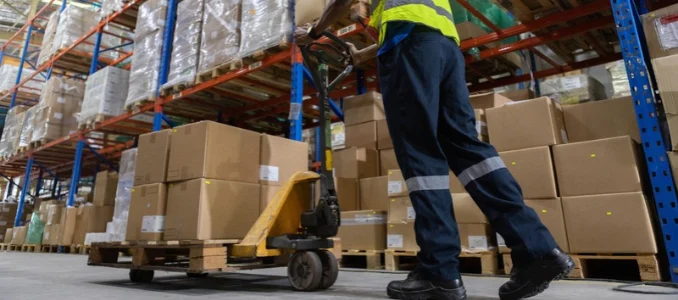
In an industrial environment, the human body functions as a kinetic chain. When a worker pushes a cart, the force generated by the legs and core must be transferred through the feet to the floor to create the ground reaction force necessary for forward momentum. If the coefficient of friction (COF) between the footwear and the floor is insufficient, the feet will slide backward rather than propelling the object forward.
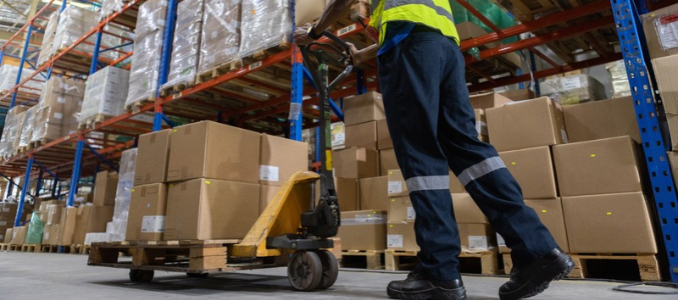
This failure of force transmission creates a high-risk environment. When the feet lose traction, the body’s center of gravity becomes unstable, forcing the worker to exert excessive muscular effort to compensate. According to the National Institute for Occupational Safety and Health (NIOSH), overexertion injuries—frequently linked to pushing, pulling, and lifting—account for nearly 25% of all non-fatal occupational injuries involving days away from work. By prioritizing advanced tread patterns and high-grip rubber compounds, employers can minimize the "lost force" that leads to these chronic strains.
Chronology of Workplace Ergonomics and Safety Standards
The evolution of safety footwear has moved through several distinct phases over the last fifty years. In the 1970s and 80s, the focus was almost exclusively on puncture resistance and toe protection, primarily through steel-toe integration. It was not until the late 1990s, with the rise of the ergonomics movement, that professional bodies began to categorize slips, trips, and falls (STFs) as a failure of the broader workplace design rather than simple "clumsiness."
By the mid-2000s, organizations like the American Society of Safety Professionals (ASSP) began adopting more rigorous testing protocols for footwear, such as the ASTM F2913 standard, which measures the COF of footwear soles on various surfaces. This shift moved the industry away from generic, smooth-soled work boots toward task-specific footwear designed with deep lug patterns, multi-directional channels for fluid dispersion, and specialized elastomers that maintain flexibility in cold or oily environments.

Real-World Implications: The "Hospital Cart" Scenario
To illustrate the criticality of tread, one need only look at the historical data concerning hospital staff. In clinical settings, the movement of heavy medical records carts and diagnostic equipment is a constant requirement. Historically, professional dress codes in these environments often favored aesthetics over safety, with staff wearing leather-soled shoes or heels.
Ergonomic audits conducted in medical facilities over the past decade have shown a direct correlation between footwear sole material and worker fatigue. A study observing healthcare workers navigating floor-to-ceiling shelving and long corridors found that those wearing shoes with high-grip rubber outsoles required 15% less peak force to initiate the movement of a weighted cart compared to those in smooth-soled formal footwear. When force requirements are high—such as navigating a ramp or threshold—the lack of grip forces the worker to utilize smaller stabilizing muscles, leading to premature fatigue and an increased likelihood of a "micro-slip," where the foot shifts just enough to cause a strain but not a full fall.
Proving the Physics of Traction
The relationship between tread and force can be demonstrated through a simple, repeatable experiment. If a worker places a spring scale on a heavy object and attempts to pull it while wearing a low-traction shoe, the force required to break the static friction of the shoe against the floor is often lower than the force required to move the object. This causes the worker to slip before the object even moves.

By contrast, when the same worker wears high-traction, lugged-sole footwear, the friction threshold between the foot and the floor is higher than the force required to initiate the movement of the object. This allows the worker to utilize their full body weight and leg power effectively. The object moves as intended, and the worker remains in a neutral, balanced posture. This realization has led many safety managers to incorporate "traction testing" as part of their facility-wide ergonomic assessments.
Selecting Proper Work Footwear
Selecting appropriate footwear requires an analysis of the specific work environment. Safety managers are advised to evaluate the following criteria:
- Material Composition: Not all rubber is equal. High-performance outsoles utilize specialized compounds that remain pliable even at low temperatures, ensuring that the tread can conform to the microscopic irregularities of the floor surface to create a "mechanical lock."
- Tread Geometry: Multi-directional tread patterns are superior for industrial settings where workers must pivot, push, and reach in rapid succession. Channels within the tread are essential for directing water, oil, or debris away from the contact patch, preventing hydroplaning.
- Heel Stability: The design of the heel—specifically its width and bevel—plays a crucial role in reaching. When a worker reaches forward, the heel acts as a stabilizer. A wide, low-profile heel with edge-gripping features prevents the foot from rocking or sliding backward during an extension.
The Multi-Faceted Approach to Workplace Safety
While high-quality footwear is a vital component of the safety toolkit, it is not a panacea. A comprehensive safety program must address the environment holistically. Industrial hygiene standards dictate that the order of controls should always favor engineering solutions first. This includes:

- Floor Maintenance: Implementing high-frequency cleaning schedules to remove slick contaminants that defeat even the best tread patterns.
- Equipment Upkeep: Ensuring that cart wheels are well-lubricated and composed of materials that roll easily, thereby reducing the amount of force the worker is required to exert in the first place.
- Workstation Design: Positioning tools and supplies within the "strike zone" (between waist and shoulder height) to minimize the need for extreme reaching, which inherently compromises balance regardless of the footwear worn.
Broader Impact and Future Outlook
The integration of ergonomic principles into footwear design is an ongoing process, increasingly bolstered by artificial intelligence and predictive modeling. As companies collect more data on the movement patterns of their workforce, footwear manufacturers are beginning to design "smart" soles that optimize grip based on specific floor surfaces and task types.
Carrie Taylor, a Certified Professional Ergonomist and founder of Taylor’d Ergonomics, notes that the most effective safety interventions are those that are practical and integrated into the daily workflow. By training workers to view their footwear as a piece of "safety equipment" rather than a clothing item, organizations can foster a culture of safety that emphasizes the mechanical realities of the job.
The implications for long-term worker health are significant. By reducing the incidence of musculoskeletal disorders caused by overexertion and loss of balance, employers can reduce absenteeism, lower workers’ compensation costs, and improve overall morale. In the modern industrial landscape, the grip provided by a well-designed shoe is the foundation upon which safe, efficient, and sustainable labor is built. As industry continues to advance, the synergy between human biomechanics and specialized equipment will remain the cornerstone of occupational health and safety.