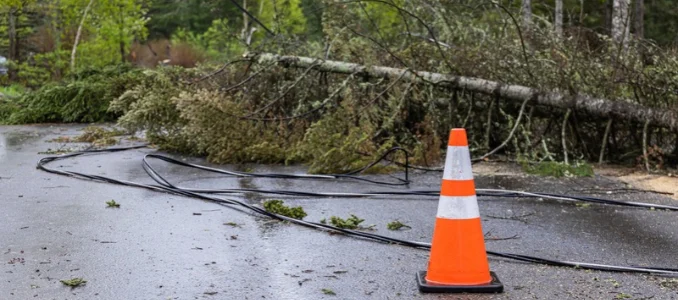
Historically, safety protocols in the utility sector have been heavily front-loaded toward the remediation phase. Organizations dedicate extensive resources to training personnel on live-line work, personal protective equipment (PPE) compliance, and complex rigging procedures. However, the travel and surveillance window—the time spent navigating to and inspecting a faulted line—is frequently treated as a logistical formality rather than a high-risk operational task. This industry-wide oversight fails to account for the environmental and psychological stressors inherent in storm-chasing or emergency patrols, effectively placing responders in the field before a formal hazard assessment has been completed.
The Anatomy of an Incident Response Cycle
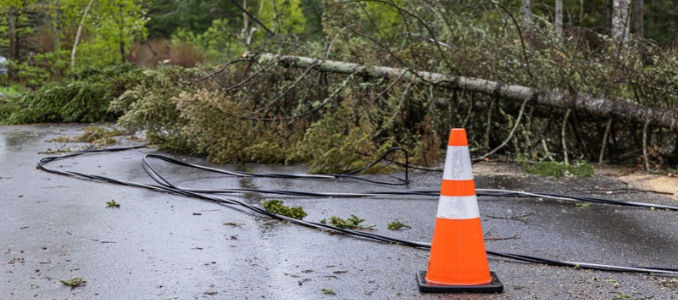
The chronology of a standard utility outage begins with a sensor trip in a control center. When a distribution line de-energizes due to storm-driven tree strikes or equipment failure, control operators are often left with nothing more than a time stamp and a grid coordinate. At this juncture, the "search window" opens.
A typical emergency response timeline follows a predictable, yet perilous, progression:
- The Alert Phase (T+0): A protective device trips. Control room personnel assess the grid’s topology and dispatch a troubleman or field crew to the general vicinity.
- The Patrol Phase (T+0 to T+Variable): Responders begin a systematic search. This involves driving along distribution rights-of-way, often under extreme weather conditions, or traversing remote terrain on foot.
- The Identification Phase (T+Variable): The fault is visually confirmed—a broken crossarm, a downed conductor, or a fallen tree. Only at this point does the "known hazard" protocol begin.
- The Remediation Phase (T+Final): Once the specific hazard is identified, the crew implements established safety procedures, sets up work-site protections, and executes the repair.
The search window is the most volatile period because it lacks the "known condition" framework that dictates safety requirements. A responder driving through a storm-battered forest is susceptible to secondary hazards—such as falling limbs, shifting mud, or additional lines coming down—that are not yet documented in the utility’s incident management system.

Supporting Data and Risk Factors
According to industry safety data, vehicular accidents and environmental exposure remain leading causes of injury for field personnel during storm recovery efforts. While exact figures vary by utility, internal safety audits consistently highlight that the majority of "near-miss" incidents occur during the transit phase rather than during the actual repair of energized equipment.
The complexity of these searches has grown alongside the expansion of the modern grid. With the integration of renewable energy sources and the increasing frequency of extreme weather events, the geographic footprint that a single troubleman must patrol has expanded. In states like California, Oregon, and Florida, where wildfire and hurricane risks are endemic, the patrol area often includes dense vegetation or mountainous terrain where communication signals are intermittent and rapid egress is impossible.
The traditional industry solution—deploying more personnel to cover ground faster—is increasingly viewed as a diminishing return. Doubling the number of trucks on the road does not necessarily lower the probability of an incident; it simply exposes more workers to the same unmanaged variables.

The Shift Toward Precision Intelligence
To close the search window, utility operators are increasingly turning to advanced sensing technologies and artificial intelligence. By installing grid-edge sensors and utilizing fault-locating algorithms, utilities can move from a "search-and-find" model to a "go-to-fix" model.
When a system can pinpoint a fault within a few hundred feet rather than a few miles, the search window effectively collapses. This precision has significant implications for safety. When a crew knows exactly where a fault lies, they can optimize their route, identify the safest approach angle, and assess the environmental conditions of the specific site before they even leave the depot.
Industry analysts note that the integration of AI-driven predictive maintenance and real-time grid diagnostics represents the most significant safety advancement in the sector since the introduction of rubber-glove work practices. By analyzing waveform signatures from fault events, modern software can distinguish between a temporary arc and a permanent, high-impedance fault, allowing controllers to provide crews with detailed intelligence on what they are about to face.

Institutional Reactions and Future Implications
Industry leaders and safety regulators are beginning to demand a shift in how "work" is defined within the utility sector. There is a growing consensus that the patrol must be legally and operationally categorized as a high-risk activity.
"We are moving toward a paradigm where the patrol is no longer a gap in our safety management system," says an anonymous safety director at a major regional utility. "If you are in the field in response to a grid anomaly, you are working. The standards we apply to a line crew should be applied to the person in the truck looking for the fault."
The broader implications of this shift are twofold. First, there is the potential for a significant reduction in workplace injuries and fatalities. By treating the search as a controlled activity—requiring check-ins, weather-based stop-work authorities, and digital mapping of the area before deployment—utilities can better manage the human element of disaster response. Second, the reliance on data-driven identification reduces the duration of outages for customers, as crews spend less time searching and more time performing the physical repair.

As the industry faces mounting pressure to improve reliability in the face of climate-driven infrastructure stress, the ability to eliminate the "search window" will become a benchmark of institutional competence. The goal is to reach a state of situational awareness where the hazard is known before the crew arrives, ensuring that the only risk-laden part of the job is the task for which the workers were specifically trained and equipped to handle. Until such technology is ubiquitous, the industry remains in a transitionary phase, where the primary challenge remains the danger of the unknown.