The Clinical Catalyst: Challenging Traditional Therapy Models
For decades, the standard approach to communication therapy for individuals with complex communication needs (CCN) has been rooted in the "medical model," often emphasizing individual, one-on-one sessions in clinical settings. This approach frequently focuses on training a single user to interact with a speaking therapist, a dynamic that Ordóñez argues often fails to account for the social realities of the user.
Ordóñez’s project emerged from a series of critical inquiries regarding the efficacy and ethical implications of traditional speech-language pathology. Key among these concerns were the limitations of individual therapy in developing functional social skills, the potential for ableist bias in prioritizing verbal speech over alternative modalities, and the lack of peer-to-peer connection for AAC users. These questions prompted a structural pivot in her practice: moving from a model that prioritizes "fixing" a perceived deficit to a model that fosters meaningful connection through shared experience.
Foundations of the VOZ SOS CAAPAZ Initiative
The conceptual framework for VOZ SOS CAAPAZ is built upon three pillars established throughout 2024 and 2025. The first pillar is the participation in the "CAAmigos Angelman" program, an evidence-based, neuro-affirming initiative that emphasizes "Comprehensive Literacy." This program proved foundational for Ordóñez, as it introduced the necessity of moving away from the assumption that non-speaking individuals cannot engage with complex literacy and communication tools.
The second pillar was the influence of critical scholarship, specifically the work of Grant Blasko. His 2025 article in the ISAAC (International Society for Augmentative and Alternative Communication) journal, "Nothing About AAC Users Without AAC Users," served as a manifesto for the project. The article highlights the systemic exclusion of AAC users from the very processes—such as research, software development, and clinical training—that govern their lives. Adopting this philosophy, Ordóñez transformed her role from a directive clinician to a facilitator of a community-led space.
The third pillar involves "Relationship-Based Learning." This pedagogical approach prioritizes the quality of the connection over the mere technical mastery of a device. It mandates that communication partners, including family members and professionals, act as active learners of the AAC systems, ensuring that the environment for the user is one of horizontal interaction rather than hierarchical instruction.
Chronology of Community Engagement
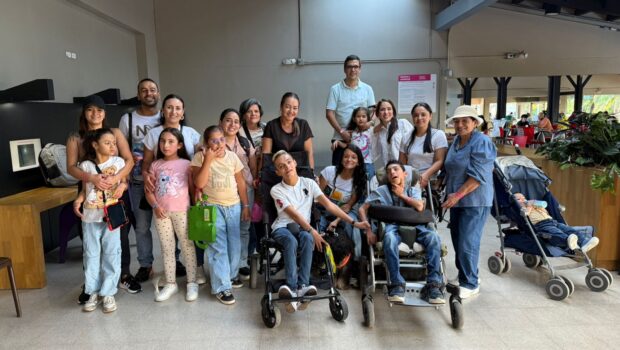
The project’s practical implementation began in October 2025, strategically aligned with international AAC Awareness Month. The inaugural event took place at the Comfama Rionegro park, providing an informal, real-world environment where users could interact with one another and the public.
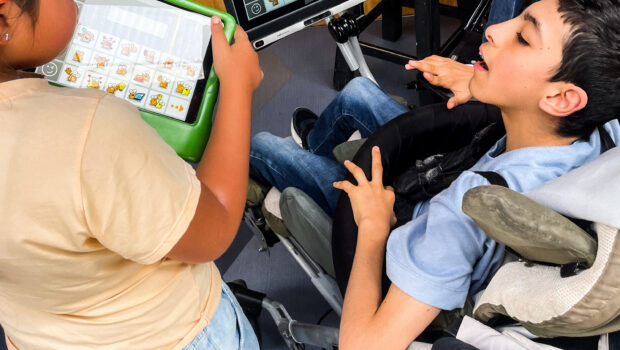
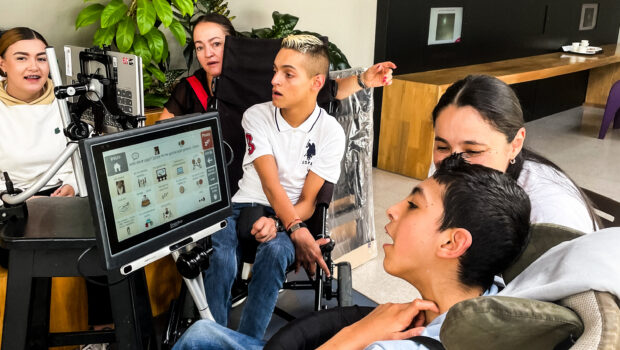
The gathering included six primary AAC users—ranging from those utilizing high-tech eye-tracking devices like the Tobii system to those using tablet-based applications such as TD Snap, Proloquo2go, and Grid. The participation of ten family members provided a necessary support network, creating a cross-generational dialogue on the challenges and successes of AAC use.
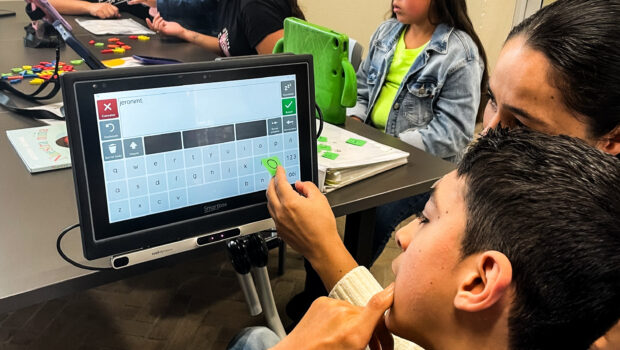
Following the success of the initial event, the project shifted toward structured learning in February 2026. This second gathering took place at a public library in Rionegro and focused on shared reading sessions. By utilizing the library—a public, accessible space—the initiative effectively moved AAC from the private sphere of the clinic to the public sphere of community education, reinforcing the idea that literacy is a fundamental right for all, regardless of speech capability.
Data and User Outcomes
The impact of these gatherings is reflected in both quantitative participation and qualitative feedback. The diversity of AAC tools represented at these sessions—ranging from Grid 3 with eye-tracking to iPad-based software—demonstrates the project’s commitment to technological pluralism.
Feedback from participants indicates a strong demand for these spaces. Pablo Andrés Calderón Gómez, a participant and user of the Tobii eye-tracking system, noted in a post-event reflection that the importance of the gathering lay not just in the technology, but in the social validation of his identity. His statement, "We need more people with this Right to Communication," highlights a common sentiment among AAC users: that the biggest barrier to communication is not the lack of speech, but the lack of an inclusive society that knows how to listen to diverse modalities.
Broader Implications and Future Projections
The rise of VOZ SOS CAAPAZ highlights a growing trend in Latin America toward "Neuro-Affirmative" practices. By "presuming competence"—the belief that every individual has the capacity for intelligence and communication, regardless of their motor or verbal ability—Ordóñez is challenging the "ceilings" often placed on students by traditional pedagogical frameworks.
From a sociological perspective, this project serves as a pilot for how local communities can bridge the gap in disability services. In many regions, the lack of institutional resources often leads to a "bottleneck" where individuals are diagnosed but rarely integrated into the social fabric. By hosting events in public parks and libraries, VOZ SOS CAAPAZ achieves two goals simultaneously: it provides a vital support network for families, and it provides a public education campaign for the general population.
Analysis of the "Communication Partner" Role
A core tenet of the project is the requirement for communication partners to view themselves as perpetual learners. In traditional settings, the therapist is the expert. In the VOZ SOS CAAPAZ model, the roles are fluid. The therapist is tasked with guiding the logistical environment, but the "content" of the communication is driven by the users and their families. This horizontal approach minimizes the risk of ableism, where a therapist might inadvertently prioritize their own agenda over the user’s authentic voice.
Furthermore, the emphasis on "Comprehensive Literacy" is a critical advancement. For years, non-speaking individuals were often denied access to reading and writing instruction under the assumption that they were not "ready." By proving that these individuals can and do engage with texts when given the right tools and environments, the initiative provides a blueprint for educational reforms that could significantly improve the long-term outcomes for disabled youth in Colombia.
Conclusion and Future Outlook
As VOZ SOS CAAPAZ looks toward a monthly schedule, the logistical challenges remain significant, particularly regarding funding and finding accessible spaces that can accommodate the specific needs of diverse AAC users. However, the success of the first two meetings suggests that the model is sustainable through community collaboration.
For families of individuals with communication challenges, the project serves as a call to action: to reject clinical settings that limit growth and to seek out, or create, spaces that prioritize autonomy, competence, and connection. As the project continues to evolve, it stands as a significant case study in the power of community-led, neuro-affirming advocacy, signaling a new era of communication rights for the Spanish-speaking world. The initiative is not merely about the use of devices; it is about the fundamental recognition of every individual’s right to be heard.