The historical reliance on the "ABCs" of fall protection—Anchor, Body Wear, and Connector—has provided a vital foundation for industrial safety. However, industry analysts and safety engineers argue that these components are merely the final line of defense. When a worker relies solely on their equipment, they are operating under the assumption that the system will function perfectly in a vacuum. Reality, characterized by human error, environmental stressors, and equipment fatigue, necessitates a more comprehensive approach. By integrating the SAFE framework—Secure, Attachment, Fall Arrest and Rescue, and Emergency Preparedness—organizations are attempting to transition from reactive compliance to proactive risk mitigation.
The Evolution of Fall Protection Standards
The evolution of fall protection in the United States is deeply rooted in the implementation of the OSH Act of 1970. Over the subsequent five decades, the regulatory landscape has evolved from rudimentary requirements to highly specific engineering standards. The timeline of this evolution illustrates a clear trend:
- 1970s–1980s: Initial regulatory efforts focused on basic guardrails and the introduction of simple body belts, which were later found to cause severe internal trauma during a fall.
- 1990s: A critical shift occurred with the move from body belts to full-body harnesses, significantly improving the survivability of falls by distributing impact forces across the thighs, pelvis, and shoulders.
- 2000s–2010s: Emphasis shifted toward "Qualified Person" requirements and the standardization of anchor points, acknowledging that even the best harness is ineffective if it is tethered to a substandard structure.
- 2020s–Present: The current era focuses on the "Human Element," acknowledging that training, rescue planning, and behavioral psychology are just as critical as the hardware itself.
The ABCs: The Hardware Foundation
The ABCs remain the non-negotiable prerequisite for any work conducted at height. Understanding these components is the first step in the safety lifecycle.
A – Anchor: The anchor is the point of attachment. Under OSHA 1926.502, an anchor for a Personal Fall Arrest System (PFAS) must be capable of supporting at least 5,000 pounds per employee attached, or be part of a complete system designed and maintained by a qualified person to maintain a safety factor of at least two. The integrity of the anchor is often the most overlooked variable; workers frequently tie off to pipes, conduit, or non-load-bearing structural members, which can fail instantly under the dynamic load of a fall.

B – Body Wear: The full-body harness serves as the interface between the worker and the fall protection system. Beyond merely wearing the harness, the critical aspect is the "fit." A harness that is too loose can cause the worker to slip out during a fall or suffer debilitating injuries from the harness straps upon impact. Regular inspection for frayed webbing, broken stitching, or corrosion on hardware is mandatory before every shift.
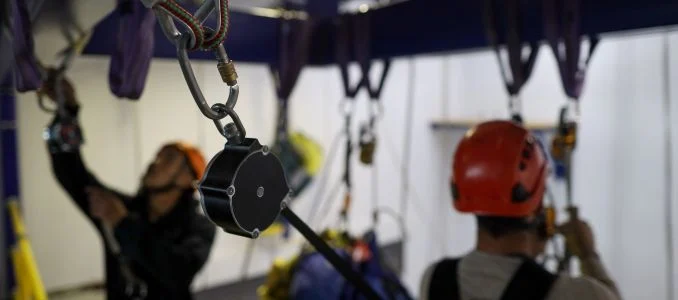
C – Connector: This includes lanyards, lifelines, and deceleration devices. The connector is the critical link that manages the energy of a fall. A shock-absorbing lanyard, for example, is engineered to extend during a fall, dissipating the kinetic energy that would otherwise be absorbed by the worker’s body. Selecting the correct connector requires an understanding of "fall clearance"—the distance between the anchor point and the ground or the next obstruction.
Beyond the ABCs: Implementing the SAFE Model
While the ABCs address the equipment, the SAFE model addresses the context of the work. Safety experts argue that a failure in one of these four pillars can render the most expensive hardware useless.

Secure: This refers to the assessment of the environment. Before a task begins, the "Secure" phase involves identifying potential hazards, such as leading edges, floor holes, or unstable surfaces. It requires a site-specific risk assessment that documents how access will be gained and how the worker will remain secured throughout the duration of the task.
Attachment: This pillar focuses on the connection protocols. It dictates that workers must be 100% tied off while in a fall-hazard zone. This requires strict adherence to tie-off procedures and the use of redundant systems where necessary. Attachment also encompasses the psychological aspect of safety—ensuring that workers have the necessary training to recognize when a connection point is compromised.
Fall Arrest and Rescue: Perhaps the most neglected aspect of fall protection is the rescue plan. OSHA mandates that employers provide for "prompt rescue" in the event of a fall. A worker suspended in a harness can suffer from suspension trauma (orthostatic intolerance) within minutes, leading to loss of consciousness or death. A rescue plan must be documented, equipment must be on-site, and personnel must be trained to execute the rescue without becoming victims themselves.

Emergency Preparedness: This involves the broader scope of incident management. If a fall occurs, how is the emergency response team alerted? Are there medical protocols in place to treat trauma? Emergency preparedness is the final failsafe that acknowledges that despite all preventive measures, accidents can still occur.
Data-Driven Implications for Site Safety
Recent analysis from the National Safety Council suggests that companies with comprehensive fall protection programs—those that integrate the SAFE model—experience a 40% reduction in recordable fall-related incidents compared to firms that rely solely on equipment-based compliance.
The economic implications are equally significant. Beyond the human toll, the cost of a single fall-related fatality can reach into the millions when factoring in legal fees, regulatory fines, increased insurance premiums, and the loss of productivity. Furthermore, the reputational damage to a construction firm can lead to the loss of future contracts, as project owners increasingly prioritize safety records as a primary qualifier for bidding.

Expert Perspectives and Industry Responses
Industry leaders emphasize that the transition from a hardware-only mindset to a holistic safety culture requires leadership commitment. "You cannot simply buy safety in a box," says one veteran safety consultant who frequently works with large-scale industrial contractors. "You can purchase the best harnesses and the strongest anchors, but if the supervisor on-site doesn’t prioritize the rescue plan, or if the worker doesn’t understand the clearance requirements, you have a false sense of security."
OSHA’s continued focus on "Fall Protection—General Requirements" (Subpart M) highlights the agency’s frustration with repeat violations. The agency has signaled that it will continue to prioritize inspections of high-hazard sites, specifically targeting the failure to provide proper training and the absence of rescue planning.
Conclusion
The path forward for the construction and industrial sectors lies in the seamless integration of hardware and behavior. The ABCs of fall protection provide the necessary mechanical security, but the SAFE model provides the procedural intelligence required to survive in complex work environments. As the industry faces the dual pressures of tight project deadlines and a shortage of skilled labor, the importance of a standardized, rigorous approach to fall protection has never been higher. By adopting a full-cycle approach—from the initial anchor selection to the final emergency rescue protocol—organizations can move beyond mere regulatory compliance and create a culture where every worker returns home safely at the end of the day. The future of height safety is not just about staying tied off; it is about staying prepared, trained, and vigilant at every step of the process.