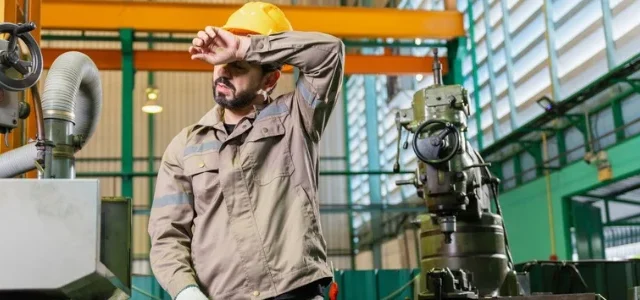

The Evolution of Safety Communication
Historically, safety management systems were reactive, relying on incident reporting and lagging indicators to dictate policy changes. Today, the focus has shifted toward proactive, predictive safety modeling. This paradigm shift requires safety managers to be well-versed in the latest technological innovations, ranging from wearable biometric sensors to AI-driven hazard detection software. The dissemination of this information is critical. Industry-specific news platforms, such as the OH&S eNews network, serve as vital conduits for this knowledge, bridging the gap between emerging regulatory mandates and the practical implementation of safety hardware and software solutions.
The importance of this information stream is underscored by the current labor market volatility. With high turnover rates in industrial and construction sectors, the rapid onboarding of new, often inexperienced workers has heightened the risk of workplace injuries. Providing these professionals with a streamlined channel for technical updates and safety product information—such as the digital subscription models utilized by industry leaders—is no longer a peripheral benefit but a core operational necessity.
A Chronology of Regulatory and Technological Shifts
The trajectory of workplace safety over the last decade has been defined by three distinct phases: the digital documentation era, the IoT integration period, and the current era of AI-augmented safety.
In the early 2010s, the primary challenge was the digitization of paper-based compliance records. Organizations transitioned to cloud-based management systems, which allowed for the first real-time tracking of safety compliance across multiple geographic locations. By 2015, the focus expanded to the integration of the Internet of Things (IoT). Sensors placed on heavy machinery and within personal protective equipment (PPE) began generating massive datasets, allowing for the analysis of equipment failure patterns before incidents occurred.
From 2020 onward, the COVID-19 pandemic acted as an accelerant for safety technology adoption. The necessity of monitoring biological health, social distancing, and air quality in closed environments introduced a new layer of complexity to standard safety protocols. During this period, the demand for reliable, objective news regarding OSHA updates, PPE availability, and industrial hygiene standards reached an all-time high. Professionals who subscribed to centralized information hubs reported a significantly higher rate of compliance during the regulatory flux of 2020 and 2021 compared to those relying on decentralized or generalist media.
Supporting Data and Industry Impact
Quantitative evidence supports the efficacy of staying informed through specialized industrial platforms. According to recent Bureau of Labor Statistics (BLS) data, organizations that prioritize continuous safety training and technical education programs experience 28% fewer lost-time injuries than their industry peers. Furthermore, a study conducted by the National Safety Council (NSC) indicated that for every dollar invested in safety technology and information resources, organizations realize a return of approximately $4.00 through reduced insurance premiums, decreased downtime, and improved worker retention.
The necessity of staying "afloat" in this fast-paced environment is also evidenced by the sheer volume of new regulatory activity. The Occupational Safety and Health Administration (OSHA) frequently updates its "Top 10 Most Frequently Cited Standards," a list that often shifts based on new technological applications. For instance, the rise in automated warehousing has seen a corresponding surge in citations related to powered industrial trucks and machine guarding. Professionals who remain subscribed to rapid-alert news services are often the first to adjust their safety protocols to match these evolving enforcement trends, thereby shielding their organizations from costly litigation and administrative penalties.

The Role of Information Transparency
The mechanisms for disseminating this information, such as the registration portals for e-newsletters, are designed to ensure that data reaches the individuals most empowered to implement change. These systems rely on demographic verification—asking for professional email addresses and regional data—to tailor content to specific regulatory jurisdictions.
Transparency in how these platforms handle professional data is paramount. The adherence to rigorous privacy policies, such as those maintained by established media organizations, ensures that the communication between safety professionals and information providers remains secure and compliant with global data protection standards. This trust is essential, as the information exchanged often concerns sensitive organizational infrastructure, proprietary safety innovations, and workforce health data.
Official Perspectives and Industry Reactions
Leading safety advocacy groups and industrial trade associations have consistently championed the move toward decentralized, digital-first information streams. Representatives from the American Society of Safety Professionals (ASSP) have noted that the "siloing" of safety information is a primary inhibitor of progress. When safety managers act in isolation, they are unable to benefit from the collective learning of the industry.
"The landscape of workplace hazards is changing faster than ever," says a lead consultant in industrial risk management. "We are seeing risks associated with collaborative robotics, complex supply chain logistics, and remote worker safety that didn’t exist five years ago. To manage these, a safety professional needs a constant, high-velocity feed of peer-reviewed insights and product information. Subscribing to focused industry news is the professional equivalent of maintaining a high-fidelity radar system."
Broader Implications for Occupational Health
The implications of failing to keep pace with industry standards extend beyond mere regulatory compliance; they touch upon the fundamental social contract between employer and employee. A workplace that demonstrates a commitment to the latest safety technologies and best practices is consistently ranked higher in employee engagement surveys. In an era where "safety culture" is a key metric for organizational health, the accessibility of information serves as an indicator of corporate values.
Moreover, the global movement toward Environmental, Social, and Governance (ESG) reporting has placed safety performance under the microscope of investors. Large institutional investors now view safety records as a proxy for management quality and operational stability. By staying informed through professional news channels, safety leaders can ensure that their reporting is not only accurate but aligns with the highest international standards, thereby enhancing the overall reputation and valuation of their firms.
Conclusion: The Future of Safety Information
As we look toward the future, the integration of augmented reality (AR) for safety training and the use of machine learning to predict behavioral risks will further accelerate the pace of change. The "fast-paced world of safety" is not a temporary condition; it is the new permanent state of industrial operations.
Organizations that view information as a strategic asset—investing the time to sign up for industry-specific updates, verifying the credibility of their sources, and maintaining a culture of continuous learning—will inevitably be the ones that stay afloat. By leveraging tools that provide essential industry news and product information, professionals can move beyond the reactive cycle of the past and into a future where safety is engineered, expected, and continuously refined. The mechanism for this success is simple: the proactive engagement with the information streams that define the modern industrial world. For the safety professional, this is the most effective tool in the kit, a necessary anchor in a turbulent sea of regulatory and technological advancement.